| 文物統一編號 |
故畫000835N000000000
|
| 作品號 |
故畫00083500000 |
| 品名 |
宋文同墨竹 軸
Bamboo in Monochrome Ink |
| 分類 |
繪畫 |
| 作者 |
文同,Wen Tong |
| 數量 |
一軸 |
| 題跋類別 |
作者 |
位置 |
款識 |
書體 |
全文 |
| 題跋 |
王直
印記 expand_more
|
詩塘 |
|
行書 |
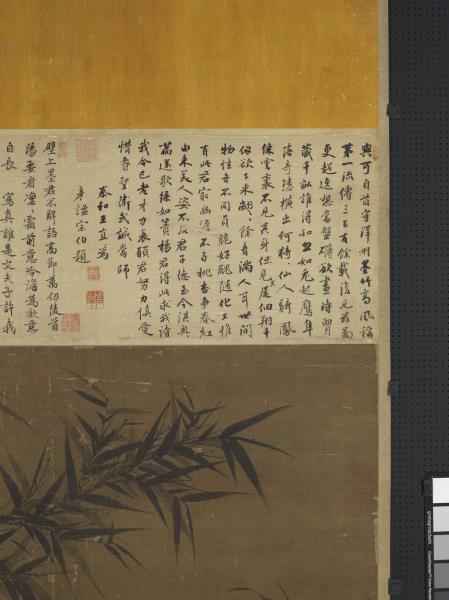
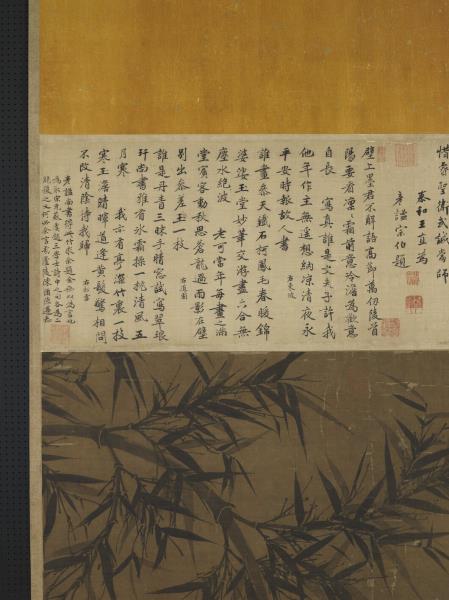
與可自昔守洋州。墨竹高風稱第一。流傳三百有餘載。復見茲圖更超逸。想當盤礡欲畫時。胸藏千畝誰得知。忽如兔起鷹隼落。奇態橫出何猗猗。仙人騎鳳綵雲裡。不見其身見其尾。佪翔千仞欲下來。翽翽餘音滿人耳。世間物性各不同。貞脆好醜隨化工。惟有此君最幽澹。不與桃杏爭春紅。由來美人姿。不及君子德。至今淇奧篇。還歌綠如簀。楊君得此求我詩。我今已老才力衰。願君努力慎愛惜。睿聖衞武誠當師。泰和王直為彥謐宗伯題。 |
| 印主 |
印記 |
| 王直 |
行儉 |
| 王直 |
弢菴 |
| 王直 |
(另半印不可辨) |
|
| 題跋 |
陳循
印記 expand_more
|
詩塘 |
|
楷書 |
壁上墨君不解語。高節萬仞陵首陽。要看凜凜霜前意。冷澹為歡意自長。寫真誰是文夫子。許我他年作主無。遙想納涼清夜永。平安時報故人書。右東坡。 誰畫參天鐵石柯。鳳毛春暖錦婆娑。玉堂妙筆交游盡。六合無塵水絕波。老可當年每畫之。滿堂賓客動秋思。蒼龍過雨影在壁。別出參差玉一枝。右道園。 誰是丹青三昧手。晴窗試寫翠琅玕。尚書雅有冰霜操。一枕清風五月寒。我亦有亭深竹裡。一枝寒玉澹清暉。道逢黃髮驚相問。不改清陰待我歸。右松雪。彥謐尚書得此竹求余題。余無以為言也。為取宋元蘇虞趙三學士詩中之句。各為二絕復之。又何必余言哉。廬陵陳循德遵志。 |
| 印主 |
印記 |
| 陳循 |
玉堂學士之章 |
| 陳循 |
泰和 |
| 陳循 |
漢文範先生裔 |
|
| 印記類別 |
印主 |
印記 |
| 作者印記 |
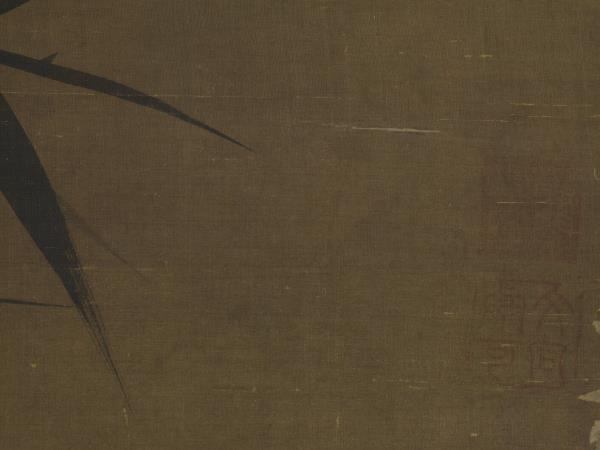
文同 |
文同與可 |
| 作者印記 |
文同 |
靜閑書室 |
| 鑑藏寶璽 |
宣統帝 |
宣統御覽之寶 |
| 鑑藏寶璽 |
清仁宗 |
嘉慶御覽之寶 |
| 主題類別 |
主題(第一層) |
主題(第二層) |
主題說明 |
| 主要主題 |
樹木 |
竹 |
|
| 類別 |
參考資料 |
| 內容簡介 |
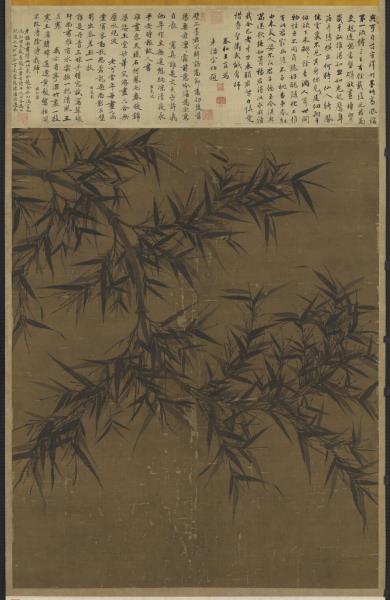
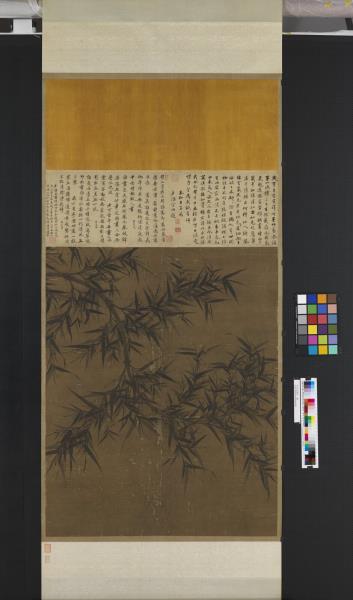
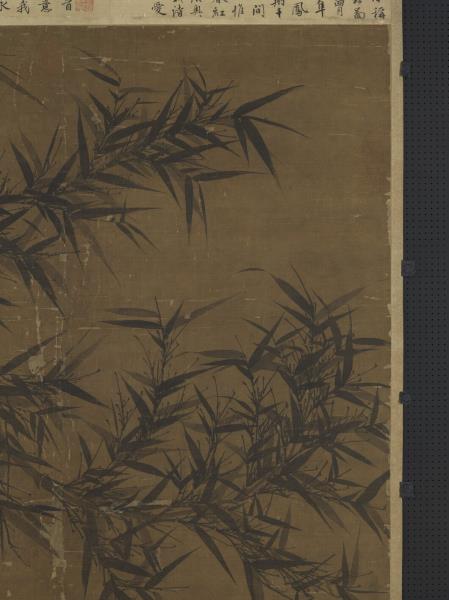
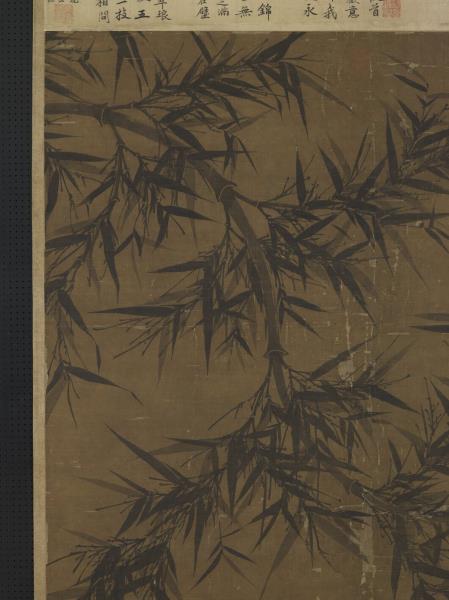
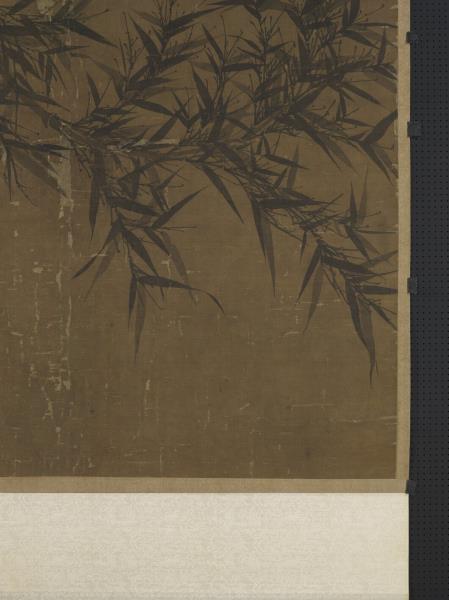
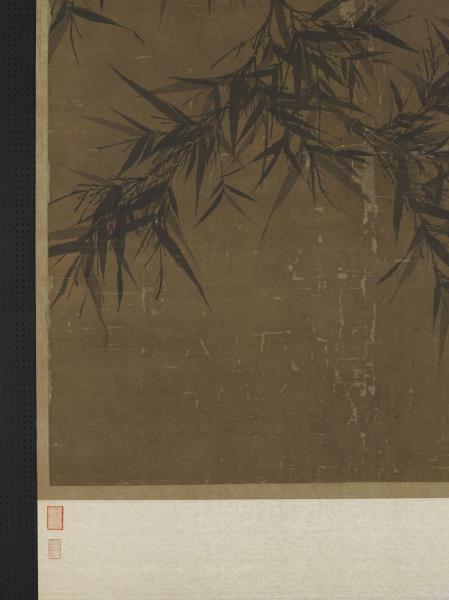
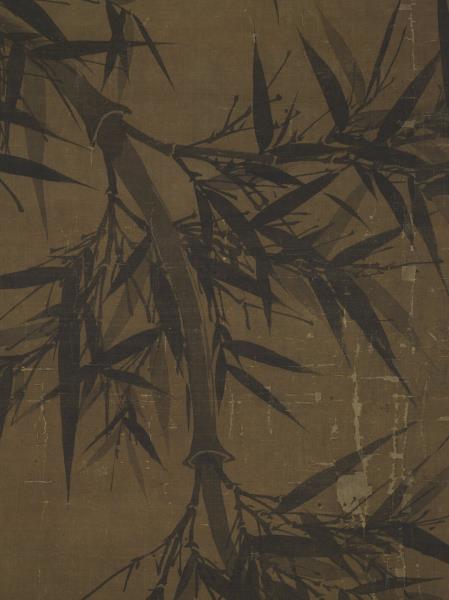
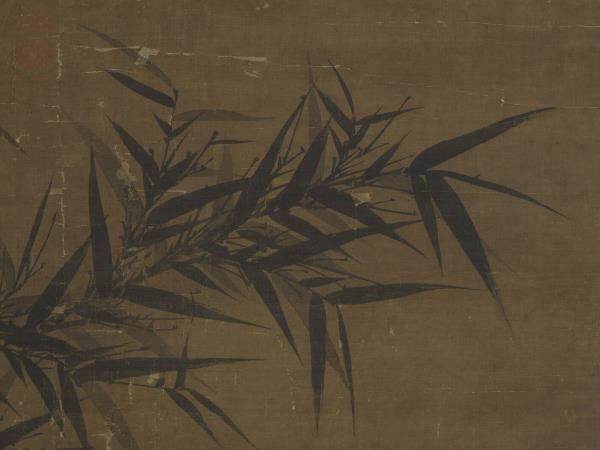
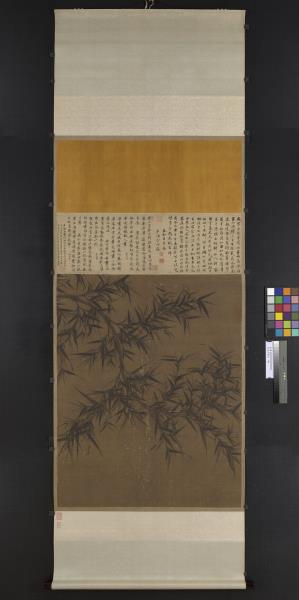
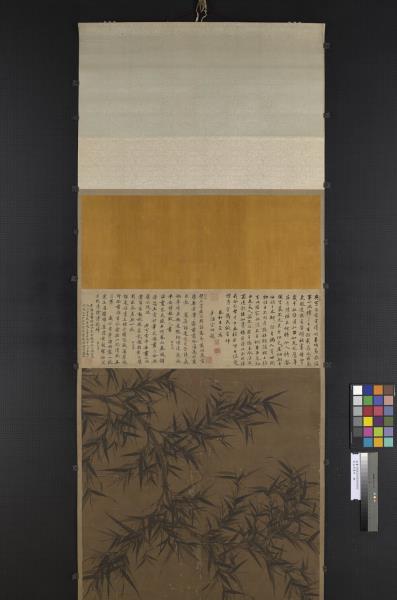
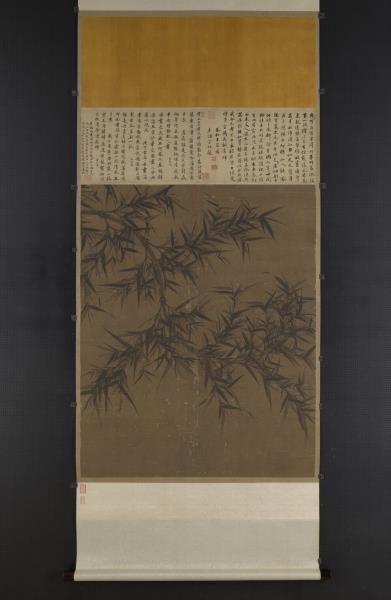
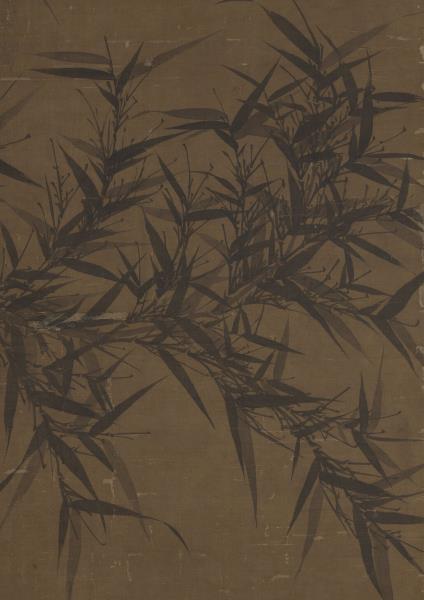
文同(西元一0一八-一0七九)字與可,四川梓潼人。善畫竹,他的好友蘇軾為他的竹子寫過許多首題畫詩。墨竹是文人畫中重要的題材之一,而文同正是北宋墨竹的代言人。畫中的一枝墨竹,竹葉和竹枝從左上方垂下,再往右方微印而上,寓屈伏中隱有勁拔的生機。此畫不但是客觀觀察與筆墨技巧的呈現,也是士大夫人格與節操的隱喻。畫葉的墨色有濃淡的對比,據米芾說也是自文同始。
|
| 內容簡介 |
文同(1018-1079),字與可,四川梓潼人。善畫竹,好友蘇軾曾為其寫過許多首題畫詩。 墨竹是文人畫重要的題材之一,而文同正是北宋墨竹的代言人。幅中墨竹一枝,從左上方蜿蜒而下,再往右方微仰向上,寓屈伏中隱有勁拔的生機。不但是客觀觀察與筆墨技巧的呈現,也是士大夫人格節操的隱喻。畫葉以墨色的濃淡來表現正反面,據米芾(1052-1108)說也始自文同。(20061206)
|
| Description |
Wen T'ung, who went by the style name Yu-k'o, was a native of Tzu-t'ung in Szechwan. Gifted at painting bamboo, the literary great Su Shih, a friend of his, wrote many poems for the paintings that he did. Bamboo rendered in monochrome ink is an important subject in the literati painting of scholars, and Wen T'ung serves as one of the most representative figures of “ink bamboo” in the Northern Sung. Shown in this painting is a branch of bamboo in monochrome ink that bends into the picture frame from the upper left, curves downwards, and then bends back upwards at the middle right. Residing within the tensile form of this “S”-shape are the forces and dynamics of life itself. Not only is this work a concrete display of the artist's acute sense of observation and consummate control of brush and ink, the bamboo is also an important metaphor for the pliant yet unbreakable integrity of the scholar-gentleman. The variations in darkness of the bamboo leaves reveal their tops and undersides, a technique that according to Mi Fu (1052-1108) originated with Wen T’ung.(20061206)
|
| Description |
Wen T'ung was a native of Szechwan who excelled at painting bamboo. His friend Su Shih inscribed many poems on his paintings of bamboo. Ink bamboo is an important subject in scholar painting and Wen T'ung is a representative example from the Northern Sung. Here, a stalk of bamboo done in ink bends down from the upper left and then curve back up to the right, giving movement and grace to the form. Not only has the artist skillfully handled the ink and observed the actual appearance of bamboo, but he also created a metaphor for the grace and resilience of the Chinese scholar. The use of rich contrast in ink tones for bamboo leaves is said by Mi Fu (1051-1107) to have started with Wen T'ung.
|
| 收藏著錄 |
故宮書畫錄(卷五),第三冊,頁61-62
|
| 收藏著錄 |
故宮書畫圖錄,第一冊,頁265-266
|
| 參考書目 |
1.張華芝,〈宋文同墨竹〉,收入王耀庭、許郭璜、陳階晉編,《故宮書畫菁華特輯》(臺北:國立故宮博物院,1987年初版,2001年再版),頁82-83。
2.譚怡令,〈宋文同墨竹 軸〉,收入林柏亭主編,《大觀-北宋書畫特展》(臺北:國立故宮博物院,2006年初版一刷),頁184-187。
3.〈宋文同墨竹圖〉,收入國立故宮博物院編輯委員會編,《名寶上珍》(臺北:國立故宮博物院,1995年初版一刷),頁221。
4.李霖燦 ,〈文同墨竹的雙包案〉,《故宮文物月刊》,第3期(1983年6月),頁74-80。
5.張華芝,〈宋文同墨竹〉,《故宮文物月刊》,第100期(1991年7月),頁77。
6.陳孟蘋,〈文同「墨竹圖」與李衎「四清圖」比較研究〉,《議藝份子》,第3期(2000年12月),頁84-101。
7.張華芝,〈宋文同墨竹〉,收入蔡玫芬主編,《精彩一百 國寶總動員》(臺北:國立故宮博物院,2011年九月初版一刷),頁260。
|
| 網頁展示說明 |
文同(1018-1079),四川梓潼人。字與可。善詩文,工書畫。尤善畫墨竹,為學者所宗,謂為「湖州派」,對後世墨竹畫影響極大。
本幅墨畫一枝繁葉茂的懸崖倒垂竹,畫竹竿用圓渾中鋒行筆;竹節採鉤筆、留白,上下相扣;畫葉之墨色濃淡相依。通幅視之,端謹合矩,卻處處瀟灑自如、筆筆帶生意。文同首創以水墨單色畫竹,本幅不僅為其存世墨竹真蹟之代表,亦為北宋文人水墨畫代表作之一。
(20110913)
|
| 網頁展示說明 |
Wen Tong (style name Yuke), a native of Zitong in Sichuan, excelled at poetry and prose while being gifted at calligraphy and painting. He particularly specialized at bamboo painted in monochrome ink. A scholar of wide learning, he founded the “Huzhou School” and had a great influence on later generations of painting bamboo using only ink.
This monochrome ink painting depicts bamboo hanging from a cliff and luxuriantly filled with leaves. The bamboo stalk was rendered with rounded brushwork using a centered tip. The knots of the stalk were done with hooked brushwork and an area left blank that hooks together the upper and lower segments. The light and dark ink of the leaves are also painted in a complementary manner. This painting appears at first glance to be solemn and straightforward, but closer observation reveals many places of casual and dashing brushwork that bring the subject and work to life. Wen Tong pioneered the technique of using monochrome ink for depicting bamboo. This painting is not only a rare original representing his surviving work, it is also one of the representative examples of Northern Song literati ink painting.
(20110913)
|
| 參考書目 |
劉芳如,〈宋文同墨竹 軸〉,收入《國寶的形成-書畫菁華特展》(臺北:國立故宮博物院,2017.10),頁72-75、305。
|
| 參考書目 |
國立故宮博物院編輯委員會,〈宋文同墨竹 軸〉,收入《故宮書畫菁華特輯》(臺北:國立故宮博物院,1996.10),頁82-83。
|
本院文物保存維護依〈國立故宮博物院典藏文物管理作業要點〉及〈國立故宮博物院文物修護業務作業原則〉辦理
抽盤點紀錄
修護紀錄