| 文物統一編號 |
故畫000487N000000000
|
| 作品號 |
故畫00048700000 |
| 品名 |
明仇英十八學士登瀛洲圖 軸
The Eighteen Scholars in the Isle of Immortals |
| 分類 |
繪畫 |
| 作者 |
仇英 |
| 數量 |
一軸 |
| 印記類別 |
印主 |
印記 |
| 收傳印記 |
|
三松堂圖書記 |
| 鑑藏寶璽 |
清內府印 |
三希堂精鑑璽 |
| 鑑藏寶璽 |
清內府印 |
石渠寶笈 |
| 鑑藏寶璽 |
清內府印 |
宜子孫 |
| 鑑藏寶璽 |
宣統帝 |
宣統御覽之寶 |
| 鑑藏寶璽 |
清仁宗 |
嘉慶御覽之寶 |
| 鑑藏寶璽 |
清仁宗 |
嘉慶鑑賞 |
| 鑑藏寶璽 |
清仁宗 |
寶笈三編 |
| 主題類別 |
主題(第一層) |
主題(第二層) |
主題說明 |
| 主要主題 |
人物 |
高士(士人、隱士) |
|
| 主要主題 |
山水 |
名勝 |
仙山(瀛洲) |
| 次要主題 |
人物 |
侍從(侍女、童僕) |
童僕 |
| 次要主題 |
人物 |
軍士 |
|
| 次要主題 |
人物 |
圉人 |
|
| 次要主題 |
山水 |
雲 |
|
| 次要主題 |
山水 |
溪澗、湍泉 |
|
| 次要主題 |
山水 |
瀑布 |
|
| 次要主題 |
走獸 |
馬 |
5匹 |
| 次要主題 |
車 |
獸力車 |
|
| 次要主題 |
花草 |
桃花 |
|
| 次要主題 |
建築 |
亭 |
|
| 次要主題 |
建築 |
庭院 |
|
| 次要主題 |
建築 |
臺閣 |
|
| 次要主題 |
建築 |
橋 |
|
| 次要主題 |
建築 |
欄杆 |
|
| 次要主題 |
器用 |
文玩(琴棋書畫) |
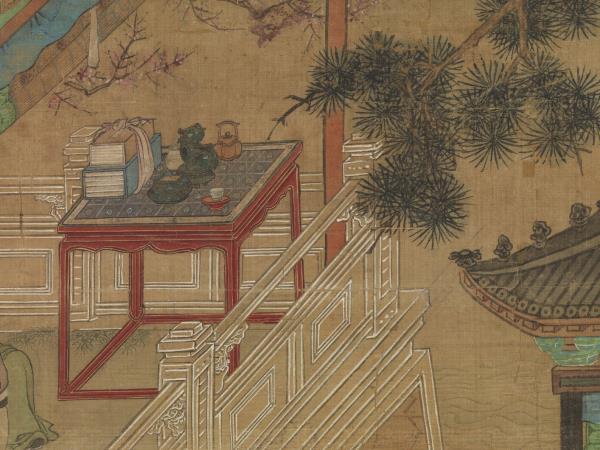
棋、書、青銅器(鼎、尊) |
| 次要主題 |
器用 |
傢俱(屏風) |
桌椅、床榻(馬車坐椅) |
| 次要主題 |
器用 |
飲食器 |
壼、杯 |
| 次要主題 |
樹木 |
|
|
| 次要主題 |
樹木 |
松 |
|
| 其他主題 |
山水 |
|
|
| 其他主題 |
器用 |
兵器 |
斧、矛、槌 |
| 其他主題 |
器用 |
服飾(對人) |
巾帽、武士服裝 |
| 其他主題 |
器用 |
扇 |
羽扇 |
| 技法 |
技法細目 |
| 人物衣紋描法(勻稱線條) |
|
| 工筆 |
|
| 界畫 |
|
| 苔點 |
|
| 皴法 |
披麻皴 |
| 類別 |
參考資料 |
| 內容簡介 |
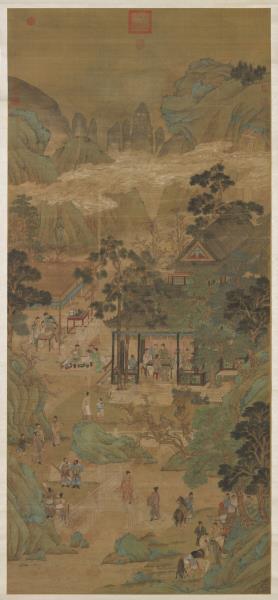
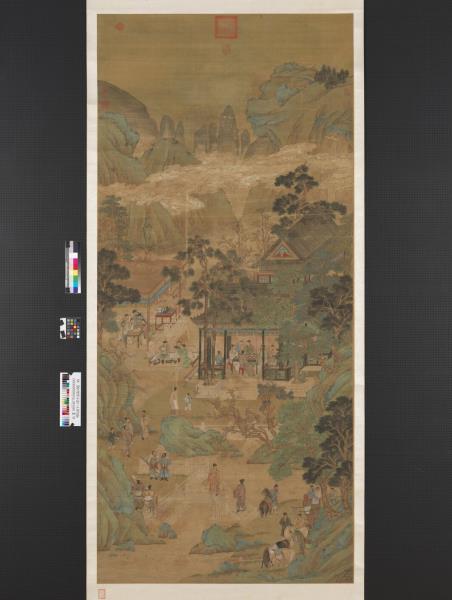
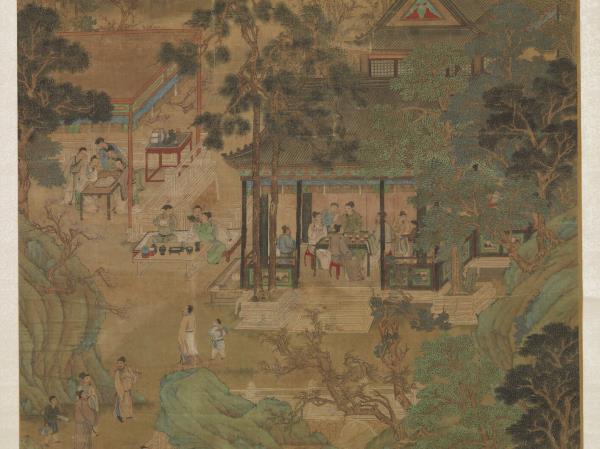
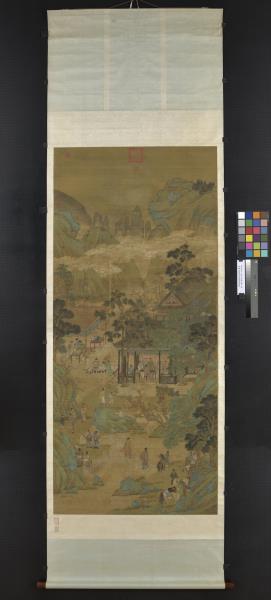
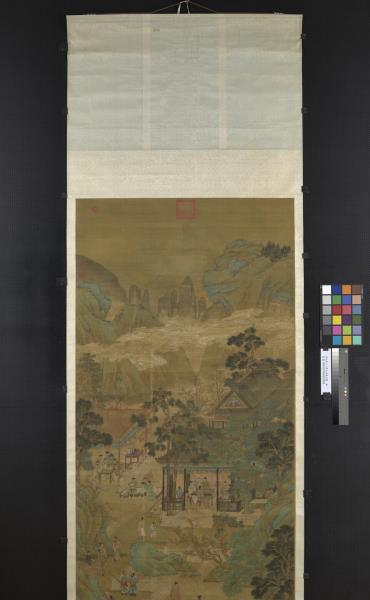
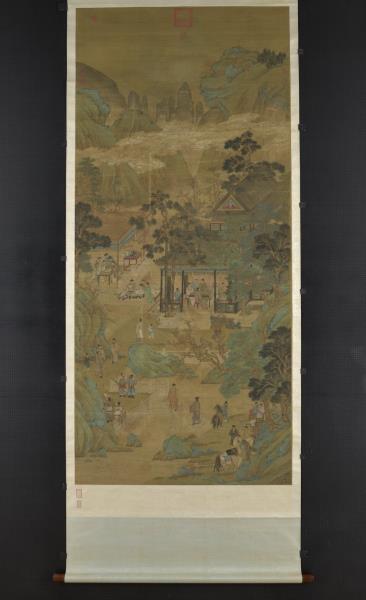
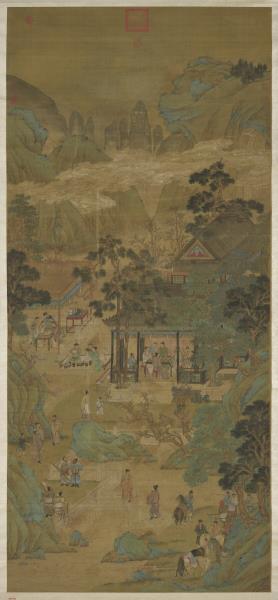
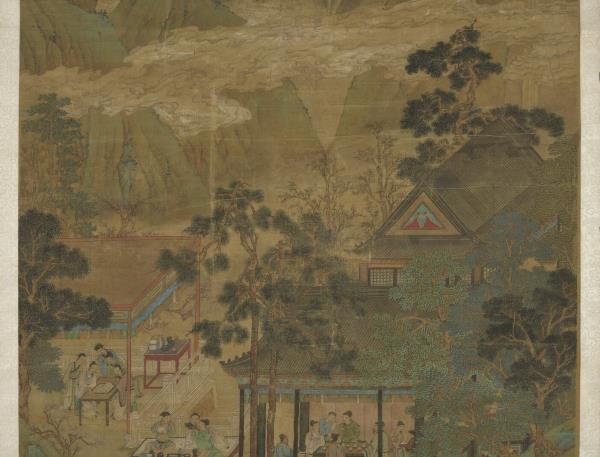
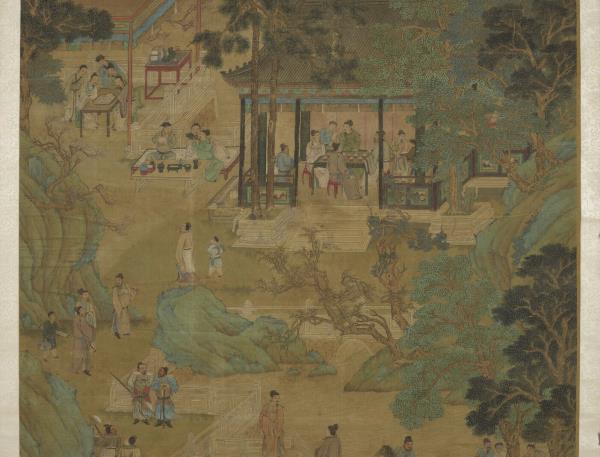
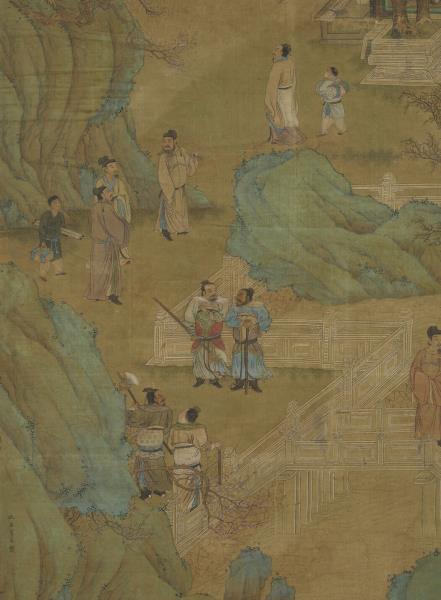
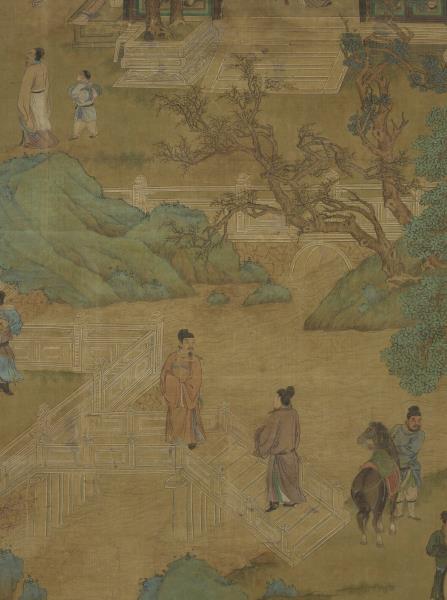
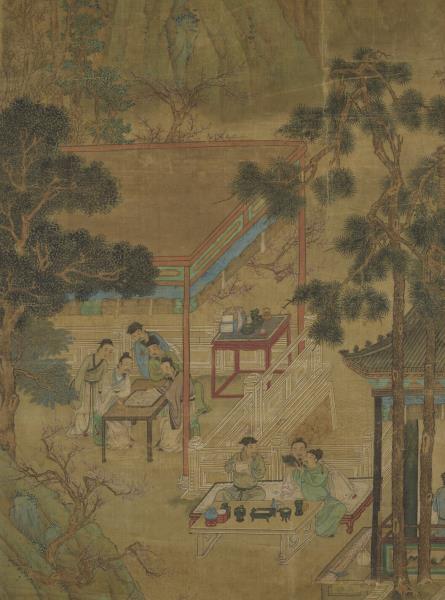
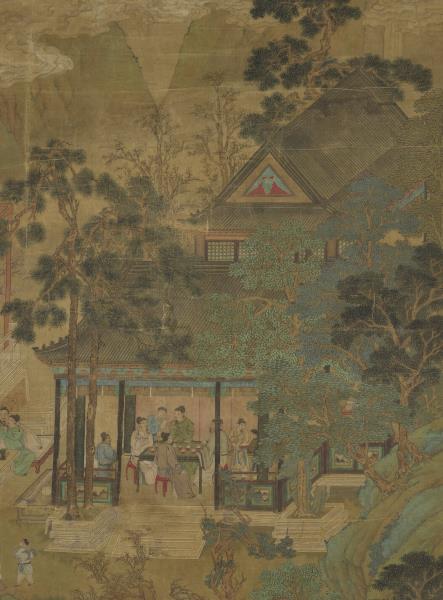
唐太宗得杜如晦、房玄齡等十八人佐政而興邦。後命閻立本圖像,褚亮為贊,題名字爵里,號十八學士,藏之御府,時人謂之登瀛洲。本幅繪十八學士集聚園林,文酒相會之景況,畫筆雖佳,然青綠設色略覺鮮麗,當出於好手仿仇英之作。
仇英(約西元一四九四-一五五二年)字實父,號十洲。江蘇太倉人。本為漆工,後從周臣學畫,為明朝四大家之一。
|
| 內容簡介 |
仇英(約西元一四九四-一五五二年),江蘇太倉人。字實父,號十洲。年青時曾為漆工,後遇周臣,經其指授,漸有名於藝壇。工畫山水、人物,為明四大家之一。唐太宗時,由於杜如晦、房玄齡等十八位賢臣的輔佐,唐室得以興盛,所以太宗即命閰立本為這十八學士畫像,自此「十八學士圖」便成為我國繪畫的一個重要題材。本幅設色明艷,畫十八學士群聚園林,文酒相會的場面,人物姿態鮮活。
|
| 內容簡介 |
仇英(約西元一四九四-一五五二年),江蘇太倉人,後移居吳縣。字實父,號十洲。本為漆工,後從周臣學畫,擅長山水、樓臺、人物和仕女。又善於臨摹古人作品,幾可亂真,為明四大家之一。
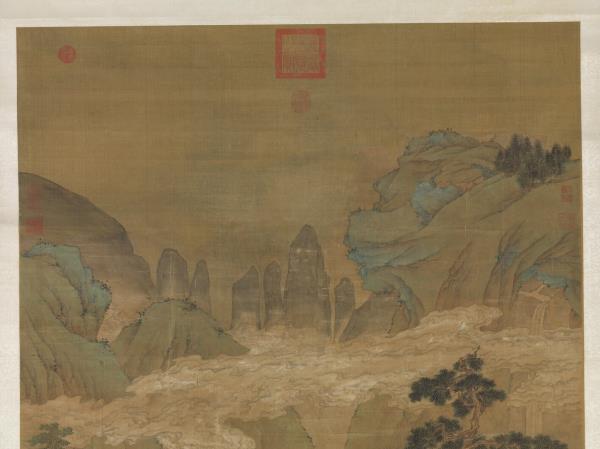
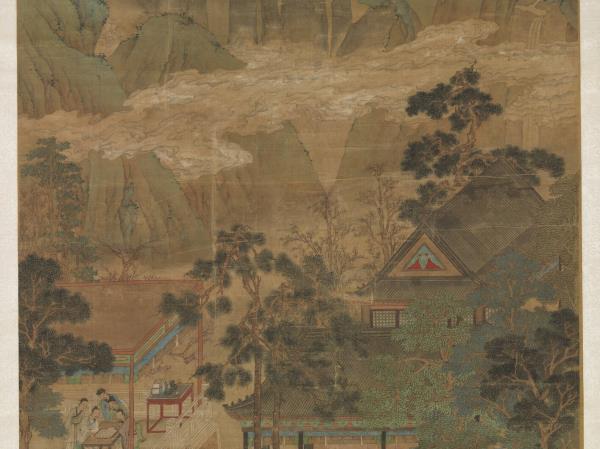
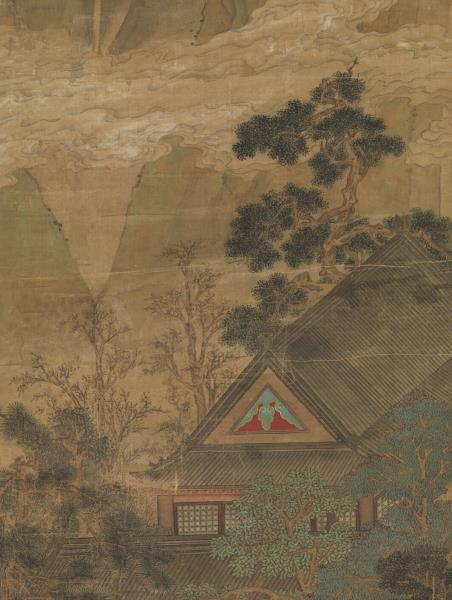
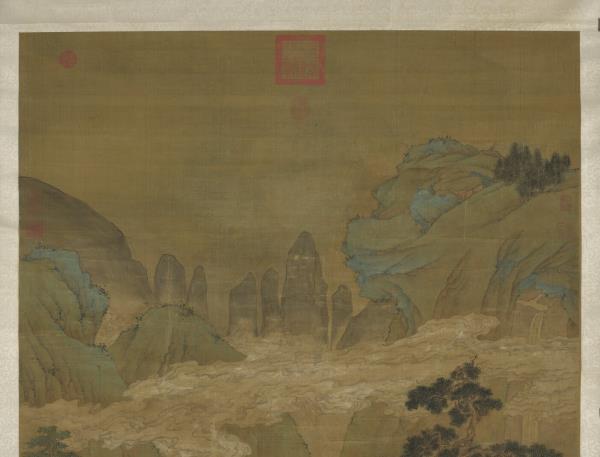
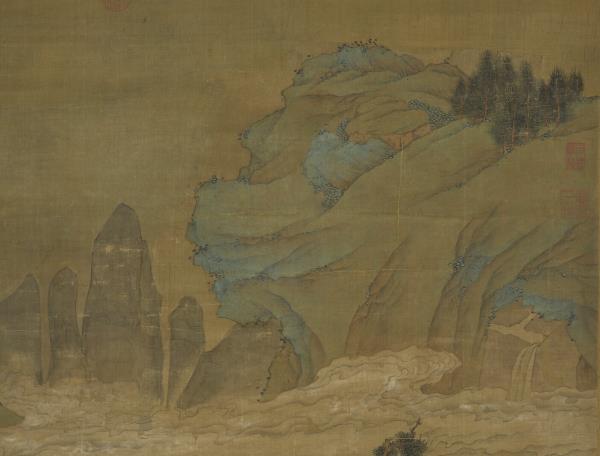
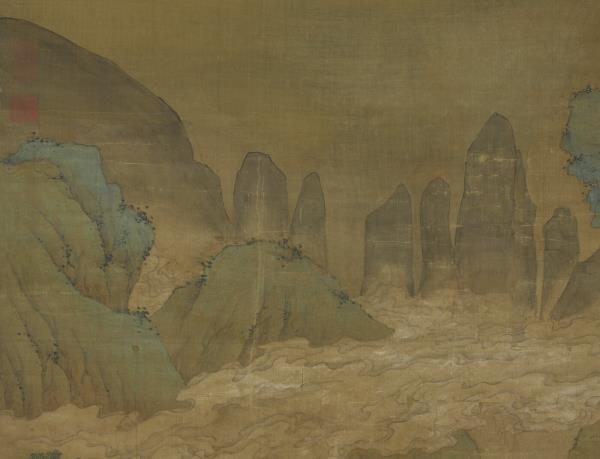
唐太宗得杜如晦、房玄齡等十八人佐政而興邦。後命閰立本圖像,褚亮為贊,題名字爵里,號十八學士,藏之御府,時人謂之登瀛洲。本幅青綠設色,十八學士,文酒相會,集聚園林,虛堂卷幔,珍木垂檐,前臨碧水,後擁雲巒,狀瀛洲之美。
|
| 內容簡介 |
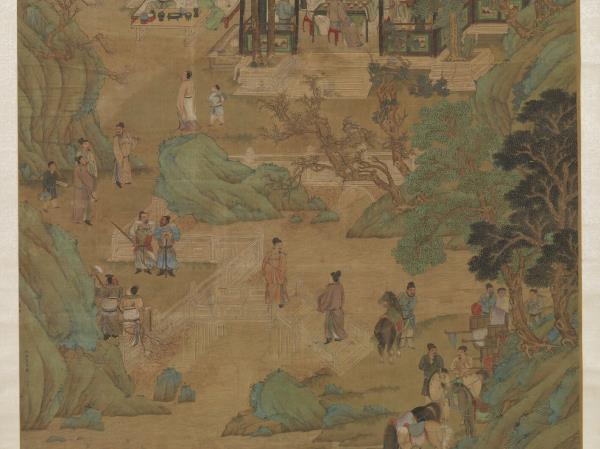
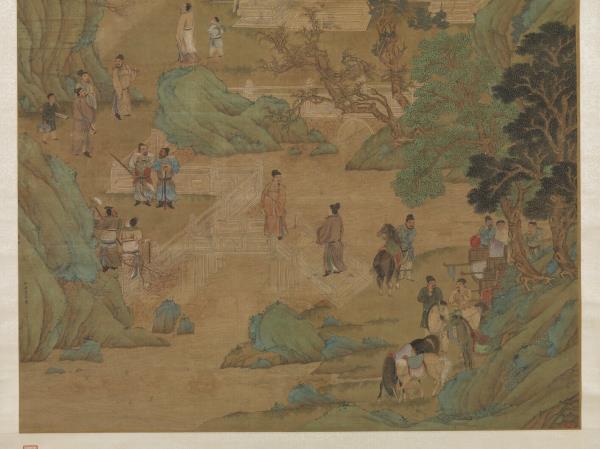
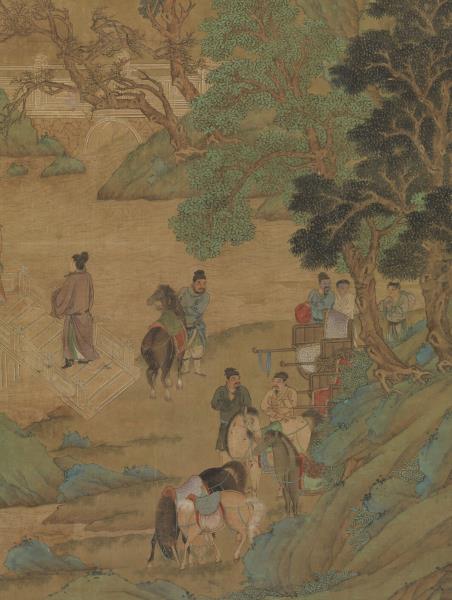
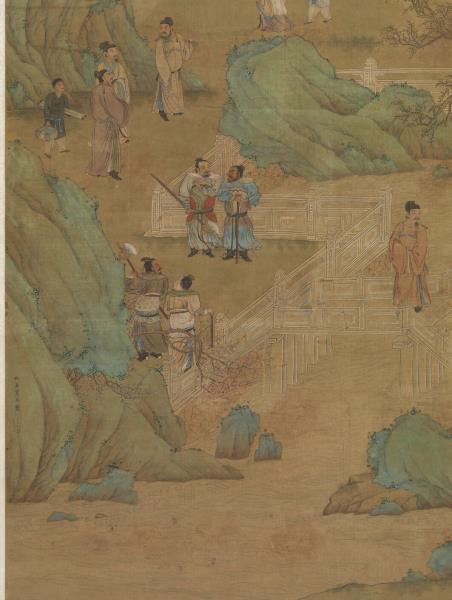
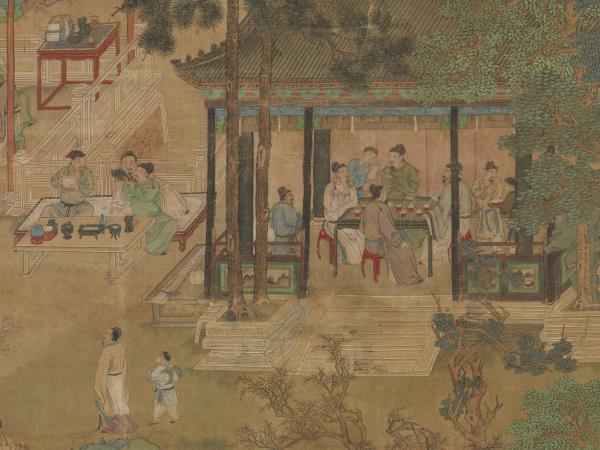
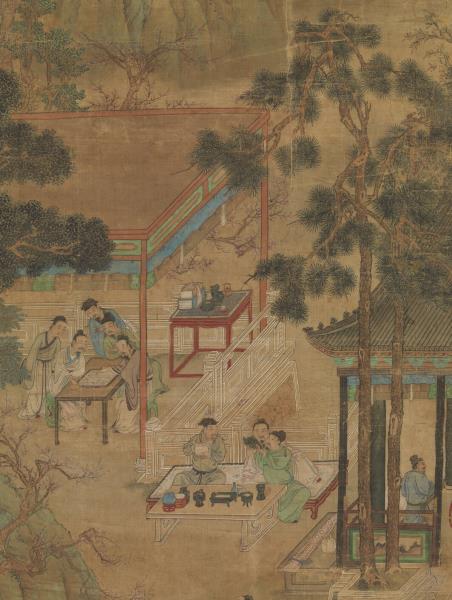
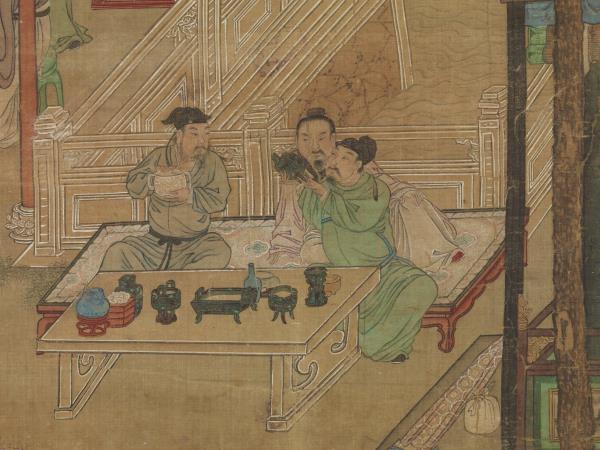
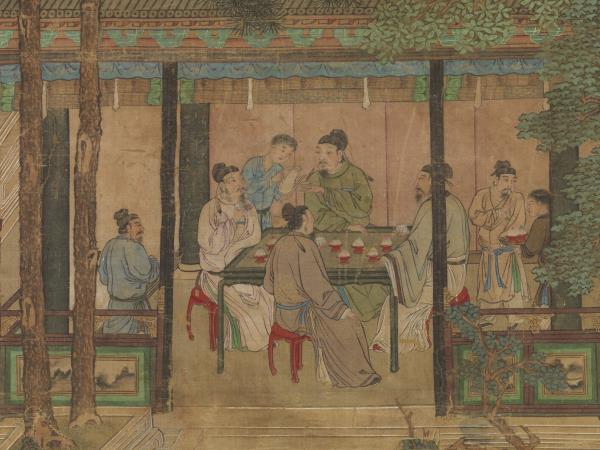
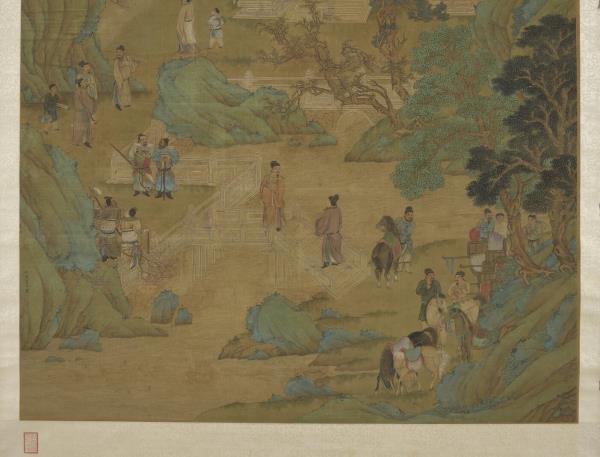
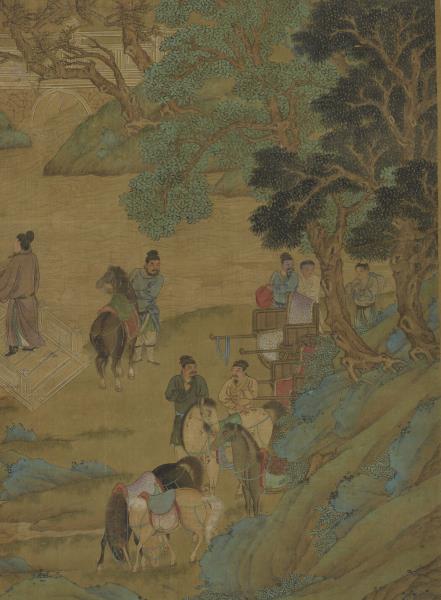
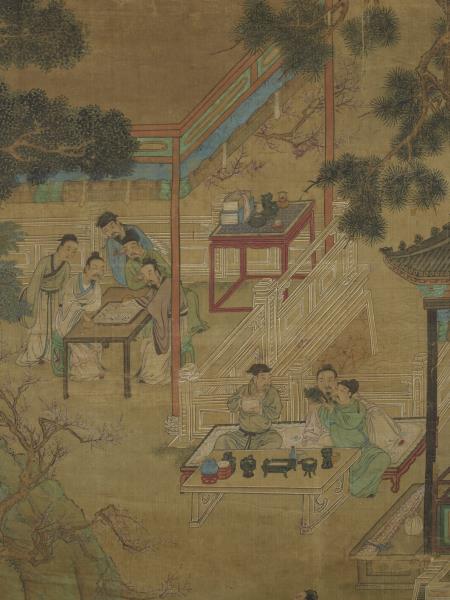
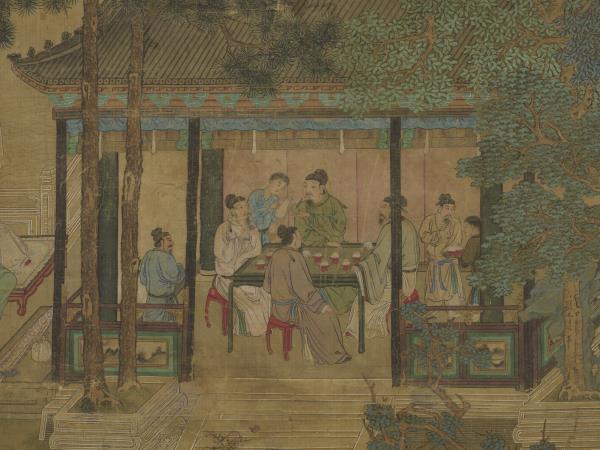
仇英字實父,江蘇太倉人。出身低微,年青時曾為漆工。他的繪畫才能被周臣賞識,加以指導,因此漸有名於畫壇。據溫肇桐明四家年譜之考訂,生於西元一四九四年。據畫蹟題跋考證,卒於嘉靖三十一年,西元一五五二年,年約五十九歲。此幅青綠畫。虛堂卷幔。珍木垂檐。其中環坐而飲者四人。執鼎彝品題者三人。對奕二人。從旁觀者三人。拈髭吟花者一人。偕行山石間相顧語者三人。度橋方來者二人。外僕夫三、童子六。武士四。前臨碧水,後擁雲巒。狀瀛洲之美。
|
| Description |
Ch’iu Ying (tzu Shu-fu), was a native of T’ai-ts’ang, Kiangsu. He was born of humble stock, and as a youth worked as a lacquerer. His paintings were much appreciated by Chou Ch’en (fl. 1500-1535), a prominent professional painter, and Chou taught Ch’iu Ying. Gradually the younger man gained fame in Suchou.
This painting is in the blue-and-green manner. In a tree shaded pavilion, four men sit drinking, while outside three others admire ancient bronze vessels. Two more gentlemen play at a chess game with three spectators. Two of the scholars are just crossing the bridge and approach four armed guardians. The view presented by the artist extends from the green water of the foreground to the cloudy peaks of the far distance. This is indeed the beauty of the Isles of the Immortals.
|
| Description |
Ch’iu Ying originally was a lacquer artisan, but then studied painting with Chou Ch’en. Ch’iu’s repertoire included landscapes, architecture, and figures. He was known for his copies of ancient paintings, which were almost indistinguishable from the originals. He is considered one of the Four Masters of the Ming dynasty.
The T’ang emperor T’ai-tsung (r. 627-649) had eighteen scholars to help him govern China, including Tu Ju-hui and Fang Hsuan-ling. Yen Li-pen was commissioned to paint a portrait of the group, and Chu Liang assisted by writing in their names and ranks. The painting was called "The Eighteen Scholars" and stored in the imperial archives. Contemporaries called it "The Isles of the Immortals." Painted here in the blue-and-green manner, the eighteen scholars have gathered in a forest garden for a literary party and are scattered about the landscape and luxurious buildings. The view extends from the clear water of the foreground to the cloudy peaks of the far distance. This indeed resembles the beauty of the isles of the immortals.
|
| Description |
Ch’iu Ying, a native of T’ai-ts’ang in Kiangsu province, studied as a lacquer artisan in his youth. He later met the artist Chou Ch’en and learned painting, gradually establishing a name in art circles. He excelled at landscapes and figures, becoming known as one of the Four Masters of the Ming.
The T’ang emperor T’ai-tsung (r. 627-649) had 18 scholars assist him in governing the country. With the dynasty firmly established, the emperor ordered Yen Li-pen to paint portraits of these important figures. This subject was known as “The Eighteen Scholars” and became important later in Chinese painting. This opulent work shows these 18 scholars scattered in a forest garden setting and engaged in lively scenes of drinking and leisure.
|
| Description |
Emperor T’ai-tsung (r. 627-649) of the T’ang had 18 scholars to help him govern China. Yen Li-pen was ordered to portray the group in what became known as “The Eighteen Scholars,” which was stored in the imperial archives. Contemporaries called it “The Isles of the Immortals.” Painted here in the blue-and-green manner, the 18 scholars gather in a forest garden for a literary party. Though the brushwork is fine, the strong coloring suggests the hand of a competent artist imitating the style of Ch’iu Ying.
Ch’iu Ying, a native of Kiangsu, originally was a lacquer artisan who later studied painting under Chou Ch’en, eventually exceeding him to become one of the Four Masters of the Ming.
|
| 收藏著錄 |
石渠寶笈三編(延春閣),第四冊,頁1882
|
| 收藏著錄 |
故宮書畫錄(卷五),第三冊,頁363
|
| 收藏著錄 |
故宮書畫圖錄,第七冊,頁283-284
|
| 參考書目 |
蔡君彞,〈明仇英十八學士登瀛洲圖 軸〉,收入蔡君彞、邱士華主編《碁人奕事-古代圍棋文化》(臺北:國立故宮博物院,2025.08),頁80-81。
|
本院文物保存維護依〈國立故宮博物院典藏文物管理作業要點〉及〈國立故宮博物院文物修護業務作業原則〉辦理
抽盤點紀錄
修護紀錄