| 類別 |
參考資料 |
| 內容簡介 |
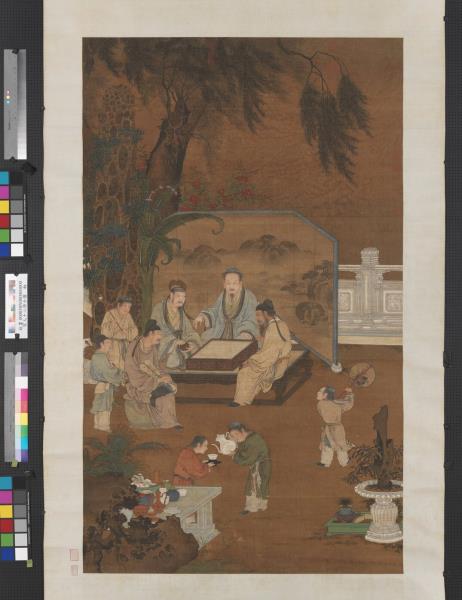
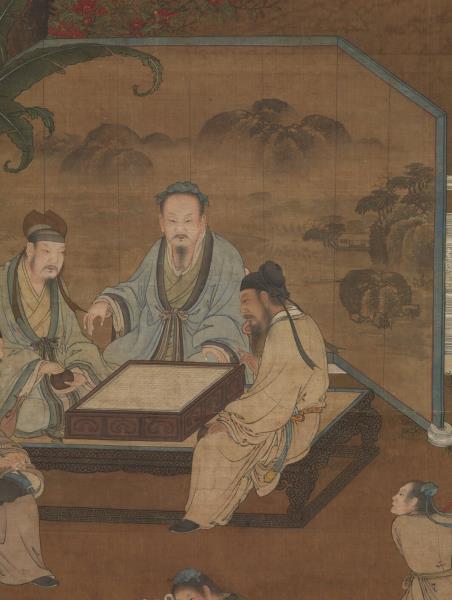
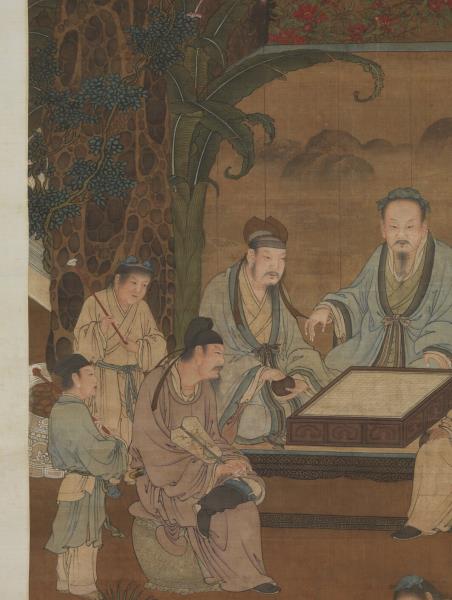
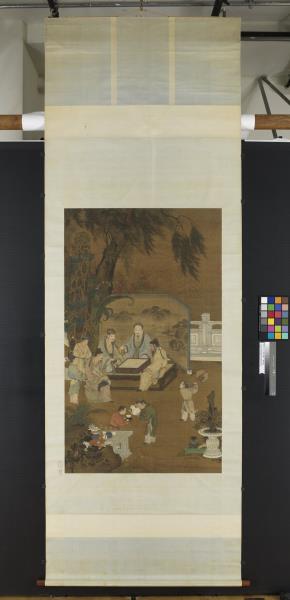
唐太宗命閻立本為文學館十八學士作畫,自此十八學士之題久為中國畫家所好。此圖宋人之作,畫學士二人對奕,二人旁觀,全神貫注,極為專一。
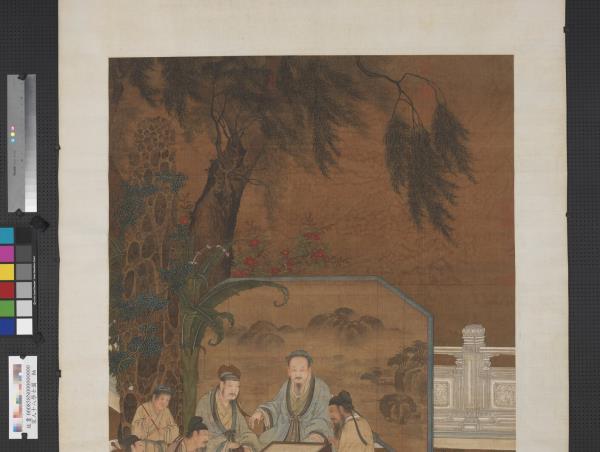
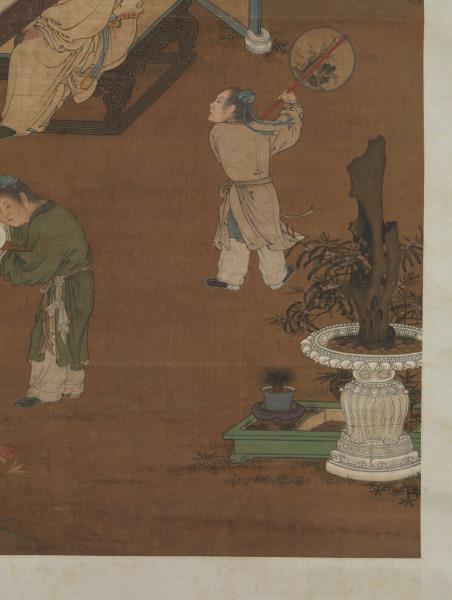
本幅構圖精妙,學士背後屏風與隨侍僕役形成一環,烘托主題,使四學士愈加突出。園中有柳、石榴花、巨石、芭蕉等。且有一奇石盆景,由此觀之,國人欣賞奇石之癖好,由來久矣。
|
| Description |
The T'ang Emperor Tai-tsung (r. 626-649) ordered the court painter Yen Li-pen to paint the eighteen scholars of the Wen-hsueh Kuan. From this point on, the theme was popular with Chinese painters. This rendition by an anonymous Sung painter portrays two scholars playing chess while two others look on with concentrated interest. The composition skillfully places the background elements and servants in a ring around the scholars, thereby highlighting the central importance of the four literati. In the garden are seen blooming pomegranates, willows, a large rock and a banana plant. A small, unusual rockery is also depicted, reflecting how early the Chinese developed their love of strangely shaped rocks.
|
| 網頁展示說明 |
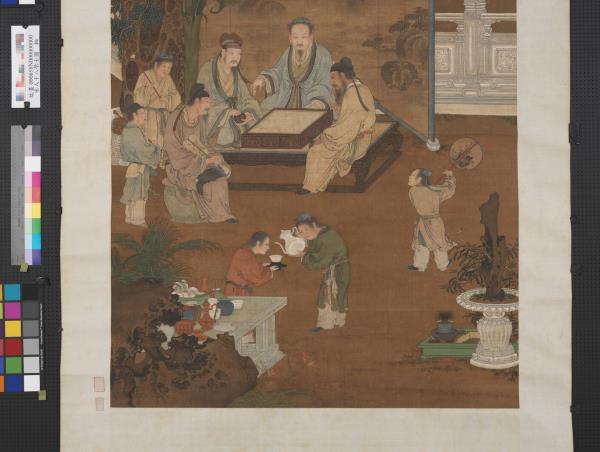
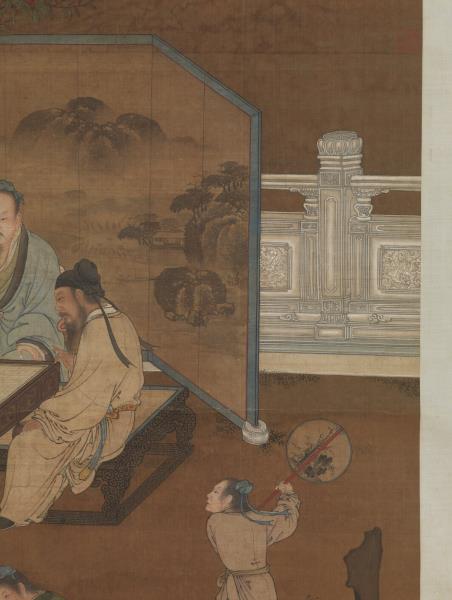
園苑柳枝迎風搖曳,綠蕉丹榴,以奇古石筍點綴,前有棕櫚、菖蒲、含羞草栽以佳器,置諸於庭中。士人圍坐於「剔犀」漆榻及瓷墩上,二對奕,二旁觀,表情凝神專注;數名侍僮分執如意、團扇隨侍在側。正中擺放八扇摺屏,陳設室外可擋風憑依。屏心繪有仿米家山水,雲漫山腰,叢樹朦朧,茅舍隱現。屏後漢白玉石欄杆,欄板雕飾張口吐舌身邊綴以雲朵的遊龍,方形覆蓮式柱頭,均為明代官式石工作法。
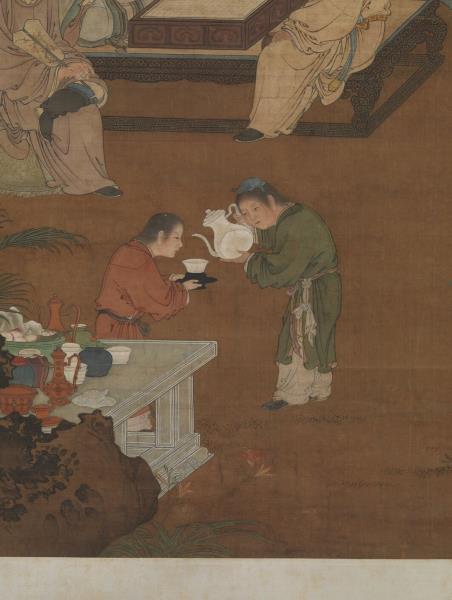
前方帶基座石桌滿置多樣茶酒器皿,盆內盛有冰鎮桃果。童僕手捧白瓷執壺、茶甌、黑漆托子,正欲注茶入碗。大型杏葉式執壺與白碗,胎質潔白瑩潤,為典型明代嘉靖(1522-1566)以後形制,其他嵌寶石金托、爵、執壺亦是。畫中器物用品精心陳設,呈現明代貴冑文士考究的生活賞玩。
(20121019)
|
| 網頁展示說明 |
Willow branches sway in the breeze, the garden setting here complemented by green banana leaves and red pomegranates as well as a fantastic, archaic-looking rock. Placed in front of the scenery are palm, calamus, and mimosa planted in beautiful vessels. Scholars sit on a carved polychrome lacquer daybed and a porcelain stool. Two of them are playing go as another two look on intently. Two attendants are holding backscratchers and another has a round fan. Behind the figures is a folding eight-panel screen, which can also be used as a windbreak. The screen is painted with a landscape in imitation of the Song dynasty Mi Fu and Mi Youren style as mists pervade the scene and envelope trees, a thatched hut partially visible. Behind the screen is a white marble railing, the panels of which are decorated with prancing dragons among clouds. The square post tops with inverted lotus motifs are typical of Ming court stone carving.
In the foreground is a foundation stone table filled with tea and wine vessels as well as a container with peaches on ice. One child attendant holds a white heart-décor porcelain pot and pours tea into the cup on a black-lacquered tray held by another. The teapot and bowl are pure white and lustrous, typical of Jiajing (1522-1566) porcelains and afterwards. The gem-inlaid golden tray, cup, and handled pots are also from this period. The vessels and accessories are all displayed with great refinement, reflecting the meticulous appreciation of refined beauty in the life of upper classes in the Ming dynasty.
(20121019)
|
| 網頁展示說明 |
庭園の柳が風に搖れている。芭蕉の葉の綠と石榴の赤、奇妙な形の石筍(筍形の岩石)が彩りを添えている。手前には、なかなかよい鉢に植えられた棕櫚や菖蒲、含羞草(オジギソウ)があり、それぞれ庭園內に配置されている。士人たちが?盤を囲んで剔犀(堆朱)の榻(寢台風の長椅子)と磁墩(磁器製の丸椅子)に腰を下ろしている。二人は囲?を打ち、ほかの二人はその様子を眺めている。その表情は真剣そのものである。侍僮が幾人かいて、それぞれ如意や団扇を持って側に控えている。畫面中央にある八扇摺屏(八曲屏風)は、室外で使えば風除けになる。屏風の絵は米芾を倣った山水畫で、山腰にたなびく雲、樹木生い茂る朦朧とした中に茅葺の家が見え隱れする風景が描かれている。屏風の後ろには漢白玉石の欄干がある。欄板には、口を開けて舌を伸ばし、雲の中を悠々と進む龍が彫刻されている。この彫刻と方形の覆蓮式柱頭は、いずれも明代宮廷に仕えた石工の作風である。
手前に置かれた台座付きの机には、茶器や酒器など様々な食器類が置かれ、盆には冷えた果物が盛られている。童僕の一人は白磁の執壺(持ち手つきの茶壺)を持ち、もう一人が持つ黑い茶托に載せた茶碗に茶を注ごうとしている。大きな杏葉式執壺と白い茶碗の胎は白く潤った艶がある。これは明代嘉靖年間(1522-1566)以降の典型的な様式で、寶石がはめ込まれた金托、爵、執壺もまた同様である。畫中の器物の配置にも気を配っており、明代の貴族階級の文士たちのこだわり─日々の暮らしの中で美を楽しんだ様子がよくわかる。
(20121019)
|
| 網頁展示說明 |
明式家具將材料、功能、設計互相結合,木材色澤柔和,紋理清晰,造型簡練,曲直變化流暢,具有「精、巧、雅」的特色。明代文人居室布置充滿豐富意蘊,使用的家具和器物陳設,體現文人生活品味與審美情趣。
剔犀大榻軟屜(面心用棕藤編織),鼓腿彭牙,帶托泥。榻體雕刻雲鉤、回紋、幾何紋,圖案迴環往復,斜面呈紅、黑、綠色相間線紋。漆器家具因製作費時費工,更費財力,代表著使用者的身份與地位。
瓷墩坐具,全器施淺色青釉,腹壁劃刻雙龍穿梭於纏枝番蓮、雲紋之間,此類「穿花龍」紋出現年代晚於雲龍紋樣,是明代中期流行的裝飾圖案。瓷墩上下邊緣飾凸起鼓釘一周,座底飾有花足。因其表面滿佈花紋,仿如覆蓋繡布,故又名「繡墩」。
(20121019)
|
| 網頁展示說明 |
Ming dynasty furniture represents a fine fusion of material, function, and design. The mellow wood hues, fine grain, and succinct shapes combine to make fluid forms featuring "precision, skill, and refinement." The residences of literati in the Ming dynasty were filled with overtones and meaning, turning furniture and display antiquities into embodiments of aesthetic tastes and tendencies in literati life at the time.
The large carved polychrome lacquer daybed has a soft woven palm-fiber surface, bulging legs, and runners. The lacquer is carved with cloud-hook, reticulated, and geometric patterns that circle the daybed. The carved lines reveal alternating layers of red, black, and green lacquer. The time and expense of producing lacquered furniture meant they were very expensive, thus representing the status and wealth of the owner.
This porcelain stool is covered with light celadon glaze, the body engraved with dragons shuttling amongst winding lotus and cloud patterns. This design of ″dragons amongst flowers″ appears later than dragons among clouds, representing a decorative motif popular in the middle Ming dynasty. The top and bottom rims of the porcelain stool are ringed by drum studs in relief, while the bottom is decorated with a flower base. Covered with floral decoration in imitation of brocade, this is also known as an ″embroidered stool.″
(20121019)
|
| 網頁展示說明 |
明代の家具は、材料・機能・設計の三者が互いに結び付いています。木材の柔らかな色合い、くっきりした模様、シンプルなデザイン、流れるような曲線の変化など、「精、巧、雅」がその特色だと言えます。明代文人の居室の調度品は実に趣深く、実際に使用した家具や器物には、文人たちの気品溢れる暮らしぶりや、その審美感が表れています。
この剔犀(堆朱)の大榻軟屜(寢台風の腰掛で座面は棕藤を編んだもの)は鼓腿彭牙(腳が外側に丸く張り出している形)で、托泥(腳を載せる木枠)が付いています。榻は雲鉤と回紋、幾何紋による反復模様がぐるりと彫刻され、斜めの部分は赤と黑、綠を交互に配した線紋で飾られています。漆器家具の製作は時間も手間もかかる上、かなり高価なもので、持ち主の身分や社会的地位を象徵しています。
この磁墩(磁器製の腰掛)は全体に淡い青釉が施され、胴に纏枝番蓮と雲紋の間を縫うようにして進む雙龍が描かれています。このような「穿花龍」の紋様は雲龍の紋様より後に現われました。明代中期に流行した裝飾模様です。磁墩の上下の緣は突出した鼓釘がめぐらされ、底は裝飾的な花足になっています。表面にびっしりと模様が施され、刺繍した布で覆ったように見えるため、「繍墩」とも言われます
(20121019)
|
| 網頁展示說明 |
白瓷執壺,撇口、頸微束、溜肩,扁腹兩側呈杏葉形凸起。細長流與壺口同高,扁型柄呈曲狀。由器型來推測,扁壺的年代應該可以定在十六世紀後半及十七世紀前半之間。搭配之仰鐘式碗,撇口,深直壁,矮圈足,此類碗型流行於宣德(1426-1435在位)年間。
嵌寶石金執壺酒具一套,瓜棱型執壺蓋頂為寶珠鈕,蓋面作二層階梯狀,流、柄、周身鑲嵌松綠石與各色寶石,造型紋飾繁複,構思巧妙;前方溫酒大碗腹部鑲嵌連珠紋寶相花及菱花紋。另一件金盞與托盤,盞為圓形、敞口、圈足,外壁光素,兩側焊接如意形耳,口沿飾連珠紋。運用珠寶鑲嵌金銀器盛行於明代中、晚期,此套器物裝飾華麗,具有濃厚的宮廷氣息。
白玉花柄桃式杯,柄呈花枝狀,托盤呈凹卷荷葉形,內壁淺劃葉脈紋。盤中凸起高台,可納杯足。南宋以來玉雕桃形杯就一直可見,明代特別多。明代中、晚期,因受道教的影響,桃形器極為盛行,桃式杯含長壽之意,寓意吉祥。一般來說,明代玉雕桃形杯枝梗部份較寫實,也少見桃形杯配置托盤之例,而托盤很少製作成荷葉形。
(20121019)
|
| 網頁展示說明 |
The white porcelain handled pot has a flaring mouth, constricted neck, and sloping shoulders, both sides of which have an apricot-leaf form standing out from the surface. Its slender spout is as tall as the opening, and the vessel has a reticulated flat handle. This type of flat pot probably dates from the last half of the sixteenth or first half of the seventeenth century. Accompanying it is a cup in the shape of an inverted bell, its flaring rim, deep body, and short base reflecting a form popular during the Xuande reign (1426-1435).
This gem-inlaid golden handled pot is part of a wine vessel set. The cover of this melon-shaped pot is rendered in two levels and topped with a semi-precious stone knob. The spout, handle, and body are also inlaid with turquoise and semi-precious stones, the shape quite complex and ingeniously designed. In front is a large wine-warming bowl inlaid with gems in continuous bead and floral patterning, accompanied by a small golden cup and tray. The cup has a flaring rim, raised foot, and plain body with two "ruyi"-shaped" handles welded onto the sides, the rim featuring a continuous bead design. The use of precious inlays on gold and silver vessels was popular in the middle and late Ming dynasty, this set featuring gorgeous decoration much in the manner of the imperial court.
(20121019-E1)
|
| 網頁展示說明 |
The floral-stem peach-shaped white jade cup is named after its floral-stem handle. Its tray here is in the form of a curving lotus leaf, the inside of which is decorated with shallow vein engraving and the center raised to serve as a cup stand. Jade peach-shaped cups appeared in the Southern Song period and became especially numerous later in the Ming dynasty. In the middle and late Ming, under the influence of Taoism, such vessels shaped like a peach (symbolizing immortality) became extremely popular due to their auspicious overtones of longevity. Generally speaking, Ming jade peach-shaped cups have more realistic stems, and few examples have a tray, with fewer still rendered in the shape of a lotus leaf.
(20121019-E2)
|
| 網頁展示說明 |
この 白磁の執壺(茶壺)の口は外側に開き、首はややすぼまっています。肩は滑らかな曲線を描き、胴の両側は杏葉の形が突出しています。注ぎ口と壺口の高さは等しく、扁型の曲がった持ち手が付いています。器型から推測するに、偏壺の年代はおそらく16世紀後半から17世紀前半のものと思われます。鐘を逆さにしたような形の茶碗の口も外側に開いており、見込みは深く直線的で高台は低くなっています。このような形の茶碗は宣德時代(1426-1435)に流行しました。
寶石がはめ込まれた金執壺と酒器一揃いが置いてあります。瓜棱型執壺のふたのつまみは寶珠形で、ふたは二層になっています。注ぎ口と持ち手、壺本体にトルコ石など色とりどりの寶石がはめ込まれています。造形も裝飾紋様も複雜で工夫が凝らされています。手前の溫酒大碗の胴も寶石をはめ込んだ連珠紋と寶相花、菱花紋で飾られています。その手前にある金盞(杯)と托盤(杯を載せる盤)を見ると、盞は円形で口が外側に開き、高台があります。胴は無紋で両側に如意形の耳が付けられ、口緣は連珠紋で飾られています。寶石をはめ込んだ金銀器は明代中期から晩期に流行しました。ここに描かれた器物はどれも華麗な裝飾が施されており、宮廷の雰囲気が濃厚に漂っています。
(20121019-J1)
|
| 網頁展示說明 |
この 白玉花柄桃式杯の持ち手は花の枝のようです。蓮の葉形の托盤は底がへこんでやや丸まり、表面に葉脈が浅く彫られており、中央の突出した部分に杯の底が納まるようになっています。南宋以來、玉を彫刻した桃形の杯が繼続して作られましたが、明代はとりわけ多く見られます。明代中期から晩期にかけては道教の影響を受けて、桃形器が盛んに作られました。桃形の杯には長寿や吉祥の意が込められています。一般的に明代の玉彫桃形杯の枝部分は写実的です。桃形杯を置く托盤の例は少なく、托盤が蓮の葉形に作られることもほとんどありませんでした。
(20121019-J2)
|
| 網頁展示說明 |
庭中雅趣-盆景、盆栽:明代文人重視園林生活之美,喜蓄養花木盆景以美化環境,為居家生活增添高雅品味。〈明人十八學士圖〉畫中植物品類可分:林木類(羅漢松、梧桐、槐、雀梅)、花卉類(牡丹、萱花)、觀葉類(棕櫚、菖蒲、芭蕉)、竹類(斑竹)、草本類(含羞草)等類型。長方型盆器,淺腹直壁平底,口部折沿平伸,中間有「S」分隔板,下接四雲形足。此為水旱盆景,一部分貯水,一部分盛土,同一只盆內合植菖蒲與含羞草。盆器上置 鈞窯仰鐘式花盆,下承 紫色鈞窯鼓釘洗承盤,主要是承接盆內滲漏的水份,兼具增高、裝飾功能。 // 庭石:獨塊造型奇特的太湖石,古樸蒼勁,栽於精緻的 葵口須彌座底座。台座打出窪槽,將奇石置放其中,填以美麗卵石。畫中所繪為皇家苑囿賞石所配用之覆蓮式漢白玉台座,色澤潔白,質地細膩而溫潤。
(20121019)
|
| 網頁展示說明 |
Courtyard Refinements: Potted Scenes and Plants : Ming literati emphasized beauty in garden life, using potted plants and scenery to embellish the surroundings and add lofty elegance to their residences. The garden vegetation found in "The Eighteen Scholars" includes various types of trees (Buddhist pine, paulownia, locust, Chinese sweet plum), flowers (peony, lily), ornamental foliage plants (palm, calamus, plantain), bamboo (mottled bamboo), and grasses (mimosa).Resting on four cloud-shaped feet, this rectangular planter has a shallow body and a flat extending rim with an "S"-shaped divider in the middle. This is a combination wet-dry planter, with one part holding water and the other earth for both calamus and mimosa plants. Placed within the planter is a Jun porcelain bowl in the shape of an inverted bell that rests inside a purple Jun porcelain drum-stud washer basin to hold the water seeping through, thus serving both aesthetic and practical functions. // Courtyard Rockeries:An exotic Lake Tai garden rock appears craggy and archaic sitting within a delicate raised platform planter with a foliated rim. The stand fluted, the rock stands in the middle to add beauty to the scenery. The marble stand in the form of an inverted lotus used for a rockery in an imperial garden is pure white in color, fine-grained, and mellow in appearance.
(20121019)
|
| 網頁展示說明 |
庭園の雅趣─寄せ植えと鉢植え: 明代の文人たちは庭園での過ごし方とその美に重きを置き、花木や鉢植えを育てて暮らしの彩りとし、日常生活に趣を添えました。「明人十八学士図」に描かれている植物は次のように分類されます。樹木類(羅漢松、桐、槐、雀梅)、花卉類(牡丹、萱花)、観葉植物類(棕櫚、菖蒲、芭蕉)、竹類(斑竹)、草本類(含羞草)。長方形の鉢の胴は直線的で浅く、底が平らです。口は外緣で平たく、中間にS字型の仕切り板があり、雲形の足が四つ付いています。これは「水旱盆景」で、水と土を別々に入れることができるので、一つの鉢に菖蒲とオジギソウが植えられています。この鉢の上には 鈞窯の仰鐘式花盆(鉢)が置いてあり、 紫色の鈞窯鼓釘洗承盤に載せてあります。これは鉢から溢れた余分な水を受けるためで、鉢の高さを增すだけでなく、裝飾的な意味合いもあります。 // 庭石 :独特の形狀の太湖石は、古めかしく素朴でありながら力強く、精緻な造りの 葵口須彌座の上に置かれています。この台座には窪みがあり、そこに奇石が入れられ、美しい卵石で隙間が埋められています。ここに描かれている、皇家庭園での奇石観賞用に配された覆蓮式漢白玉台座の色は清らかに白く、肌理細やかで溫かな潤いが感じられます。
(20121019)
|
| 參考書目 |
1.林莉娜;〈明人十八學士圖(棋)〉,收入林莉娜主編,《文人雅事 明人十八學士圖》(臺北:國立故宮博物院,2012年十月初版),頁18-23、49-57。
2.林莉娜;〈關於明人十八學士圖之考析〉,《故宮文物月刊》,第356期(2012年11月份),頁72-87。
3.洪順興;〈鑑古知今—談宋人十八學士圖的設色技法與畫中掛軸裝裱〉,《故宮文物月刊》,第356期(2012年11月份),頁88-95。
|
| 參考書目 |
林莉娜,〈宋人十八學士圖 軸〉,收入《文人雅事-明人十八學士圖》(臺北:國立故宮博物院,2012.10),頁18-23、49-57。
|
| 參考書目 |
〈宋人十八學士圖 軸〉,收入國立故宮博物院編輯委員會、林莉娜主編《畫中家具特展》(臺北:國立故宮博物院,1996.10),頁52-53、120。
|
| 收藏著錄 |
石渠寶笈三編(御書房),第七冊,頁3081
|
| 收藏著錄 |
故宮書畫錄(卷五),第三冊,頁136-137
|
| 收藏著錄 |
故宮書畫圖錄,第三冊,頁59-60
|