| 類別 |
參考資料 |
| 內容簡介 |
王振鵬(1275- 1328), 浙江永嘉人, 字朋梅, 仁宗朝(1311-1320)賜封孤雲處士. 任職於秘書監典簿, 後累官至漕運千戶.
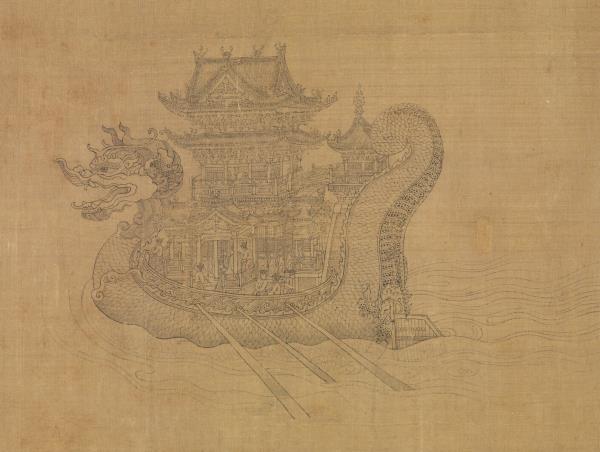
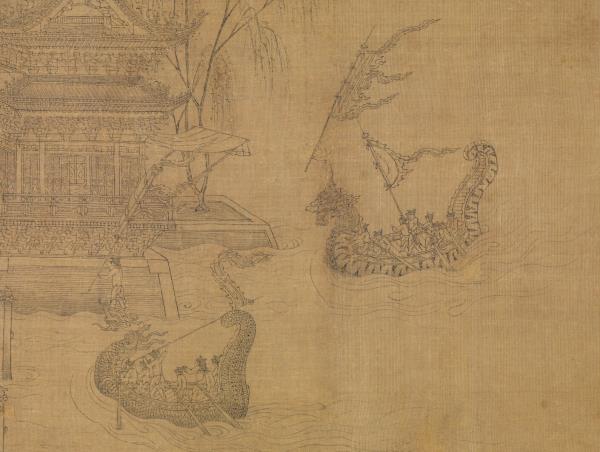
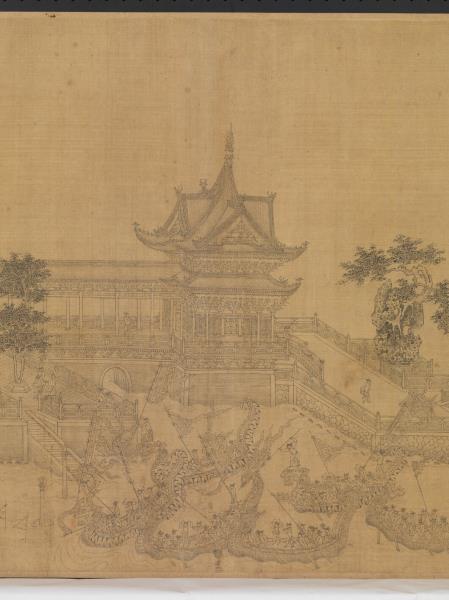
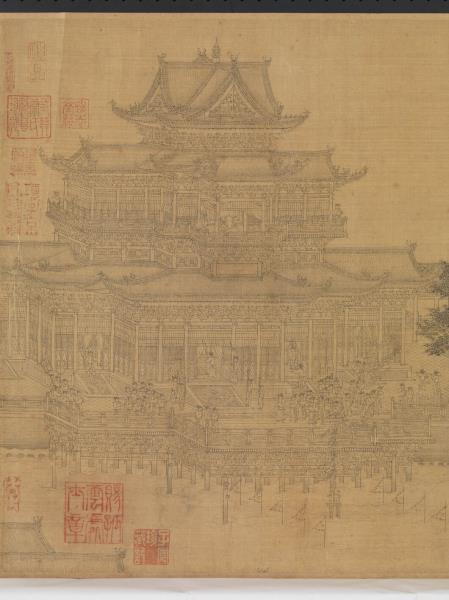
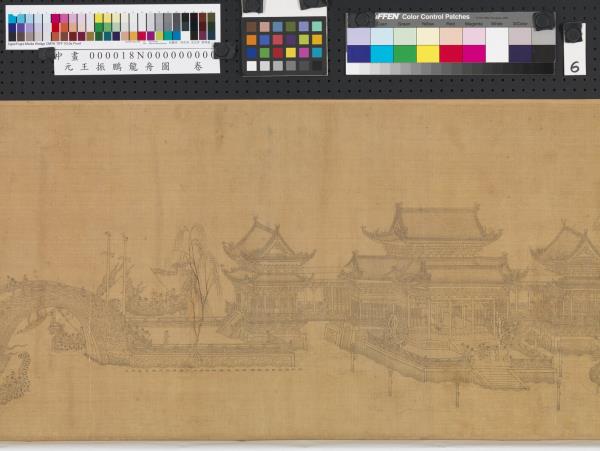
圖繪金明池爭標景象, 寶津殿築於磚石台基上, 前為臨水木柱基座, 四周全用平坐. 斗栱式樣多而且繪法精準, 兼用下昂、上昂, 並有補間鋪作. 元代補間與柱頭斗栱較宋突出, 已無出跳位置不等的早期特點.
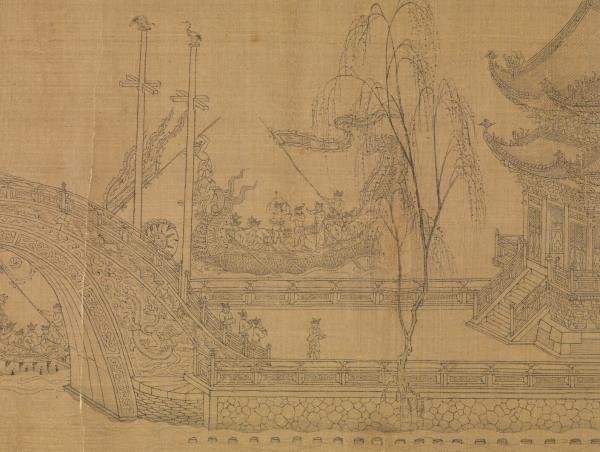
柱頭上皆施闌額和普拍枋, 轉角柱出頭處垂直截取, 仍沿遼代舊規. 中段歇山頂殿亭採「減柱造」, 設月梁及垂蓮柱, 柱身比例高大, 室內空間顯得寬敞.(林莉娜)
|
| 內容簡介 |
王振鵬(約西元一二八○—一三二九年),嘉定人。字鵬梅,受知仁宗,賜號孤雲處士。善界畫,妙在運筆和墨,毫分髮析,左右高下,俯仰曲折,方圓平直,曲盡其體,而神氣飛動,不為法拘。
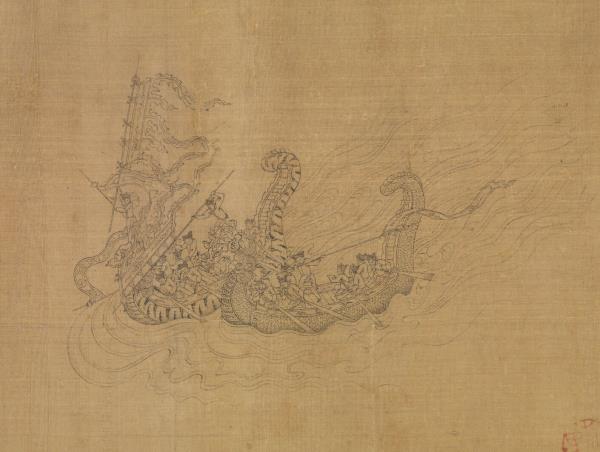
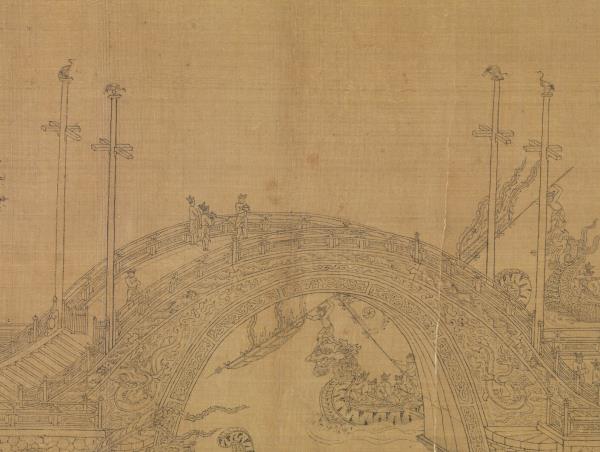
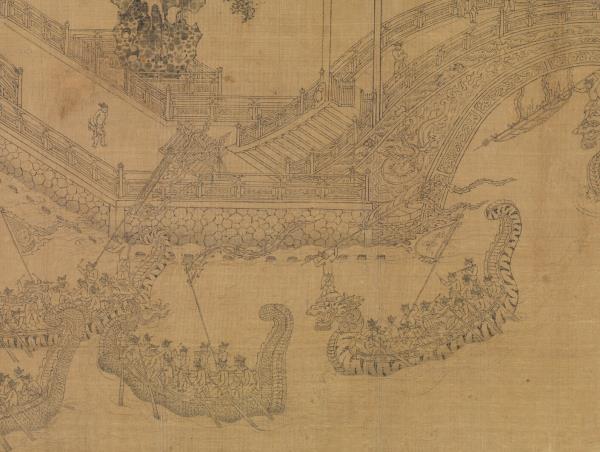
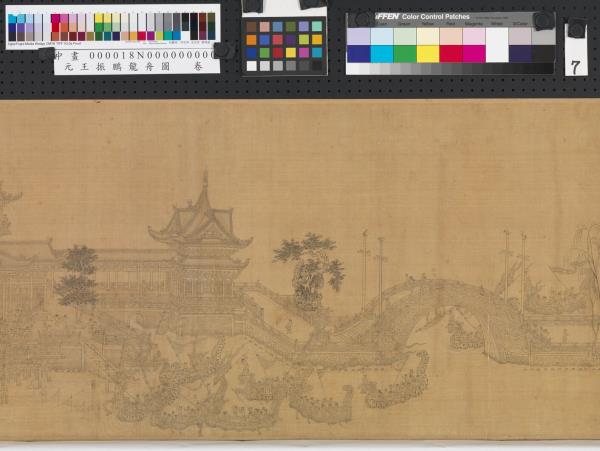
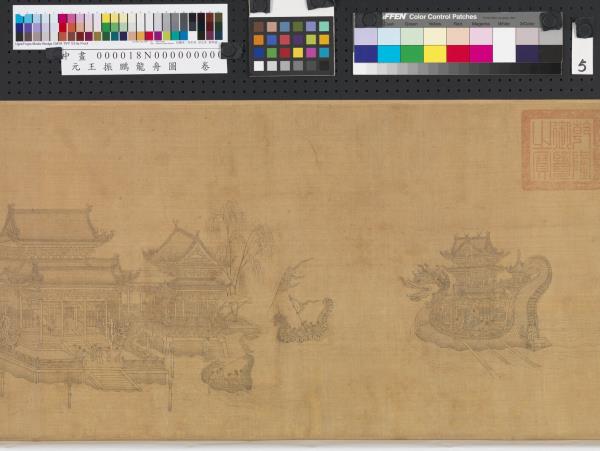
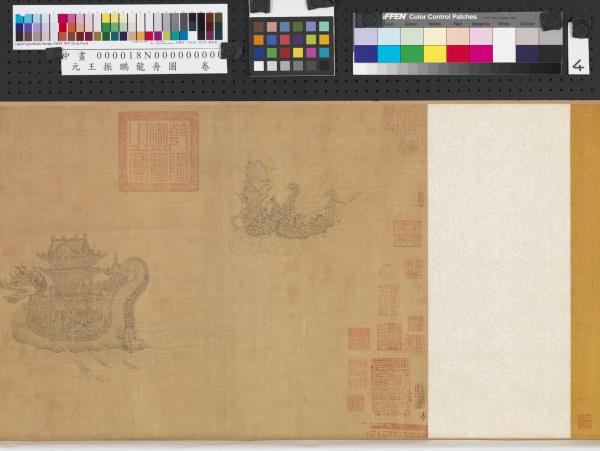
本幅畫大、小龍舟穿梭在臺榭拱橋間競渡的情景,均勻的線條,巨細靡遺的描繪出所有景物的細節,筆筆工整穩健,顯見作者界畫的功力。
|
| 內容簡介 |
王振鵬(約活動於1280-1329)元成宗、順帝時人,至正十年(1350)尚在。字朋梅,浙江永嘉(溫州)人。受到元仁宗(1312-1320在位) 重用,號「孤雲處士」,令其任職秘書監典簿,後累官至漕運千戶。仁宗尚為皇太子時,曾進呈「龍池競渡圖」賀其生日,後皇姊大長公主(1283前後-1331)舉行雅集又請他照畫壹卷,今傳世本多依據原跡摹製,此類題材本院共收有三卷。此卷描繪宋代皇室演習水軍之處 – 金明池,宋徽宗(1101-1125在位)政和年間(1111-1117)於池內建殿宇,寶津樓為皇帝觀看水戲爭標之殿。池中心有拱橋,橋盡處建有一組殿堂﹐是皇帝遊樂起居處及賜宴群臣的地方。
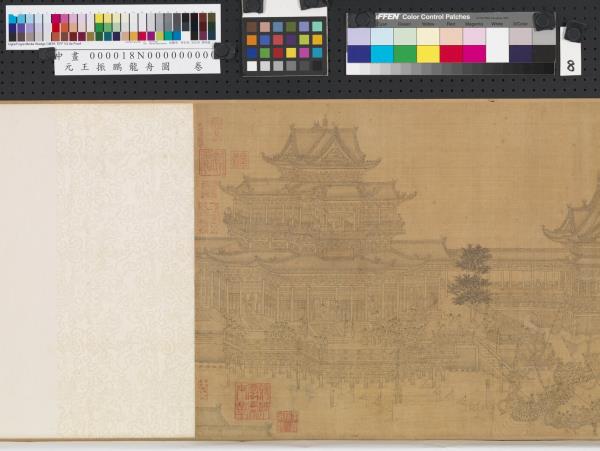
王氏是元代界畫高手,專以墨線疏密、交叉各種線條變化,來區分建築各部質感與體積,代替了前人設色或淡墨渲染的作法。此卷屋頂、斗栱、台階、欄杆繪法多樣且精準,保留了元代木建築結構珍貴的資料。(林莉娜)
|
| 內容簡介 |
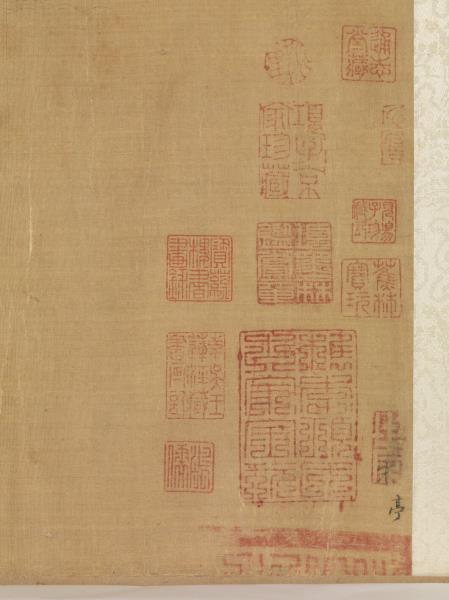
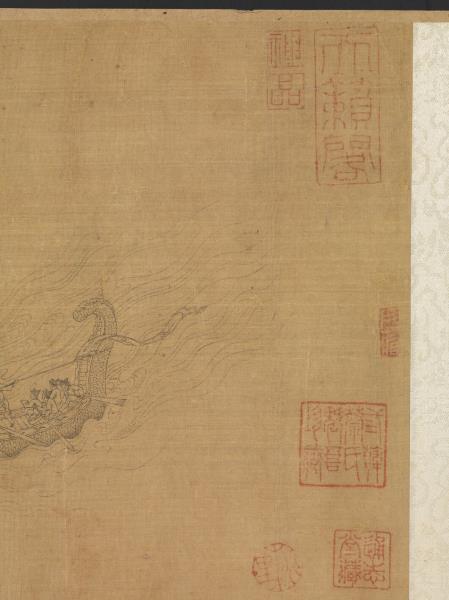
王振鵬(約西元一二八0 —一三二九年),嘉定人,官至漕運千戶。最擅作宮殿樓閣等建築界畫,極得仁宗賞識,賜號孤雲處士。界畫極工緻,能於筆致纖細中,不失飛動的氣勢。本幅畫大、小龍舟穿梭在臺榭拱橋間競渡的情景,均勻的線條,巨細靡遺地描繪出景物的細節,筆筆工整穩健,顯見作者界畫的功力。卷前右下有千字文第六二四「亭」字編號,幅間鈐有項元汴「天籟閣」諸印。
|
| 內容簡介 |
王振鵬(約1280–1329),嘉定(今浙江永嘉)人,字朋梅,因畫藝受知於元仁宗,賜號孤雲處士,任職秘書監典簿,掌歷代書畫及圖籍,為元代重要的界畫家。
此卷描繪金明池內、龍舟穿梭於臺榭拱橋間的競渡景象,以墨線疏密的變化與線條交叉的組合,表現建築結構的體積與質感,所作白描墨線工整穩健,能以纖細筆意營造飛動的氣勢,斗栱類型雖多卻無雜亂之感,為元代界畫的典型。
(20120714)
|
| Description |
Wang Zhenpeng, a native of Jiading (modern Yongjia, Zhejiang), had the style name Pengmei. Recognized for painting by Emperor Renzong, he was awarded the sobriquet Guyun chushi. He served as Archivist in the Palace Library in charge of illustrations, paintings, and calligraphies, also being an important “ruled-line” painter. This handscroll is a pavilion-and-bridge scene of a dragon boat race on Lake Jinming. Done in varying densities of ink lines to form groupings, they reveal the form and substance of the architecture. The baimiao ink lines are steady and meticulous, but the fine brushwork still creates a dynamic force. The numerous columns and brackets do not appear chaotic, making this a classic example of Yuan dynasty ruled-line painting.
(20120714)
|
| Description |
Wang Zhenpeng, a native of Jiading, rose to become Commander of the Transport Office. Excelling at palace pavilions and towers using ruled-line painting, he was highly appreciated by Emperor Renzong (Buyantu Khan), who presented him with a sobriquet. His ruled-line works are quite refined and, despite the precise brushwork, do not lack liveliness. This work depicts large and small dragon boats in magnificent tower and arched bridge scenery. Even lines depict all the details, each stroke exact and steady, reflecting the artist’s ruled-line skill. In the lower right part is the character “ting 亭,” the 624th in the “Thousand Character Classic.” In addition to this accession number of Xiang Yuanbian are his seals from the Hall of Heavenly Sounds.
|
| Description |
Wang Chen-p'eng, a native of Yung-chia, served under Emperor Jen-tsung at court. He excelled at ruled-line painting, using the brush to render steady strokes as fine as hair. Regardless of the view, the forms in his works appear complete and solid. The spirit of his style, however, was unhampered by this technique.
This work shows large and small dragon boats engaged in a regatta by a pavilion. Not a single detail is missing from the scene as the brushwork is exceptionally fine and steady, thus clearly revealing the accomplished skill of the artist in the technique of ruled-line painting.
|
| Description |
Wang Cheng-'eng, a native of Chekiang, served as an official, though he is probably best known for his meticulous ruled-line paintings.
This is an interpretation of a regatta once held at the Chin-ming Pond in front of the Pao-chin Hall (at the far left), where a pennant indicates the end of the race. This handscroll reveals a large variety of detailed brackets with tips pointing up and down. In Yuan paintings, the number and height of brackets were increased, creating for detail and complexity. A building at the right features "column elimination," which involves cutting off the lower parts of select columns. Here, they are supported with crescent beams and decorated. Unhindered space can thus be created.
|
| 收藏著錄 |
盛京故宮書畫錄,第三冊,頁21
|
| 收藏著錄 |
故宮書畫錄(卷四),第二冊,頁123
|
| 收藏著錄 |
故宮書畫圖錄,第十七冊,頁207-210
|
| 研究性論著 |
王振鵬(1275- 1328)浙江永嘉人, 字朋梅, 仁宗朝(1311-1320)受寵賜封孤雲處士. 王振鵬因畫藝受知於元仁宗, 令他任職於秘書監典簿( 元代掌管書畫及歷代圖籍的主要機構 ) 得遍觀古圖書, 後累官至漕運千戶, 總理海運於江陰常熟之間. 其作品迎合皇室的需要, 直接以宮廷建築為主題, 專用墨線白描法畫建築, 並以墨線深淺、疏密、平行、交叉之不同, 來區分建築各部的質感、材料和體積感, 代替以前的設色或淡墨渲染的畫法.
王氏是元代最重要的界畫家, 其風格特色為準確與細緻. 元代虞集在為其父所撰墓誌銘中稱他的畫藝是「運筆和墨, 毫分縷析, 左右高下, 俯仰曲折, 方圓平直, 曲盡其體, 而神氣飛動, 不為法拘.」
主殿屋頂為十字脊重檐歇山式, 正中有火燄寶珠裝飾. 殿頂鴟吻、瓦隴、脊獸完備, 精巧富麗. 畫中主殿四周全用平坐, 平坐立在水中作為水上平台和水上建築的基座, 可以繞圈行走. 此圖斗栱形式多樣且繪法精準, 根據每種斗栱特殊之用途而異其形制, 或承檐、 承平坐、 承梁枋, 或在柱頭轉角補間, 類型雖多卻無雜亂之感. 主殿只在明間用兩朵補間鋪作, 次、梢間都用一朵. 上層平坐用上昂, 上昂作用是增加鋪作高度, 減少挑出深度, 用於平坐外檐外跳. 上昂構造實物遺存很少, 元代建築中偶而使用, 此為珍貴資料. (註 1)元代補間斗栱與柱頭斗栱較宋更突出, 已無出跳位置不等的早期特點.
殿之內外柱頭上, 皆施闌額和普拍枋, 普拍枋的使用在元代很普遍, 且多已隨闌額一道至角出頭, 並加飾腳. 殿堂轉角處角柱上闌額出頭處, 垂直截取, 仍沿遼代舊規, 有利於結構的緊固.(註 2) 元代的柱比宋代細長, 柱高在建築總高中所佔比例增大. 卷之中段歇山頂殿前涼亭原有兩排柱子, 殿內柱子大量減去, 緊挨主殿裝設兩個月梁及一個垂懸蓮柱, 支撐軒的屋頂, 室內空間顯得寬敞, 改善室內採光效果, 此乃「減柱造」, 在元代常用. 垂蓮柱此種構件在主體結構上沒有多大承重作用, 但對外檐裝飾卻有豐滿壯麗的效果.
台基是此卷全部建築物的基礎, 四角轉角處有角柱石, 四周沿邊上面平鋪階條石, 中央是慢道, 由花磚或整石雕成的斜面, 刻滿龍鳳紋樣的御路, 富麗尊貴, 是皇宮才適用. 裝修是房屋、門窗、戶牖等小木作的總稱, 此圖所繪為菱花格扇(宋稱格子門) 門扇分為格眼、障水板與腰華板三個部份.(林莉娜)
|
| 參考書目 |
1.林莉娜,〈元王振鵬龍舟圖〉,收入林莉娜主編,《宮室樓閣之美 - 界畫特展》(臺北:國立故宮博物院,2000年初版),頁44-47、106-107。 2.陳韻如,〈「界畫」在宋元時期的轉折:以王振鵬的界畫為例〉,《國立臺灣大學美術史研究集刊》,第26期(2009),頁135-192。
|
| 網頁展示說明 |
王振鵬(1275-1328)浙江永嘉人,字朋梅,仁宗朝(在位1311-1320)受寵賜封孤雲處士。王振鵬因畫藝受知於元仁宗,令他任職於秘書監典簿( 元代掌管書畫及歷代圖籍的主要機構。
王氏是元代最重要的界畫家,其風格特色為準確與細緻。作品迎合皇室的需要,直接以宮廷建築為主題,專用墨線白描法畫建築,並以墨線深淺、疏密、平行、交叉之不同,來區分建築各部的質感、材料和體積感,代替以前的設色或淡墨渲染的畫法。
卷左主殿屋頂為十字脊重檐歇山式,正中有火燄寶珠裝飾。殿頂鴟吻、瓦隴、脊獸完備,精巧富麗。畫中主殿四周全用平坐,另有平坐立在水中作為水上平台和水上建築的基座,可以繞圈行走。此圖斗栱形式多樣且繪法精準,類型雖多卻無雜亂之感。主殿在當心間用兩至三朵補間鋪作,次、梢間用一至兩朵。元代補間斗栱與柱頭斗栱較宋更突出,已無出跳位置不等的早期特點。
殿之內外柱頭上,皆施闌額和普拍枋至角出頭,並加飾腳。元代的柱比宋代細長,柱高在建築總高中所佔比例增大。卷之中段歇山頂殿前涼亭原有兩排柱子,殿內柱子大量減去,緊挨主殿裝設兩個月梁及一個垂蓮柱,支撐軒的屋頂,室內空間顯得寬敞,改善室內採光效果,此乃「 減柱造 」,在元代常用。
水上台基是此卷全部建築物的基礎,四角轉角處有角石、角柱石,四周沿邊上面平鋪壓闌石,中央是踏道,由花磚或整石雕成的斜面,刻滿龍鳳紋樣的御路,富麗尊貴,是皇宮才適用。
王振鵬根據宋孟元老<<東京夢華錄>>所載,描繪宋太宗太平興國七年( 982 )於東京爭標演習水軍景象,對金明池中建築物描寫淋漓盡緻,寶津樓是皇帝觀看爭標賜宴的所在。元仁宗尚是皇太子生日王振鵬進呈「龍池競渡圖」為賀,過十年多至治癸亥(1323),皇姐祥哥剌吉皇姊大長公主(1283前後-1331)舉行雅集請他照畫一卷,今傳世本都是根據原跡忠實仿製。「 龍舟圖 」白描未施墨染,用筆疏簡隨意,是未完成的樣稿,或許是「龍池競渡圖」原畫樣本。 (林莉娜)
|
| 網頁展示說明 |
Wang Cheng-p'eng, a native of Chekiang, was bestowed with a sobriquet by Emperor Jen-tsung (1312-1320). Though he eventually went on to serve as Grain Transport Commissioner, he is probably best known for his meticulous ruled-line paintings.
This is an interpretation of a regatta that was once held at the Chin-ming Pond in front of the Pao-chin Hall (shown at the far left with a cross-shaped roof), where the banquet was held and in front of which is seen a pennant in the water indicating the end of the race. The large terrace in front of the hall extends over the water and is supported by numerous columns underneath. The hall itself is surrounded by an open area. This handscroll reveals a large variety of brackets painted with great detail, and the cantilever tips in the bracketing point up as well as down. In Yuan dynasty paintings of buildings, the number and height of brackets were increased, creating for an exceptionally intricate and complex scene.
A lintel and topping lintel (p'u-po fang) are shown above the columns as they decoratively protrude from the corners. The first main building from the right features "column elimination," which involves cutting off the lower parts of select columns. Here, they are supported above with crescent beams and bear lotus designs. Combined with the large timber of the columns, unhindered space can thus be created.
|