| 文物統一編號 |
故畫000859N000000000
|
| 作品號 |
故畫00085900000 |
| 品名 |
宋人十八學士圖 軸
"The Eighteen Scholars" (Painting) |
| 分類 |
繪畫 |
| 數量 |
一軸 |
| 印記類別 |
印主 |
印記 |
| 鑑藏寶璽 |
清內府印 |
三希堂精鑑璽 |
| 鑑藏寶璽 |
清內府印 |
石渠寶笈 |
| 鑑藏寶璽 |
清內府印 |
宜子孫 |
| 鑑藏寶璽 |
宣統帝 |
宣統御覽之寶 |
| 鑑藏寶璽 |
清高宗 |
乾隆御覽之寶 |
| 鑑藏寶璽 |
清高宗 |
乾隆鑑賞 |
| 鑑藏寶璽 |
清仁宗 |
嘉慶御覽之寶 |
| 鑑藏寶璽 |
清仁宗 |
嘉慶鑑賞 |
| 鑑藏寶璽 |
清仁宗 |
寶笈三編 |
| 主題類別 |
主題(第一層) |
主題(第二層) |
主題說明 |
| 主要主題 |
人物 |
高士(士人、隱士) |
4人 |
| 主要主題 |
器用 |
文玩(琴棋書畫) |
|
| 次要主題 |
人物 |
侍從(侍女、童僕) |
5人 |
| 其他主題 |
山水 |
奇石 |
文石 |
| 其他主題 |
建築 |
庭院 |
|
| 其他主題 |
建築 |
欄杆 |
|
| 其他主題 |
器用 |
|
盥具、扇、麈尾、畫叉 |
| 其他主題 |
器用 |
花器 |
|
| 其他主題 |
器用 |
傢俱(屏風) |
|
| 其他主題 |
樹木 |
竹 |
|
| 其他主題 |
樹木 |
柏 |
|
| 其他主題 |
樹木 |
槐樹 |
|
| 技法 |
技法細目 |
| 人物衣紋描法(粗細線條) |
|
| 工筆 |
|
| 界畫 |
|
| 類別 |
參考資料 |
| 內容簡介 |
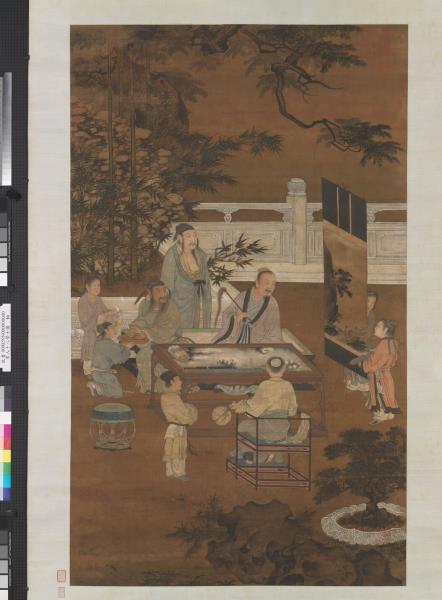
唐太宗起文學館,收聘賢才,以杜如晦、房玄齡、于志寧、蘇世長、薛收等十八人,並為學士。旋收卒,復召劉孝孫補之,命閻立本圖像,褚亮為贊,題名字爵里,號十八學士。
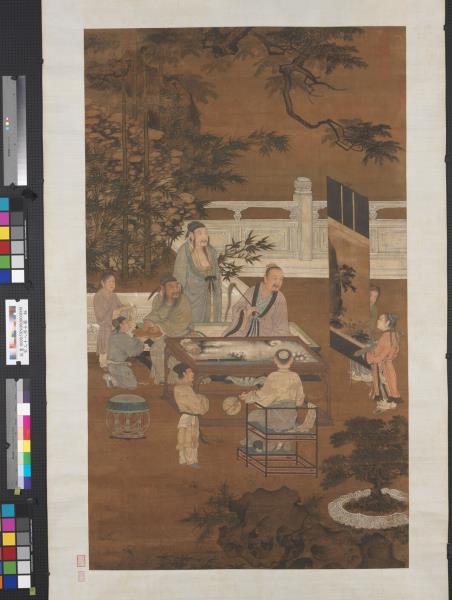
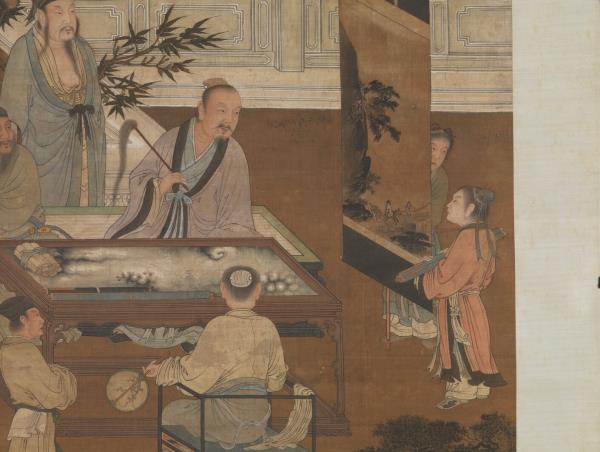
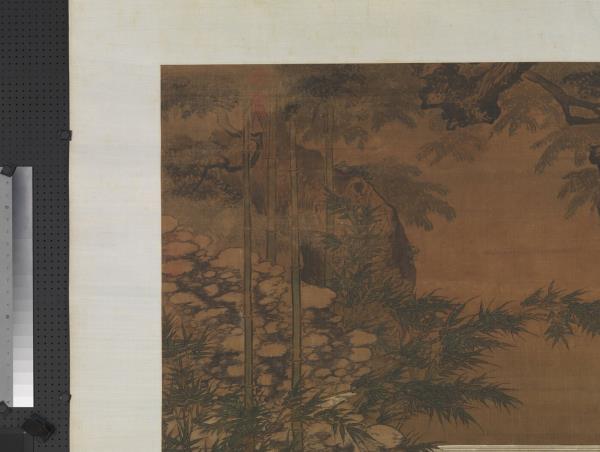
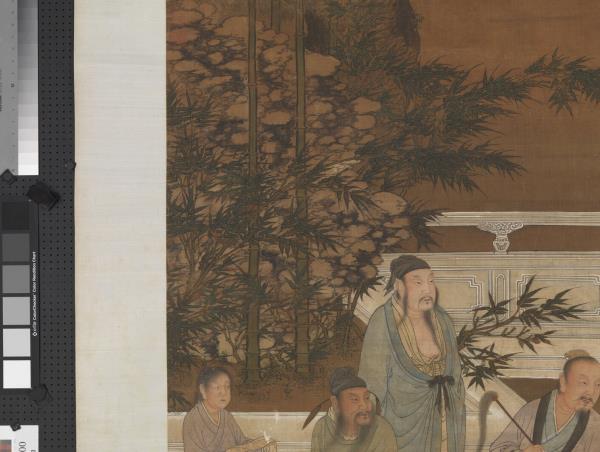
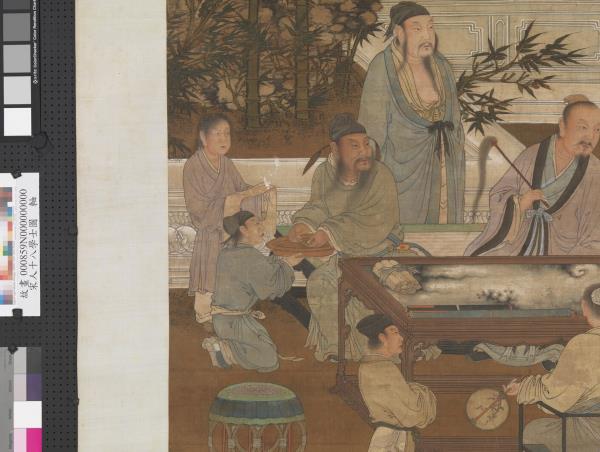
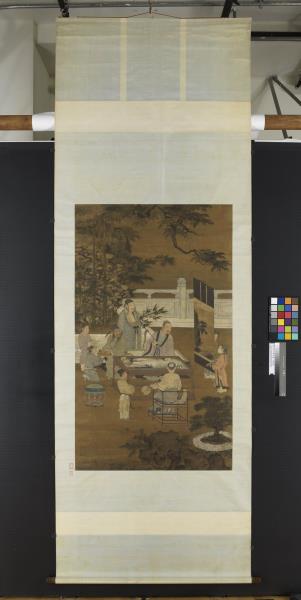
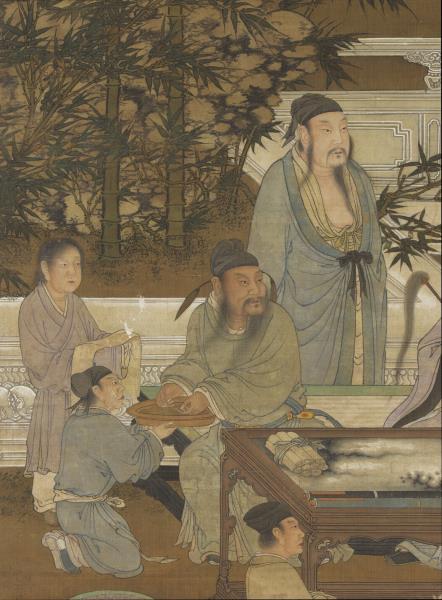
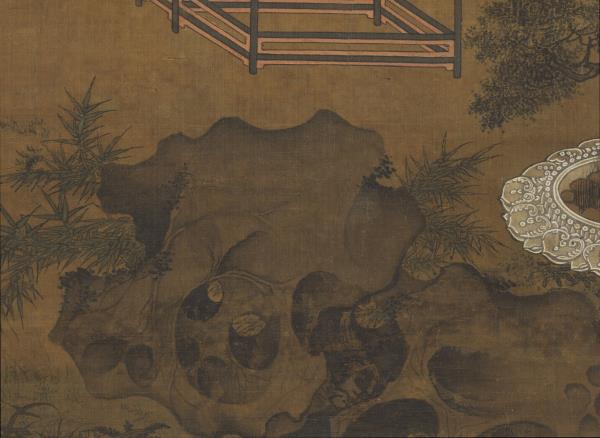
槐陰下,翠竹數竿,間以文石。畫中四人一握團扇,一執塵尾,一盥手回眸,另一則袒衣立於後,諸人皆專注凝視畫幀,神態悠雅閒適,若沉醉於畫幅景境之中。
|
| Description |
When T'ang T'ai-tsung (r. 626-649) established the Hall of Literary Studies (Wen-hsueh Kuan ), he commissioned Yen Li-pen (d. 673) to paint the eighteen talented scholars he had engaged. Ch'u Liang wrote a eulogy for the painting and a colophon noting the scholars' names and hometowns. This composition, one of a set of four hanging scrolls, is a Sung dynasty copy of the original T'ang painting.
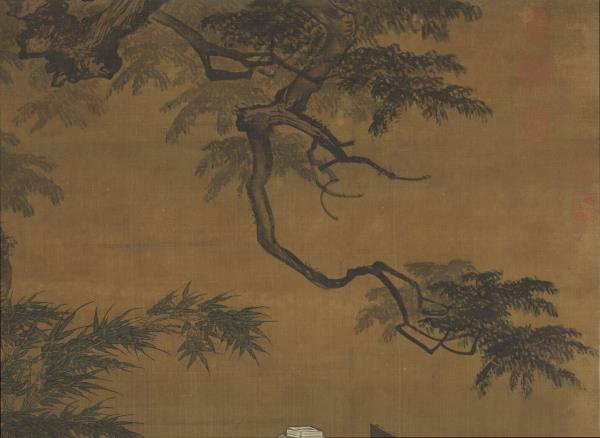
In the center of the composition in the shade of a locust tree and bamboo, four scholars are gathered around a table made of agate. One scholar holds a round fan while another a duster. The third scholar washes his hands and looks back over his shoulder. The fourth stands behind the painting held by servant boys. Their expression is refined and serious, as though they were totally immersed in the painting.
|
| 網頁展示說明 |
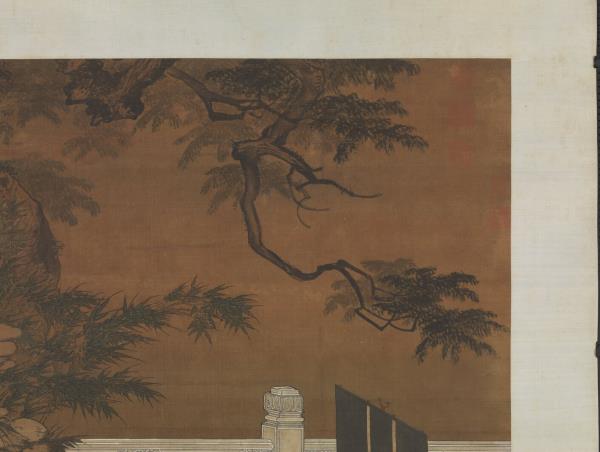
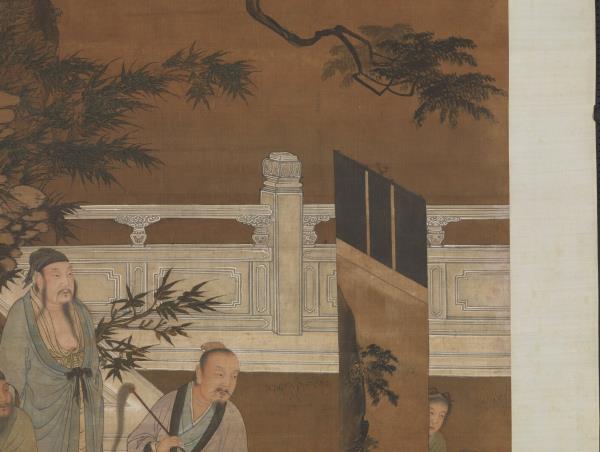
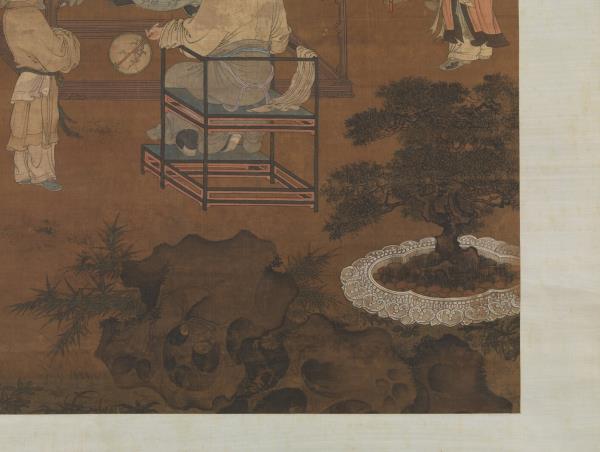
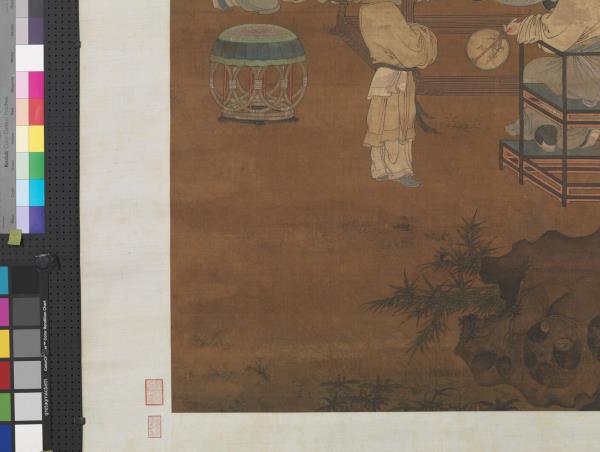
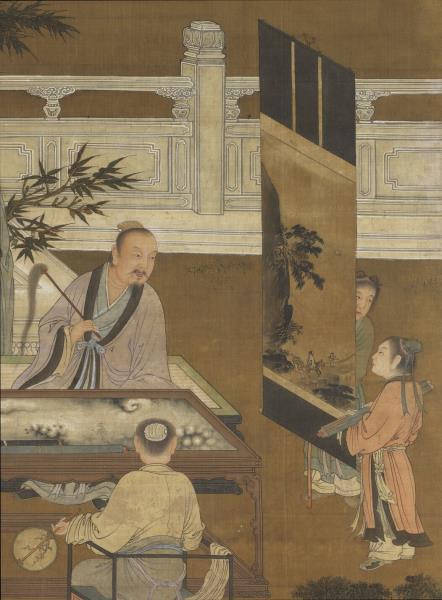
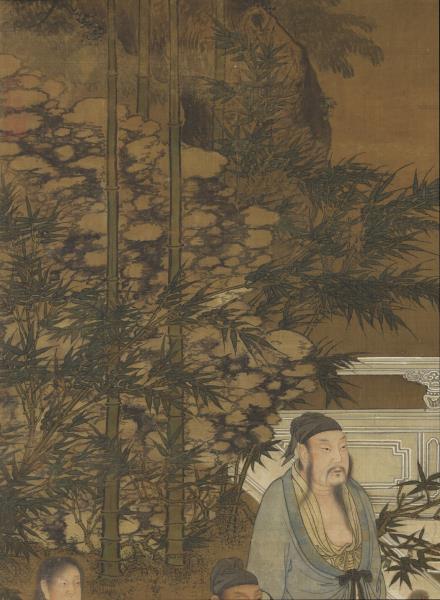
青槐樹蔭下,翠竹與文石同植於須彌座花壇。花園中石欄上部為覆蓮柱頭,欄杆尋柱下雕有淨瓶與如意雲紋,為典型官式作法,多用於皇家園林之中。文士右手執麈尾,左腕擱於腿上,桌前擺置卷帙,兩目凝神觀畫,口中若有所言。其他一盥手回眸,一袒衣立於後,另一背對觀者手持團扇。童僕五名奉畫軸及盥具,一以叉竿懸挑畫障。畫中「邊角」山水以斧劈皴與水墨刷染,樹葉用筆疾速,與明人仿南宋馬遠作品構圖筆法相似。
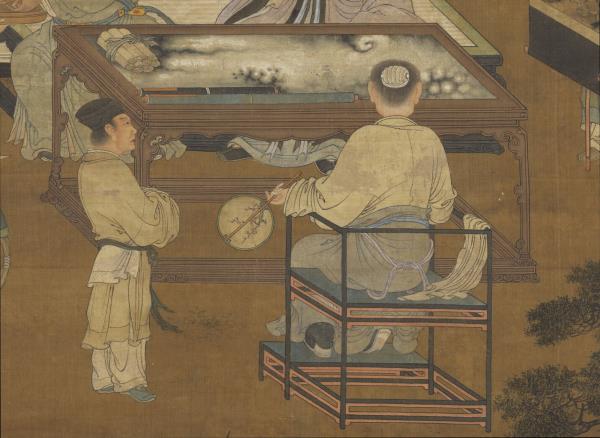
畫中家具器物勾勒仔細,束腰托泥式案桌,內翻馬蹄足下踩圓珠,腿子中部突出雲紋翅,造型裝飾十分別緻。桌面嵌石紋理天然生動,為家具增添畫意。另有帶腳踏玫瑰椅,以纖細圓材構成,造型簡練美觀,為文人雅士喜好之坐具。依家具設計式樣來看,均屬明式風格。
(20121019)
|
| 網頁展示說明 |
In the shade of a verdant locust tree stands emerald bamboo and what appears to be a decorative conglomerate stone in a platform planter. The post top of the garden railing features inverted lotus motifs, the intermediary supports carved in the form of a vase and ruyi-and-cloud forms. Typical of the court style, these often appear in the imperial gardens. A scholar holds a flywhisk in his right hand, his left hand resting below. On the table is a bundle of scrolls as he gazes intently at a painting as if about to say something. Another washes his hands and looks back at the painting, while a scholar with his back to the viewer holds a fan. A total of five attendants hold scrolls and the washbasin, one of the two at the right holding a display rod to support the hanging scroll. The "one-corner" composition of the painting within this painting features "axe-cut" texture strokes and applications of ink washes, the rendering for the tree leaves also quick, suggesting the arrangement and brushwork associated with Ming dynasty artists imitating the manner of the Southern Song artist Ma Yuan.
The furniture in the painting is fine and meticulous. The stretcher-base table with a constricted waist has inward-curling hoof feet on round balls as cloud veins stand out on the legs for a very refined and delicate design. The tabletop is inlaid marble with natural variegated patterning that suggests an ink painting. There is also a rose chair with a footrest stretcher made from delicate pieces of round wood for a very succinct and aesthetic form that represents the refined taste of literati, the design of all the furniture belonging to Ming dynasty styles.
(20121019)
|
| 網頁展示說明 |
綠色濃い槐(エンジュ)の木陰。須彌座形の花壇には、文石とともに青々とした竹が植えられている。庭園に巡らされた石欄干の上部は覆蓮柱頭となっており、欄干の尋柱下に浄瓶と如意雲紋の彫刻がある。これは典型的な宮廷様式で、多くが皇家の園林に設けられた。畫中の文士は右手に麈尾(払子)を持ち、左手を足の上に置いている。机の上には卷帙が置いてあり、じっくりと絵を眺めながら何やら話しているように見える。鄰の人物は盥で手を洗いながらそちらへ目をやり、その後ろに胸をはだけた人物が立っている。団扇を手にした人物はこちらに背を向けている。五人の童僕たちは畫軸や盥を持ち、矢筈に掛けた絵を広げている者もいる。畫中の「辺角山水畫」は、斧劈皴(畫技の一種)と水墨でぼかしたもので、素早い筆さばきで樹木の葉が描かれている。南宋馬遠の構図や筆法を模倣した明代の作品によく似ている。
畫中の家具や器物は実に丁寧に描写されている。束腰托泥式案桌(下部がすぼまり足の下に台座狀の木枠がついた机類)、內側に反り返った馬蹄形の腳の下には円珠が、腳の中ほどには立体的な雲紋があり、造形、裝飾ともに格別な趣がある。天板にはめ込まれた石板の自然な模様が生き生きとして美しく、家具に畫意を添えている。このほか、足置きのついた玫瑰椅(明代に広く用いられた椅子の一種)は、纖細な丸い木材で作られている。簡素で見た目も美しく、風流な文人が好んで用いた椅子の一つである。家具の作りを見ると、いずれも明代の様式となっている。
(20121019)
|
| 網頁展示說明 |
明式家具將材料、功能、設計互相結合,木材色澤柔和,紋理清晰,造型簡練,曲直變化流暢,具有「精、巧、雅」的特色。明代文人居室布置充滿豐富意蘊,使用的家具和器物陳設,體現文人生活品味與審美情趣。
庭園擺設床榻與畫桌,束腰托泥式案桌(腿足不著地,另有木框在下承托),內翻馬蹄足下踩圓珠,腿子中部突出雲紋翅,桌面嵌石紋理天然奇特。另有帶腳踏玫瑰椅,以纖細圓材構成,造型簡練美觀,紅、黑色材質搭配別致造型,賞心悅目,為文人雅士喜好之坐具。
藤墩,竹籐編製,底座下四龜腳足,坐面鋪以錦飾,頗具裝飾效果。畫中多種式樣坐椅均是尊貴身份的象徵,反映出當時精鍊典雅工藝之美。
(20121019)
|
| 網頁展示說明 |
Ming dynasty furniture represents a fine fusion of material, function, and design. The mellow wood hues, fine grain, and succinct shapes combine to make fluid forms featuring "precision, skill, and refinement." The residences of literati in the Ming dynasty were filled with overtones and meaning, turning furniture and display antiquities into embodiments of aesthetic tastes and tendencies in literati life at the time.
Placed within the courtyard is a daybed and table with a constricted waist. The legs do not touch the ground, instead connected to runners on all four sides. The inward-curving horse-hoof feet rest on round balls, and the middle of the legs feature protruding cloud wings. The inlaid stone tabletop has natural unusual patterning. Also shown here is a rose chair made of exceptionally fine and round materials to create a delicate and beautiful form of red and black. Pleasing to the eye, it was a favored type of chair among literati and upper classes.
This rattan stool was made from woven bamboo and rattan with turtle-foot-shaped feet at the bottom. The seat has a very decorative embroidered cover. The various types of seating in these paintings all symbolize lofty status and reflect the beauty of refined and classical handicrafts at the time.
(20121019)
|
| 網頁展示說明 |
明代の家具は、材料・機能・設計の三者が互いに結び付いています。木材の柔らかな色合い、くっきりした模様、シンプルなデザイン、流れるような曲線の変化など、「精、巧、雅」がその特色だと言えます。明代文人の居室の調度品は実に趣深く、実際に使用した家具や器物には、文人たちの気品溢れる暮らしぶりや、その審美感が表れています。
庭園內には床榻(寢台)と畫桌(机)が置かれています。束腰托泥式案桌(腳が直接地面につかず、木枠の上に載せたデザイン)は、馬の蹄形の腳が內側に反り返り、腳先は円珠になっています。腳の中ほどは突出した雲翅紋で飾られ、天板には珍しい模様の石板がはめ込んであります。足置き付きの玫瑰椅(明代に広く用いられた椅子の一種)は細い円材で作られており、簡素でありながら美しく、赤と黑の素材の組み合わせもまた格別で、目を楽しませてくれます。風流な文士たちに好まれた椅子の一つです。
竹を編んで造られたこの藤墩の底は四亀腳になっています。座面にかけられた錦の布が非常に裝飾的です。畫中に描かれた様々な椅子は、いずれも高貴な身分を象徵しており、当時の洗練された典雅な工芸品の美が反映されています。
(20121019)
|
| 參考書目 |
1.林莉娜;〈明人十八學士圖(畫)〉,收入林莉娜主編,《文人雅事 明人十八學士圖》(臺北:國立故宮博物院,2012年十月初版),頁30-35、64-66。
2.林莉娜;〈關於明人十八學士圖之考析〉,《故宮文物月刊》,第356期(2012年11月份),頁72-87。
3.洪順興;〈鑑古知今—談宋人十八學士圖的設色技法與畫中掛軸裝裱〉,《故宮文物月刊》,第356期(2012年11月份),頁88-95。
|
| 參考書目 |
林宛儒,〈宋人十八學士圖 軸〉,收入《以文會友-雅集圖特展》(臺北:國立故宮博物院,2019.10),頁188-191、280。
|
| 參考書目 |
林莉娜,〈宋人十八學士圖 軸〉,收入《文人雅事-明人十八學士圖》(臺北:國立故宮博物院,2012.10),頁30-35、64-66。
|
| 參考書目 |
〈宋人十八學士圖 軸〉,收入國立故宮博物院編輯委員會、林莉娜主編《畫中家具特展》(臺北:國立故宮博物院,1996.10),頁56-57、121。
|
| 收藏著錄 |
石渠寶笈三編(御書房),第七冊,頁3081
|
| 收藏著錄 |
故宮書畫錄(卷五),第三冊,頁136-137
|
| 收藏著錄 |
故宮書畫圖錄,第三冊,頁63-64
|
本院文物保存維護依〈國立故宮博物院典藏文物管理作業要點〉及〈國立故宮博物院文物修護業務作業原則〉辦理
抽盤點紀錄
修護紀錄