
貴霜王朝 2-3世紀 秣菟羅佛塔欄楯
Stupa Railing with Tree Goddesses, Kusana Empire, 2-3th century
雜項
貴霜王朝 西元2世紀至3世紀
高93公分
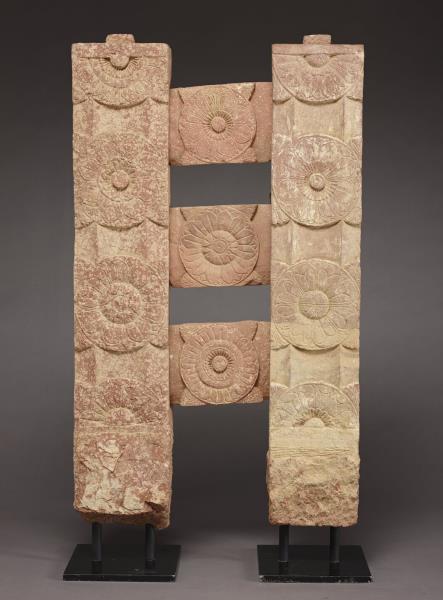
這件以印度秣菟羅地區紅砂岩所鑿刻的文物,是古代佛塔欄楯的一部分,由二條直欄和三段橫楯組合而成。直欄正面各浮雕一尊攀扶樹枝的女藥叉像,橫楯則雕飾著各式蓮花圖案,是貴霜王朝(西元1世紀-320)常見的造像。女藥叉像神情柔和,嘴角含笑,雙乳豐滿,全身S形的扭擺連動著細腰與寬臀,肌膚圓潤緊實,造像風格與該地許多西元二至三世紀的作品一致。 女藥叉信仰源於印度先民崇拜的地母神、樹精,豐乳寬臀的造型為豐饒多產的象徵,而攀扶樹枝的姿勢又可能與祈求豐饒的古老儀式有關。這種女藥叉信仰後被佛教所收攝,成為佛教的守護神之一,進而出現在佛塔欄楯中。


| 文物統一編號 | 南購雜000001N000000000 |
| 品名 |
貴霜王朝 2-3世紀 秣菟羅佛塔欄楯
Stupa Railing with Tree Goddesses, Kusana Empire, 2-3th century |
| 分類 | 雜項 |
| 尺寸 | 高93公分 |
| 說明 | 這件以印度秣菟羅地區紅砂岩所鑿刻的文物,是古代佛塔欄楯的一部分,由二條直欄和三段橫楯組合而成。直欄正面各浮雕一尊攀扶樹枝的女藥叉像,橫楯則雕飾著各式蓮花圖案,是貴霜王朝(西元1世紀-320)常見的造像。女藥叉像神情柔和,嘴角含笑,雙乳豐滿,全身S形的扭擺連動著細腰與寬臀,肌膚圓潤緊實,造像風格與該地許多西元二至三世紀的作品一致。 女藥叉信仰源於印度先民崇拜的地母神、樹精,豐乳寬臀的造型為豐饒多產的象徵,而攀扶樹枝的姿勢又可能與祈求豐饒的古老儀式有關。這種女藥叉信仰後被佛教所收攝,成為佛教的守護神之一,進而出現在佛塔欄楯中。 |
100萬像素圖檔下載
600萬像素圖檔下載