| 文物統一編號 |
故畫003119N000000000
|
| 作品號 |
故畫00311900000 |
| 品名 |
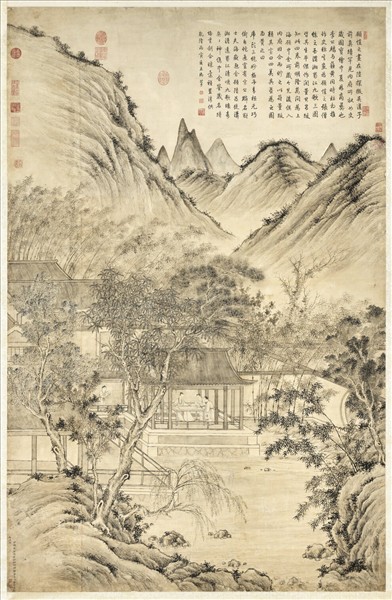
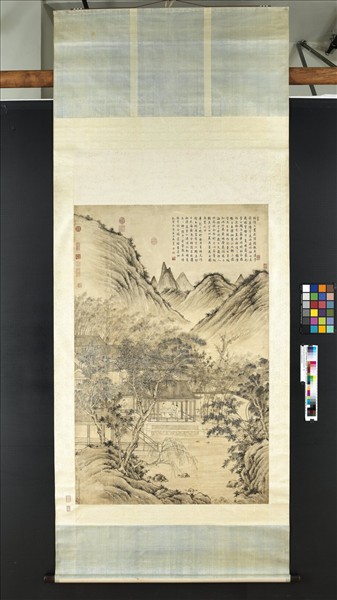
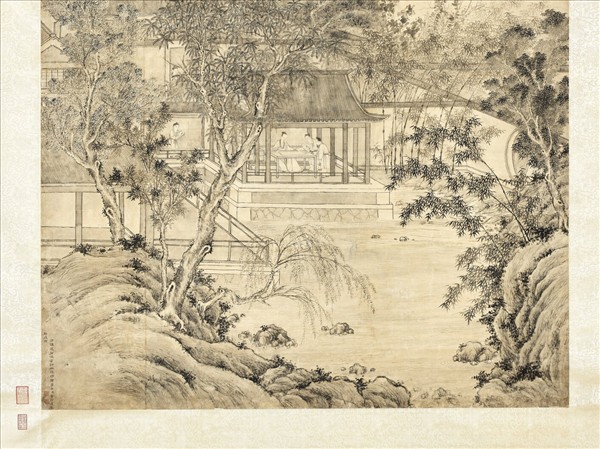
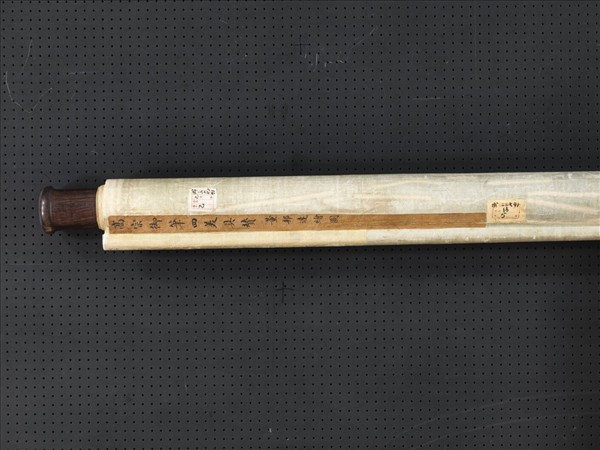
清董邦達繪高宗御筆四美具贊 軸
Emperor Ch’ien-lung Praises ‘The Four Beauties’ |
| 分類 |
繪畫 |
| 作者 |
董邦達 |
| 數量 |
一軸 |
| 題跋類別 |
作者 |
位置 |
款識 |
書體 |
全文 |
| 作者款識 |
董邦達
印記 expand_more
|
本幅 |
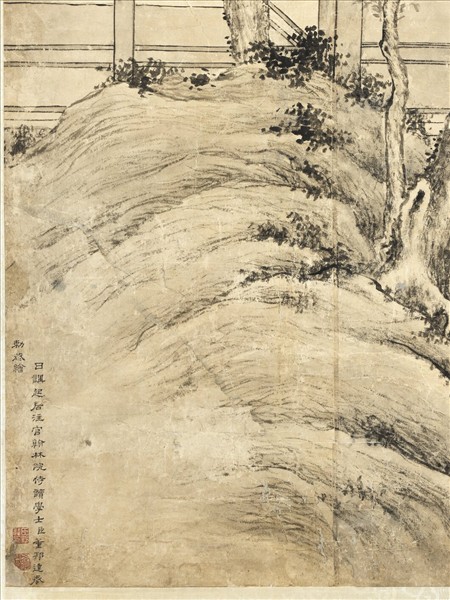
日講起居注官翰林院侍讀學士。臣董邦達奉敕恭繪。 |
隸書 |
|
|
|
| 題跋 |
清高宗
印記 expand_more
|
本幅 |
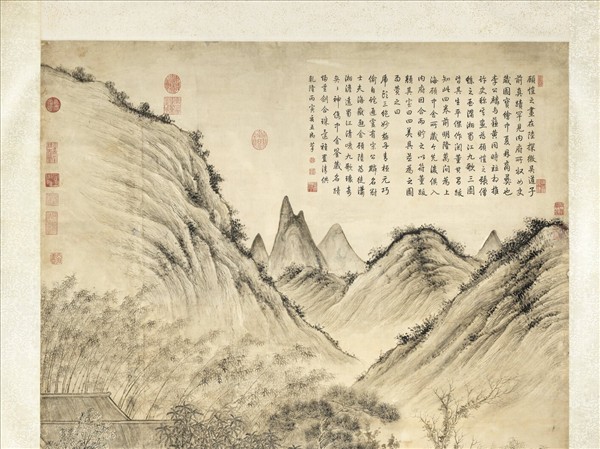
乾隆丙寅(1746)夏五御筆 |
行書 |
顧愷之畫。在陸探微吳道子前。真蹟罕見。內府所收女史箴圖。寶繪中夏鼎商彝也。李公麟與蘇黃同時。並相推許。史稱其畫為顧愷之張僧繇之亞。瀟湘蜀江九歌三圖。皆其生平傑作。閱董其昌跋。知此四卷。前明隆萬間。為上海顧中舍所藏。今先後俱入內府。因合而貯之。以符董跋。顏其室曰四美具。並為之圖而贊之曰。虎頭三絕。妙極丹青。桓元巧偷。自詫通靈。有宋公麟。名冠士夫。海嶽避舍。顧陸為徒。瀟湘澹遠。蜀江清峻。九歌瓌奇,奕奕神儁。中舍鑒藏。名蹟歸重。劍合珠還。雅置清供。乾隆丙寅(1746)夏五御筆。 |
| 印主 |
印記 |
| 清高宗 |
乾 |
| 清高宗 |
隆 |
| 清高宗 |
漱芳潤 |
| 清高宗 |
雲霞思 |
| 清高宗 |
清心抒妙理 |
|
| 印記類別 |
印主 |
印記 |
| 鑑藏寶璽 |
清內府印 |
三希堂精鑑璽 |
| 鑑藏寶璽 |
清高宗 |
內府圖書 |
| 鑑藏寶璽 |
清內府印 |
石渠寶笈 |
| 鑑藏寶璽 |
清內府印 |
宜子孫 |
| 鑑藏寶璽 |
宣統帝 |
宣統御覽之寶 |
| 鑑藏寶璽 |
宣統帝 |
宣統鑑賞 |
| 鑑藏寶璽 |
清高宗 |
乾隆御覽之寶 |
| 鑑藏寶璽 |
宣統帝 |
無逸齋精鑑璽 |
| 鑑藏寶璽 |
清仁宗 |
嘉慶御覽之寶 |
| 鑑藏寶璽 |
清仁宗 |
嘉慶鑑賞 |
| 鑑藏寶璽 |
清仁宗 |
寶笈三編 |
| 主題類別 |
主題(第一層) |
主題(第二層) |
主題說明 |
| 主要主題 |
經史‧故事 |
|
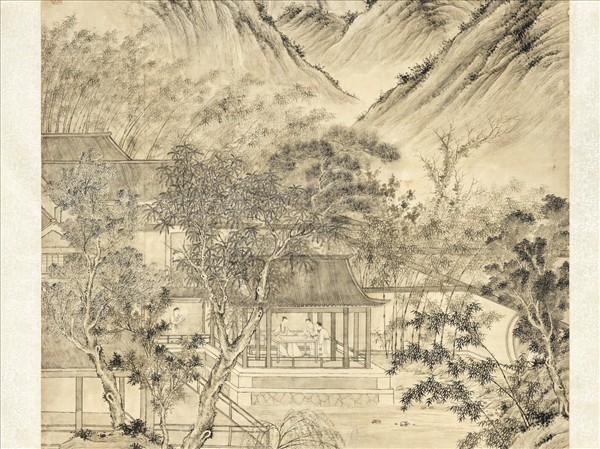
四美具 |
| 次要主題 |
人物 |
侍從(侍女、童僕) |
童僕三 |
| 次要主題 |
建築 |
齋館 |
|
| 次要主題 |
樹木 |
竹 |
|
| 次要主題 |
樹木 |
松 |
|
| 次要主題 |
樹木 |
楊柳 |
|
| 其他主題 |
人物 |
高士(士人、隱士) |
士人 |
| 其他主題 |
山水 |
|
|
| 其他主題 |
建築 |
池水 |
|
| 其他主題 |
建築 |
房舍 |
|
| 其他主題 |
建築 |
庭院 |
|
| 其他主題 |
建築 |
欄杆 |
|
| 其他主題 |
建築 |
籬笆、圍牆 |
圍牆 |
| 其他主題 |
器用 |
文玩(琴棋書畫) |
書(書卷) |
| 其他主題 |
器用 |
傢俱(屏風) |
桌、榻 |
| 其他主題 |
樹木 |
|
|
| 技法 |
技法細目 |
| 人物衣紋描法(勻稱線條) |
|
| 工筆 |
|
| 界畫 |
|
| 苔點 |
|
| 皴法 |
|
| 皴法 |
披麻皴 |
| 寫意 |
|
| 類別 |
參考資料 |
| 內容簡介 |
董邦達(西元一六九九-一七六九年),浙江富陽人,字存孚,號東山。雍正癸丑進士,乾隆間,以博學精考核,命入內廷,襄編石渠寶笈諸書,後仕至禮部尚書。工畫山水,喜宗法元人筆墨。
明末,顧從義藏有顧愷之女史箴圖、李公麟瀟湘、蜀江、九歌圖四卷,董其昌以為此四卷乃古之名家極珍貴之遺物,故為顧從義題「四美具」於其室。後來四卷失散,乾隆間又陸續轉入青宮,高宗喜此四卷之聚,因作贊並命董邦達繪圖以誌其事。
|
| 內容簡介 |
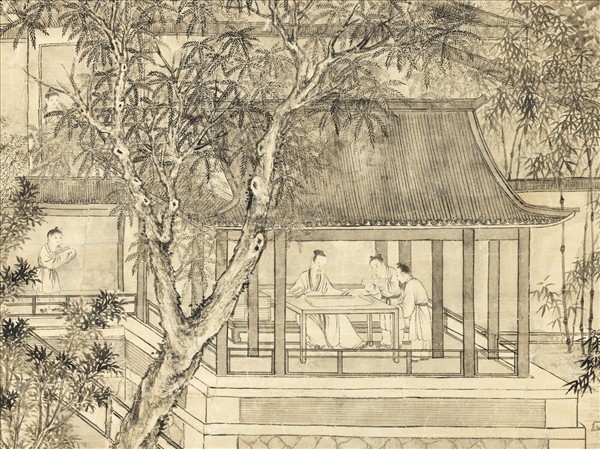
明末顧從義收藏東晉顧愷之、北宋李公麟四卷名蹟,於乾隆十一年先後俱入清內府。乾隆皇帝喜此四卷重聚,特將四美聚置於紫禁城建福宮花園之靜怡軒,親書匾額名曰「四美具」懸掛於西室。又命翰林院學士董邦達繪圖,並御題《四美具贊》記錄四張名蹟的聚散因緣故事。四美另一解釋或取自唐王勃〈滕王閣序〉所謂「良辰、美景、賞心、樂事」。此圖為董邦達〈畫四美具合幅〉二軸之左幅。(20100714)
|
| Description |
In the late Ming, the collector Gu Congyi had 4 famed handscrolls—one by Gu Kaizhi and 3 by Li Gonglin. They entered the Qing imperial collection starting in 1746. Delighted at their reunion, the Qianlong Emperor stored the “Four Beauties” in the western wing of Jingyi Building at the Garden of the Palace of Established Happiness in the Forbidden City, also personally writing its plaque. He then ordered the Hanlin Academician Dong Bangda to illustrate it, recording the imperial “Praise of the Four Beauties Complete” to recount the masterpieces being lost and found. In “Tengwang Pavilion Preface,” “Four Beauties” also means “beautiful scenery” “on a bright day” and “delightful things” “for appreciation”. This is the left scroll of the two by Dong.(20100714)
|
| Description |
Tung Pang-ta (tzu: Fu-ts’un; hao: Tung-shan), was born in Fu-yang, Chekiang. He received the chin-shih degree during the Yung-cheng period and afterwards entered the court of the Ch’ien-lung emperor. He assisted in the compilation of the Imperial catalogue, Shih-chu pao-chi, and later served as an official in the Ministry of Rites. His landscape paintings were greatly influenced by Tung Ch’i-ch’ang.
During the later years of the Ming dynasty, a connoisseur named Ku Chen-yu held four great mosterpieces in his collection at the some time: three scrolls by Li kung-lin and one by Ku K’ai-chih. The works, lost after Ku Chen-yu’s death, were subsequently recovered by Ch’ien-lung’s imperial collection. Delighted at having the four together once more, Ch’ien-lung wrote an inscription naming the group ‘The Four Beauties’. This painting records the occasion when the emperor wrote his words of praise.
|
| 收藏著錄 |
石渠寶笈三編(延春閣),第五冊,頁2304
|
| 收藏著錄 |
故宮書畫錄(卷八),第四冊,頁134
|
| 收藏著錄 |
故宮書畫圖錄,第十四冊,頁343-344
|
本院文物保存維護依〈國立故宮博物院典藏文物管理作業要點〉及〈國立故宮博物院文物修護業務作業原則〉辦理
抽盤點紀錄
修護紀錄