| 文物統一編號 |
故畫001274N000000006
|
| 作品號 |
故畫00127400006 |
| 品名 |
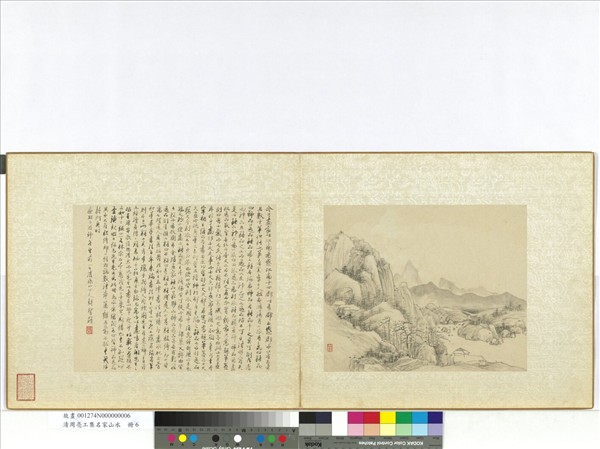
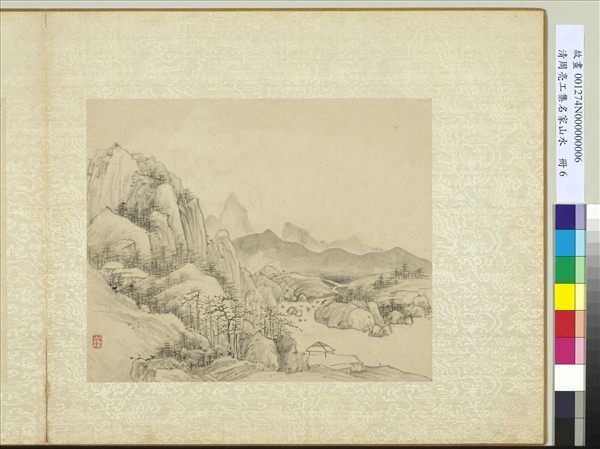
清周亮工集名家山水 冊 明程正揆泉石林巒
Stream and Rocks with Trees and Peaks |
| 分類 |
繪畫 |
| 作者 |
程正揆,Cheng Zhengkui |
| 數量 |
一幅 |
| 位置 |
尺寸(公分) |
| 本幅 |
23.6x28.9 |
| 對幅 |
23.6x28.9 |
| 題跋類別 |
作者 |
位置 |
款識 |
書體 |
全文 |
| 題跋 |
龔賢
印記 expand_more
|
對幅 |
時康熙己酉仲冬望前一日。清涼山下人龔賢題。 |
行書 |
今日畫家以江南為盛。江南十四郡。以首郡為盛。郡中著名者且數十輩。但能吮筆者。奚啻千人。然名流復有二派。有三品。曰能品。曰神品。曰逸品。能品為上。餘無論焉。神品者。能品中之莫可測識者也。神品在能品之上。而逸品又在神品之上。逸品殆不可言語形容矣。是以能品神品為一派。曰正派。逸品為別派。能品稱畫師。神品為畫祖。逸品散聖。無位可居。反不得不謂之畫士。今賞鑑家。見高超筆墨。則曰有士氣。而凡夫俗子。於稱揚之詞。寓譏諷之意。亦曰此士大夫畫耳。明乎畫非士大夫事。而士大夫非畫家者流。不知閻立本乃李唐宰相。王維亦尚書右丞。何嘗非士大夫耶。若定以高超筆墨為士大夫畫。而倪黃董巨。亦何嘗在縉紳列耶。自吾論之。能品不得非逸品。猶之乎別派不可少正派也。使世皆別派。是國中惟高僧羽流。而無衣冠文物也。使畫止能品。是王斗顏斶皆可役而為皁隸。巢父許由皆可驅而為牧圉耳。金陵畫家。能品最夥。而神品逸品亦各有數人。然逸品則首推二谿。曰石谿。曰青谿。石谿。殘道人也。青谿。程侍郎也。皆寓公。殘道人畫。麤服亂頭。如王孟津書法。程侍郎畫。冰肌玉骨。如董華亭書法。百年來論書法。則王董二公應不讓。若論畫筆。則今日兩谿。又奚肯多讓乎哉。詩人周櫟園先生有畫癖。來官茲土。結讀畫樓。樓頭萬軸千箱。集古勿論。凡寓內以畫鳴者。聞先生之風。星流電激。惟恐後至。而況先生以書召以幣迎乎。故載几盈床。不止如十三經。廿一史。林宗五千卷。茂先三十乘。登斯樓也。吾不知從何處讀起。暇日偶過先生。先生出此冊見示。余繙閱再四。皆神品逸品。其中尤喜程侍郎二幀。因誌數語。幸藻鑑在前。不然。吾幾涉於阿矣。時康熙己酉仲冬望前一日。清涼山下人龔賢題。 |
|
|
| 主題類別 |
主題(第一層) |
主題(第二層) |
主題說明 |
| 主要主題 |
山水 |
|
|
| 其他主題 |
山水 |
江河、湖海 |
|
| 其他主題 |
建築 |
亭 |
|
| 其他主題 |
樹木 |
|
|
| 類別 |
參考資料 |
| 內容簡介 |
程正揆(西元十七世紀),湖北孝感人,甲申後卜居江寧。初名正葵,崇幀辛未進士,順治時改今名,字端伯,號鞠陵,又號青溪道人。山水得董其昌指授。
禿筆中鋒,用墨枯淡,境亦幽僻,是程畫中之精者。對開有龔賢題語,與僧髠殘並推為二溪。謂髠殘畫如亂頭粗服,程正揆畫如玉骨水肌。
|
| 內容簡介 |
程正揆(1604-1676),字端伯,別號青溪道人,湖北人,以山水畫名擅一時。程正揆曾臨〈富春山居圖〉「無用師卷」,對黃公望推崇備至,畫風深受影響。
此幅畫山巖疊佈,坡腳平台置一小亭,可隨曲折河道遠望。畫中尖角狀山形、山間平台等母題,以及渾厚的山體,均承自黃公望。此作禿筆中鋒,用墨淺淡,畫境幽僻,在近似黃公望山水面貌之餘,另有一份清寂之感。
(清周亮工集名家山水冊 第六開 20110609)
|
| Description |
Cheng Zhengkui (style name Duanbo, sobriquet Qingxi daoren), a native of Hubei, was a famous landscape painter of his time. He once made a copy of the “Master Wuyong Version” of “Dwelling in the Fuchun Mountains,” having the utmost reverence for Huang Gongwang and being deeply influenced by his style.
This work depicts a layered arrangement of mountains with a flat outcropping at the foothills and a small kiosk, the viewer able to follow the stream zigzagging into the distance. Such motifs as the pointed mountain forms and outcroppings among them, along with the natural power of the mountains, are all features deriving from Huang Gongwang’s style. The artist here employed a centered blunt brush with light ink to create a secluded and remote scene. In addition to its similarity to Huang Gongwang’s landscape, it also has a pure and desolate quality as well.
(20110609)
|
| Description |
Although Ch’eng Cheng-k’uel was originally a native of Hsiao-kan in Hupei province, he moved to the Kiangning area (Nanking) after the fall of the Ming dynasty in 1644. He received the chin-shih degree in 1631. He adopted the present name at the beginning of the Ch’ing dynasty. His tzu was Tuan-po and his hao were Chu-ling and Ching-his Tao-jen. He once studied landscape painting with Tung Ch’i-ch’ang (1555-1636).
The artist has used a blunt brush and pale dry inks to execute this isolated scene. It is one of his finest works. Mounted with the landscape is a long eulogy by the painter Kung Hsien (d. 1689) who compares the work to that of the monk K’un-ts’an (fl. 17th century). Kung says K’un-ts’an’s paintings are like people with dishevelled hair and ill-kempt clothing, while Ch’eng’s like people with fine bones and fair complexion.
|
| 收藏著錄 |
石渠寶笈三編(御書房),第七冊,頁3229-3236
|
| 收藏著錄 |
故宮書畫錄(卷六),第四冊,頁273-281
|
| 收藏著錄 |
故宮書畫圖錄,第三十冊,頁272-285
|
| 參考書目 |
1.邱士華,〈清程正揆泉石林巒〉,收入何傳馨主編,《山水合璧:黃公望與富春山居圖特展》(臺北:國立故宮博物院,2011年五月初版一刷),頁345-346。
|
本院文物保存維護依〈國立故宮博物院典藏文物管理作業要點〉及〈國立故宮博物院文物修護業務作業原則〉辦理
抽盤點紀錄
修護紀錄