| 文物統一編號 |
故畫001203N000000004
|
| 作品號 |
故畫00120300004 |
| 品名 |
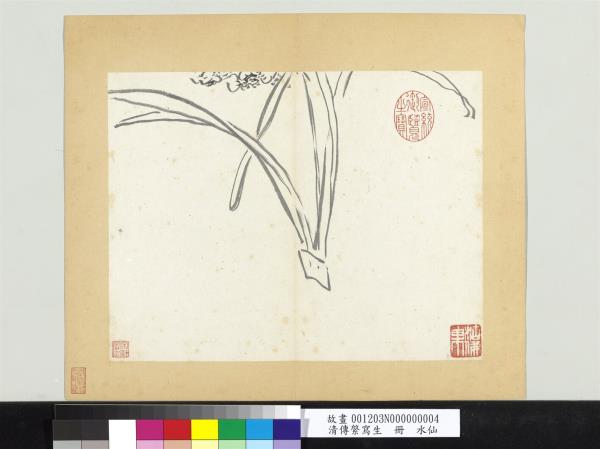
清傳綮寫生 冊 水仙
Narcissus |
| 分類 |
繪畫 |
| 作者 |
朱耷 |
| 創作時間 |
清世祖順治十六年(1659) |
| 數量 |
一幅 |
| 印記類別 |
印主 |
印記 |
| 收傳印記 |
宋致 |
宋致審定 |
| 作者印記 |
朱耷 |
枯佛巢 |
| 鑑藏寶璽 |
宣統帝 |
宣統御覽之寶 |
| 主題類別 |
主題(第一層) |
主題(第二層) |
主題說明 |
| 主要主題 |
花草 |
水仙 |
|
| 類別 |
參考資料 |
| 內容簡介 |
傳綮(約1626-1705)為明皇族後裔,原名朱耷,號八大山人,江西南昌人。明亡後出家為僧,後又改信道教。作畫多採水墨大寫意法,尤以花鳥最稱特出。筆墨簡練,將物象擬人化,用象徵手法表達寓意,締造了藉物抒情的獨到風格。
本幅選自〈寫生冊〉,以簡率之筆,鉤繪水仙一株凌空上揚,花蕊甚且已經探出幅面,僅右下角鈐「枯佛巢」一印。這種極端偏倚的構圖手法,不僅傳透出畫家內心孤傲不群,憤世嫉俗的性情,也為花卉畫的布局章法,締造了前所罕見的新境。(20110102)
|
| Description |
Chuanqi was a descendant of the Ming dynasty imperial family. A native of Nanchang in Jiangxi, his original name was Zhu Da, and he had the sobriquet Bada shanren. After the fall of the Ming in 1644, he became a Buddhist monk but later converted to Daoism. Most of his paintings were done in a very expressive “sketching ideas” manner, his bird-and-flower subjects being most outstanding. With mature and succinct brush and ink, he personified his subjects, using symbolic expressions to convey meaning and thus creating an original style to show his feelings.
This work, from “Album of Sketches from Life,” is done in very succinct brushwork, outlining a single soaring narcissus with most of the blossoms out of the composition. The artist’s only other addition to the work was a seal impression in the lower right that reads, “Withered Buddha’s Nest.” This kind of extremely unbalanced vertical composition not only reflects the artist’s proud and aloof character different from others, it also suggests his cynical temperament. Purely in terms of flower arrangement, however, it is an unprecedented new vision in painting.(20110102)
|
| 參考書目 |
1.〈清傳綮寫生 冊 水仙〉,收入譚怡令、劉芳如、林莉娜主編《滿庭芳-歷代花卉名品特展》(臺北:國立故宮博物院,2010年十二月初版一刷),頁124-125。
|
| 收藏著錄 |
石渠寶笈初編(養心殿),上冊,頁509-510
|
| 收藏著錄 |
故宮書畫錄(卷六),第四冊,頁141
|
| 收藏著錄 |
故宮書畫圖錄,第二十三冊,頁298-301
|
本院文物保存維護依〈國立故宮博物院典藏文物管理作業要點〉及〈國立故宮博物院文物修護業務作業原則〉辦理
抽盤點紀錄
修護紀錄