| 文物統一編號 |
故畫000742N000000000
|
| 作品號 |
故畫00074200000 |
| 品名 |
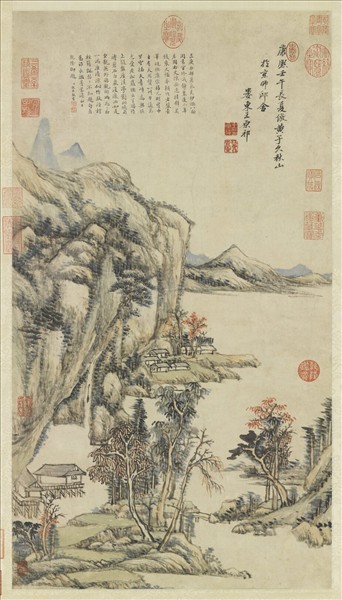
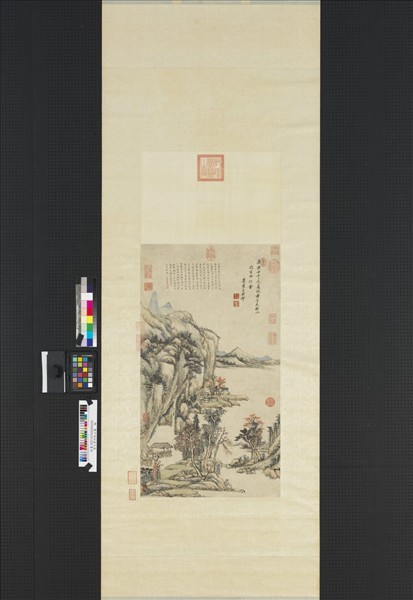
清王原祁秋山圖 軸
Autumn Mountains |
| 分類 |
繪畫 |
| 作者 |
王原祁 |
| 創作時間 |
清聖祖康熙四十一年(1702) |
| 數量 |
一軸 |
| 題跋類別 |
作者 |
位置 |
款識 |
書體 |
全文 |
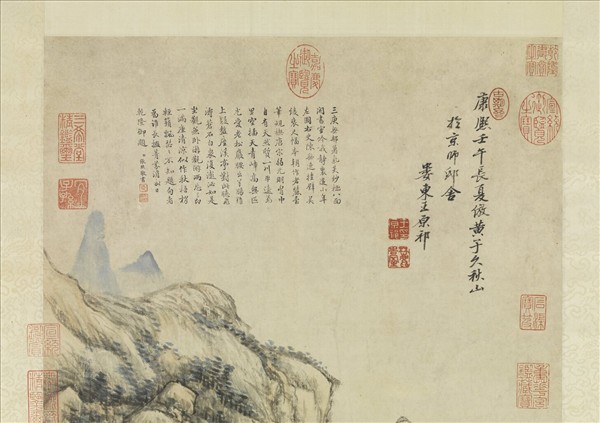
| 作者款識 |
王原祁
印記 expand_more
|
本幅 |
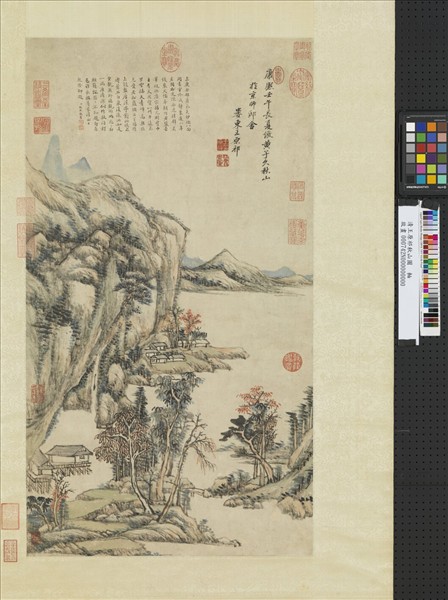
康熙壬午(西元一七0二年)長夏。倣黃子久秋山於京師邸舍。婁東王原祁。 |
行書 |
|
| 印主 |
印記 |
| 王原祁 |
王原祁印 |
| 王原祁 |
麓臺 |
| 王原祁 |
古期齋 |
| 王原祁 |
興與烟霞會 |
|
| 題跋 |
張照
印記 expand_more
|
本幅 |
臣張照敬書 |
行書 |
三庚無𨚗暑氣炎。紗櫺八面開書室。吟哦靜裏遣小年。左圖右史陳無逸。挂壁吳綾裝尺幅。本朝作者麓臺筆。規橅唐宋弱元明。胸中自有天然質。一川平遠萬里空。插天青嶂高無匹。尤愛老松巖腰出。羊腸難上疑盩庢。溪亭對此聽飛濤。蒼石白泉復澎泌。如是坐觀兼卧游。觀游兩忘三即一。滿座清涼似作秋。梧梢輕籟飄瑟瑟。不知題句者為誰。長掇菁芬消永日乾隆御題。臣張照敬書。 |
|
|
| 印記類別 |
印主 |
印記 |
| 鑑藏寶璽 |
清內府印 |
三希堂精鑑璽 |
| 鑑藏寶璽 |
清內府印 |
石渠寶笈 |
| 鑑藏寶璽 |
清內府印 |
宜子孫 |
| 鑑藏寶璽 |
宣統帝 |
宣統御覽之寶 |
| 鑑藏寶璽 |
宣統帝 |
宣統鑑賞 |
| 鑑藏寶璽 |
清高宗 |
重華宮鑑藏寶 |
| 鑑藏寶璽 |
清高宗 |
乾隆御賞之寶 |
| 鑑藏寶璽 |
清高宗 |
乾隆御覽之寶 |
| 鑑藏寶璽 |
清高宗 |
乾隆鑑賞 |
| 鑑藏寶璽 |
宣統帝 |
無逸齋精鑑璽 |
| 鑑藏寶璽 |
清仁宗 |
嘉慶御覽之寶 |
| 鑑藏寶璽 |
清高宗 |
樂善堂圖書記 |
| 主題類別 |
主題(第一層) |
主題(第二層) |
主題說明 |
| 主要主題 |
山水 |
秋景 |
|
| 其他主題 |
山水 |
江河、湖海 |
|
| 其他主題 |
山水 |
瀑布 |
|
| 其他主題 |
建築 |
水榭 |
|
| 其他主題 |
建築 |
房舍 |
|
| 其他主題 |
建築 |
橋 |
|
| 其他主題 |
樹木 |
|
|
| 其他主題 |
樹木 |
松 |
|
| 類別 |
參考資料 |
| 內容簡介 |
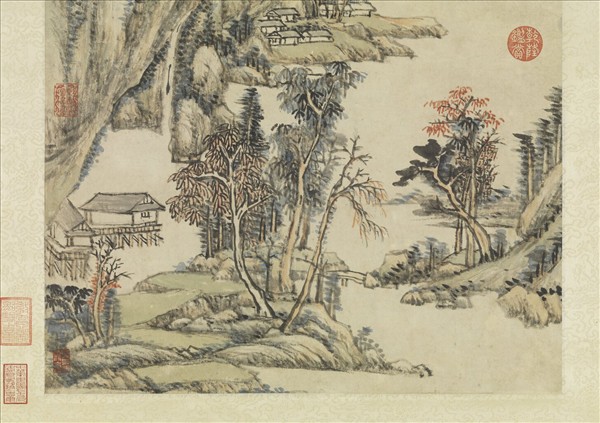
王原祁為王時敏之孫,在祖父指點下,幼年即展現繪畫天分,康熙9年(1670)得進士後歷任官職,並於康熙39年(1700)成為皇帝的書畫顧問,總成《佩文齋書畫譜》的編輯工作。其畫風於宮廷朝臣間風行,促成正統畫派於清代前中期的重要位置。王原祁的繪畫理論,由《雨窗漫筆》中可見到承接著董其昌的影響,不僅強調仿古,也重視創新。構圖上講究山體龍脈開合、起伏,不僅重視筆墨,更凸顯設色之要。此件倣黃公望的作品,遠較其祖父王時敏更加簡化黃公望筆墨,但在山體的組成上,可見有各種不同的方向感,增添許多動態效果。透過畫中留白,雖是水域的表達,卻也提供著與山體之間,若虛、若實的對應趣味。其間山體淺色敷染,與樹色上彩妝點,增添畫面的活潑生趣。(陳韻如)
|
| 內容簡介 |
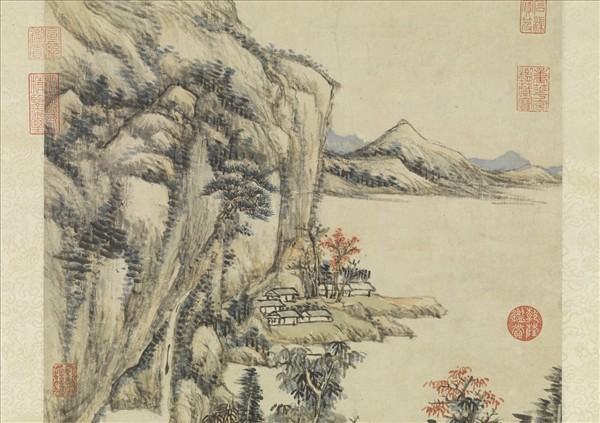
一崖一水。取景無多。而江村景色恍然在目。畫樹用筆老辣。皴山全以側筆。覺其稍懈矣。惟緣崖提破數筆。極其老辣。此蓋麓臺遣興之作。沖淡有餘。精警不足者也。作時六十一歲。
|
| 內容簡介 |
此軸左側描寫「實」的樹石、坡岸、房舍及主山,對應到右側大片留白產生「虛」的廣大河面。透過近景坡岸樹叢聯結中景山體,加以斜向堆疊的山勢引導觀者視線移動。藉著與山體並排的曲折水域,由右下往左中、接續轉折右上的流動,與實體山石形成兩股相互呼應的運動方向。此作以乾筆界定山體樹石輪廓,再用側筆乾擦增添物象質感,以花青與朱砂作苔點及紅葉。自識:「康熙壬午(1702)長夏。倣黃子久秋山於京師邸舍。」(20110609)
|
| Description |
The left side of this painting depicts “solid” portions of rocks and trees, banks, and the main mountain, with a corresponding large area of blank space for the “void” representing the expansive river on the right. The trees on the bank in the foreground linking upwards with the mountain forms in the middleground are combined with the diagonally leaning piled force of the mountain to lead the viewer’s shifting line of sight. By means of the zigzagging water side-by-side with the mountain forms, the composition goes from the lower right to the middle left, then flows to the upper right, creating two directions of motion that echo and reciprocate with the solid mountain form. This work in dry brushwork delineates the outlines of rocks and trees for the mountains, to which slanted-brush dry texturing was added to give the forms texture. Cyanine blue and cinnabar red were then used for the moss dots and autumn leaves. The artist’s inscription reads, “In late summer of 1702; imitating Huang Gongwang’s ‘Autumn Mountains’ at the official residence in the capital.”(20110609)
|
| Description |
This painting depicts a solitary mountain and a single river. Although the scene is limited, the view of a riverside village is lively. In rendering the trees, the artist employed an experienced brush for a striking effect, while the strokes on the mountains were executed with an oblique brush. One feels a slight laxness. Only a few accent strokes on the mountain reveal the artist’s masterful control of the brush. Evidently the painting was done when Wang Yuan-ch’i had other matters in mind. He was 60-years-old when he finished the work.
|
| 參考書目 |
1.陳昱全,〈清王原祁秋山圖〉,收入何傳馨主編,《山水合璧:黃公望與富春山居圖特展》(臺北:國立故宮博物院,2011年五月初版一刷),頁351-354。
|
| 收藏著錄 |
石渠寶笈初編(重華宮),下冊,頁807
|
| 收藏著錄 |
故宮書畫錄(卷五),第三冊,頁542
|
| 收藏著錄 |
故宮書畫圖錄,第十冊,頁283-284
|
本院文物保存維護依〈國立故宮博物院典藏文物管理作業要點〉及〈國立故宮博物院文物修護業務作業原則〉辦理
抽盤點紀錄
修護紀錄