| 文物統一編號 |
故畫000741N000000000
|
| 作品號 |
故畫00074100000 |
| 品名 |
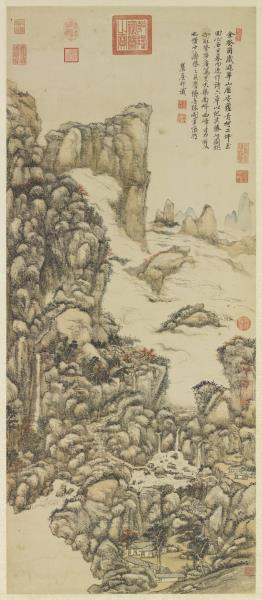
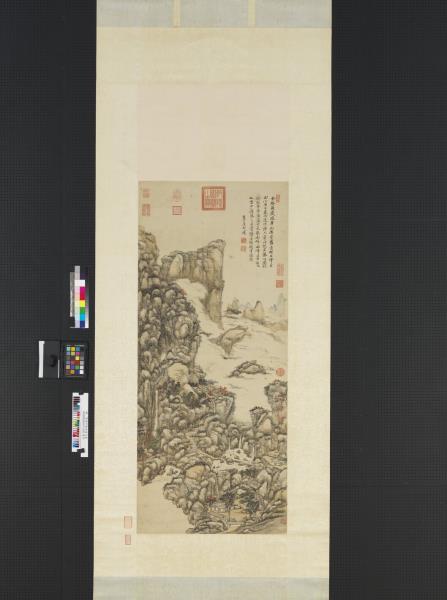
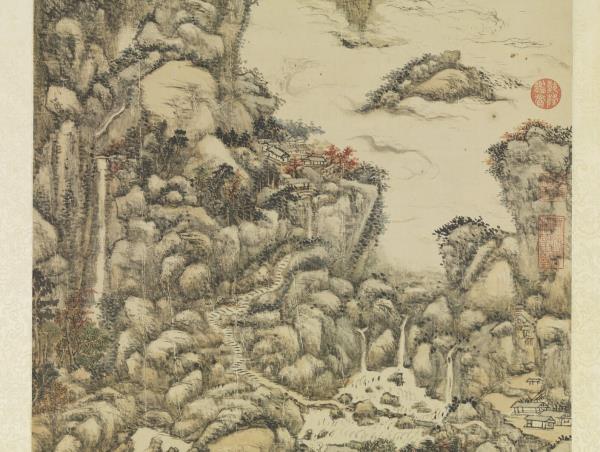
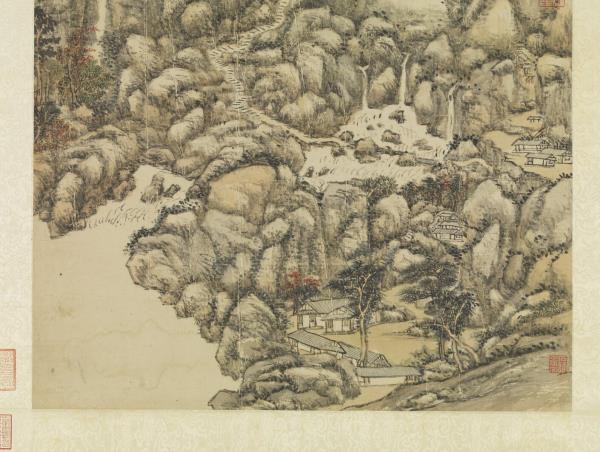
清王原祁華山秋色 軸
Autumn Colors on Mount Hua |
| 分類 |
繪畫 |
| 作者 |
王原祁,Wang Yuanqi |
| 數量 |
一軸 |
| 題跋類別 |
作者 |
位置 |
款識 |
書體 |
全文 |
| 作者款識 |
王原祁
印記 expand_more
|
本幅 |
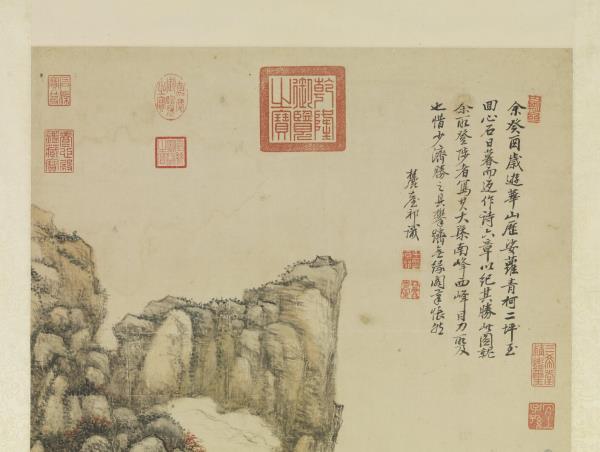
余癸酉歲遊華山。歷娑蘿青柯二坪。至回心石。日暮而返。作詩六章。以紀其勝。此圖就余所登陟者。寫其大槩。南峰西峰目力所及也。惜少濟勝之具。攀躋無緣。閣筆悵然。麓臺祁識。 |
行書 |
|
| 印主 |
印記 |
| 王原祁 |
王原祁印 |
| 王原祁 |
麓臺 |
| 王原祁 |
古期齋 |
| 王原祁 |
石師道人 |
|
| 印記類別 |
印主 |
印記 |
| 鑑藏寶璽 |
清內府印 |
三希堂精鑑璽 |
| 鑑藏寶璽 |
清內府印 |
石渠寶笈 |
| 鑑藏寶璽 |
清內府印 |
宜子孫 |
| 鑑藏寶璽 |
宣統帝 |
宣統御覽之寶 |
| 鑑藏寶璽 |
宣統帝 |
宣統鑑賞 |
| 鑑藏寶璽 |
清高宗 |
乾隆御覽之寶 |
| 鑑藏寶璽 |
清高宗 |
乾隆鑑賞 |
| 鑑藏寶璽 |
宣統帝 |
無逸齋精鑑璽 |
| 鑑藏寶璽 |
清仁宗 |
嘉慶御覽之寶 |
| 鑑藏寶璽 |
清高宗 |
養心殿鑑藏寶 |
| 主題類別 |
主題(第一層) |
主題(第二層) |
主題說明 |
| 主要主題 |
山水 |
名勝 |
華山 |
| 主要主題 |
山水 |
秋景 |
|
| 其他主題 |
山水 |
石磴、棧道 |
石磴 |
| 其他主題 |
山水 |
雲 |
|
| 其他主題 |
山水 |
溪澗、湍泉 |
|
| 其他主題 |
山水 |
瀑布 |
|
| 其他主題 |
建築 |
房舍 |
|
| 其他主題 |
建築 |
橋 |
|
| 其他主題 |
樹木 |
|
|
| 類別 |
參考資料 |
| 內容簡介 |
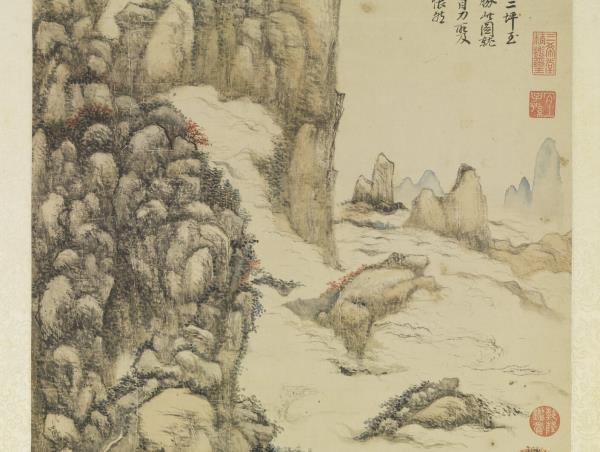
王原祁,江蘇太倉人。明崇禎十五年生,清康熙五十四年卒。(西元一六四二-一七一五年)王原祁畫,得之家學,而沉著茂實,出於天性。此圖纍石成山,而不覺細碎,蓋用墨渾厚,足以總攝全體。雲煙漫漶,是黑中求白,實裡求虛。逐使近山益形突出,背山漸澹、漸簡、漸小,而層次因之井然矣。五十二歲以後畫。
|
| 內容簡介 |
西嶽華山在今陜西省華陰縣南,主峰三峰聳峙,眾山拱立圍繞,遠望如花朵,因此得名為「華山」。華山勝景素為世人嚮往,明代畫家曾親臨其境,而後寫入畫圖,此幅則為清人王原祁遊歷歸來之作。王原祁(一六四二-一七一五),字茂京,號麓台,江蘇太倉人,官至戶部侍郎,曾以繪畫供奉內廷,畫風受董其昌影響,從臨摹傳統開闢自己的風格。此幅傳緒元人筆墨的意趣,與華山實景關聯不多。
|
| 內容簡介 |
王原祁(1642-1715),江蘇太倉人。字茂京,號麓台,王時敏之孫。繼承家法,學元四家,然能自出心裁,為清初四王之一。
此幅為畫家遊歷華山歸來之作。畫中壘石成山,而不覺細碎,蓋用墨渾厚,足以總攝全體。雲煙迷漫,是黑中求白,實裡求虛。遂使近山益形突出,背山漸淡、漸簡、漸小,因之層次井然。全圖重在筆情墨趣,與華山實景並無關聯。從畫風看來,應為王氏五十二歲以後所畫。
(20110913)
|
| Description |
Wang Yuanqi (style name Maojing, sobriquet Lutai) was a native of Taicang in Jiangsu and the grandson of Wang Shimin. Following in the family tradition, he studied the styles of the Four Yuan Masters but also was able to give play to his natural talents, becoming known as one of the Four Wangs of the Early Qing.
This painting, done after the artist had visited Mount Hua, reveals overlapping rocks that form mountains but do not appear scattered. The use of ink is simple and straightforward, sufficient to unite all the parts into a total form. The clouds and mists are hazy, resulting from the suggestion of light in the dark and void within the solid. This interplay causes the foreground mountains to project forward and the background mountains to gradually diminish in size. The painting throughout focuses on the artist’s interest in the use of brush and ink, being unrelated to the actual appearance of Mount Hua itself. Judging from the style, it was probably done by Wang after the age of 52.
(20110913)
|
| Description |
Mount Hua (“Blossom”), Western of the 5 Sacred Peaks, is in southern Hua-ying County, modern Shensi. The main mount comprises 3 lofty peaks surrounded by lesser ones. From a distance, they look like a blossom, hence its name. The scenic wonders of Mount Hua have attracted people for ages. Ming (1368-1644) painters traveled there and recorded their experiences in art. This work by Wang Yűan-ch’i was done after a visit. A native of T’ai-ch’ang, Kiangsu, he served to Vice-minister of Revenue and often did works for the court. His style was influenced by Tung Ch’i-ch’ang’s, starting with copying the ancients. This work has more to do with Yűan (1279-1368) brushwork than actual Mount Hua scenery, which served as a vehicle for his own style.
|
| Description |
Wang Yuan-ch'i was a native of T'ai-ts'ang, Kiangsu. A grandson of Wang Shih-min (1592-1680), he is included among the four Great Wangs of the Ch'ing dynasty. In "Autumn Colors on Mount Hua", the Mountains are composed of layers of stones, but there is no feeling of fragmentation. Wang Yuan-ch'i's use of heavy ink enabled him to unite all parts of the painting into a total image. The diffusion of the clouds results from the interplay of light and dark, positive and negative. This interplay causes the foreground mountains to project forward, while the background mountains gradually diminish in size. Wang Yuan-ch'i painted the landscape sometime after his 51st year.
|
| 收藏著錄 |
石渠寶笈初編(養心殿),上冊,頁671
|
| 收藏著錄 |
故宮書畫錄(卷五),第三冊,頁541
|
| 收藏著錄 |
故宮書畫圖錄,第十冊,頁359-360
|
| 參考書目 |
1.江兆申,〈清王原祁華山秋色〉,收入胡賽蘭編,《清王原祁畫山水畫軸特展》(臺北:國立故宮博物院,1997年初版),頁134。
|
本院文物保存維護依〈國立故宮博物院典藏文物管理作業要點〉及〈國立故宮博物院文物修護業務作業原則〉辦理
抽盤點紀錄
修護紀錄