| 文物統一編號 |
故畫000720N000000000
|
| 作品號 |
故畫00072000000 |
| 品名 |
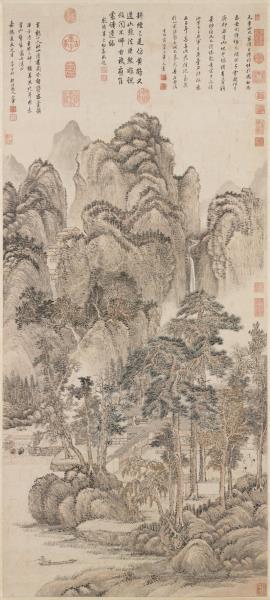
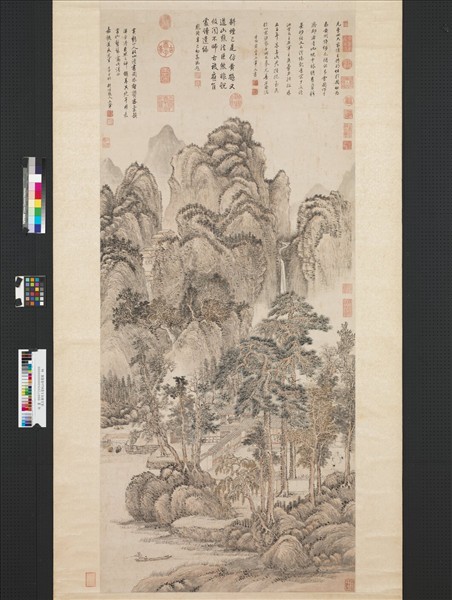
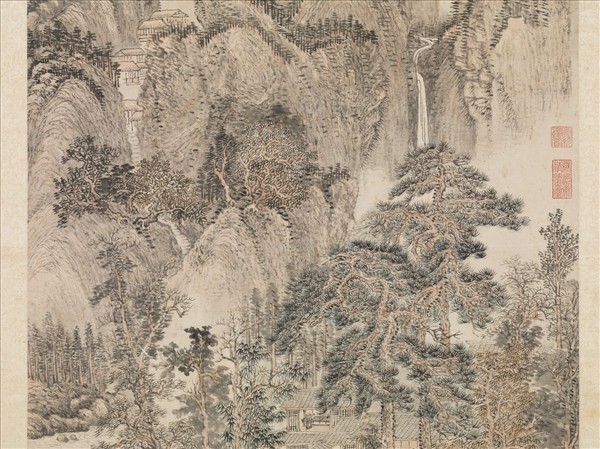
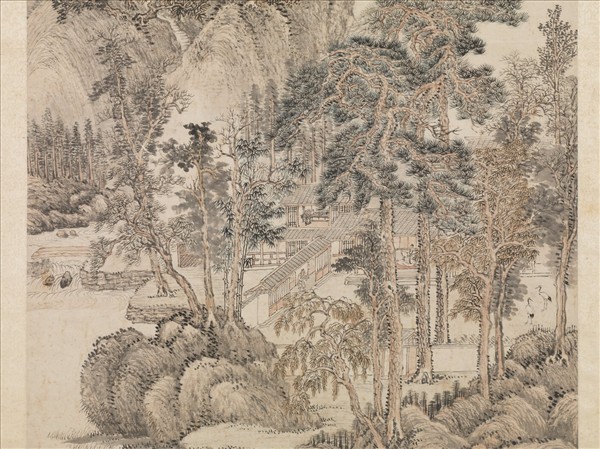
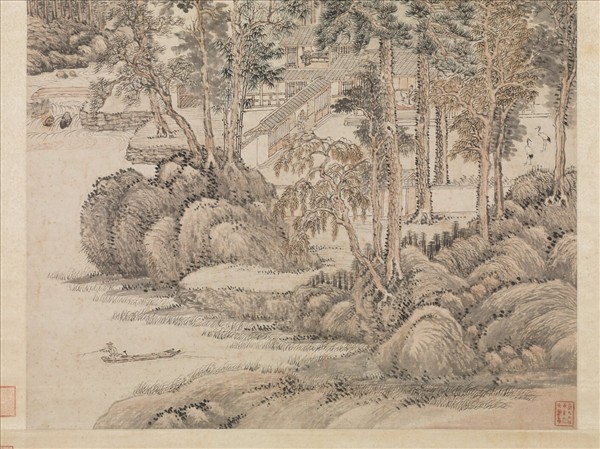
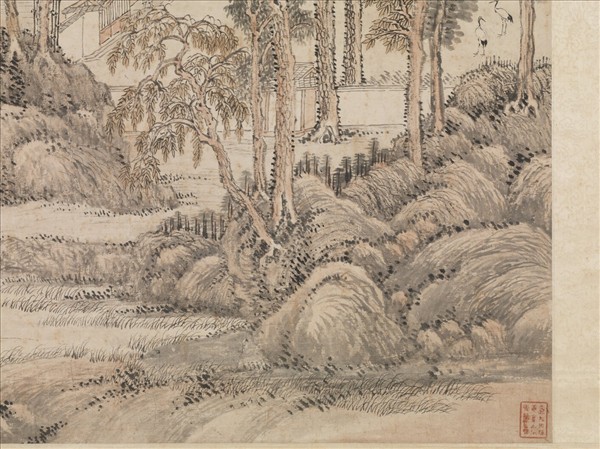
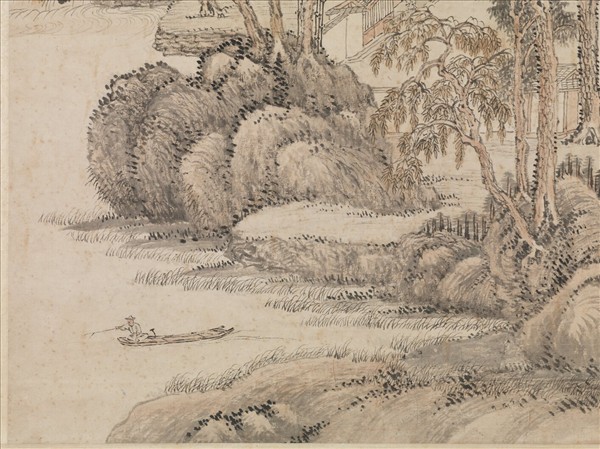
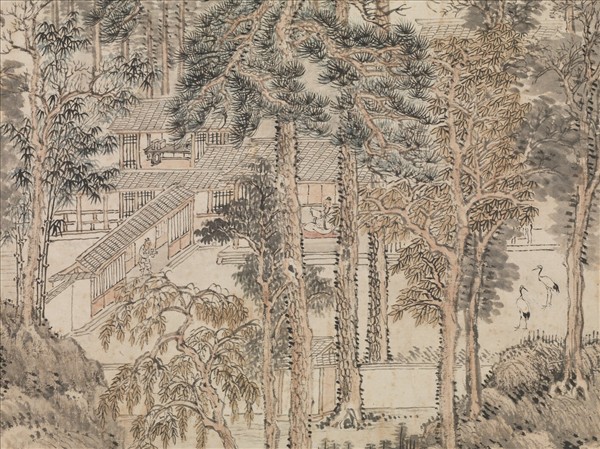
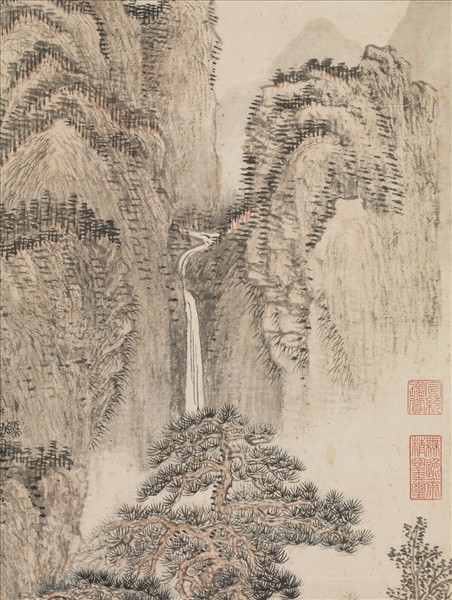
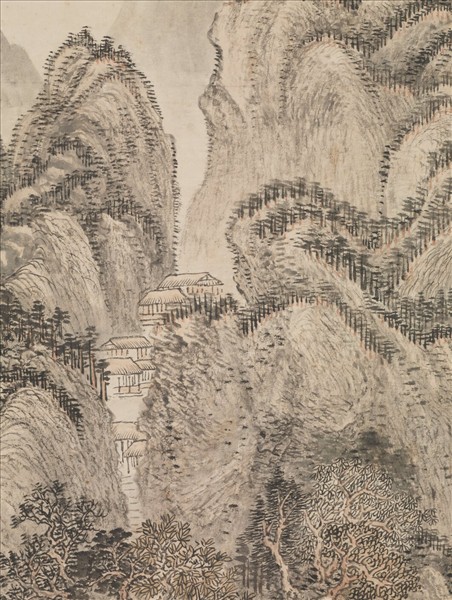
清王翬倣王蒙秋山讀書圖 軸
Imitating Wang Meng’s “Reading in Autumnal Mountains” |
| 分類 |
繪畫 |
| 作者 |
王翬,Wang Hui |
| 創作時間 |
清聖祖康熙三十一年(1692) |
| 數量 |
一軸 |
| 題跋類別 |
作者 |
位置 |
款識 |
書體 |
全文 |
| 作者款識 |
王翬
印記 expand_more
|
本幅 |
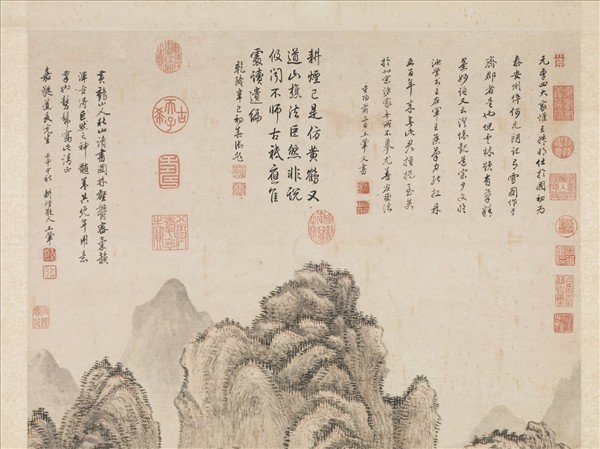
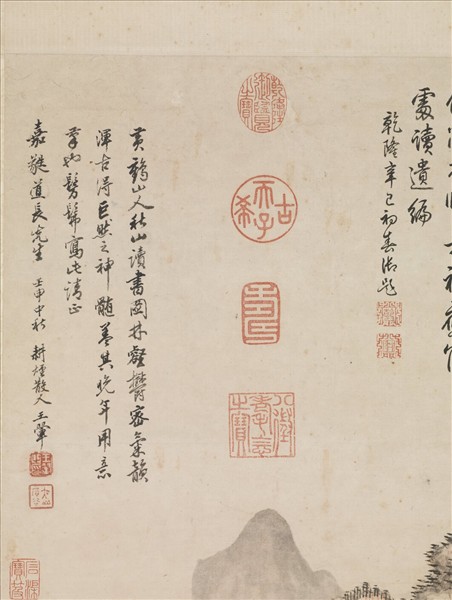
黃鶴山人秋山讀書圖。林壑鬱密。氣韻渾古。得巨然之神髓。蓋其晚年用意筆也。髣髴寫此。請正嘉甤道長先生。壬申(西元一六九二年)中秋。耕煙散人王翬。 |
行書 |
|
|
|
| 作者款識 |
王翬
印記 expand_more
|
本幅 |
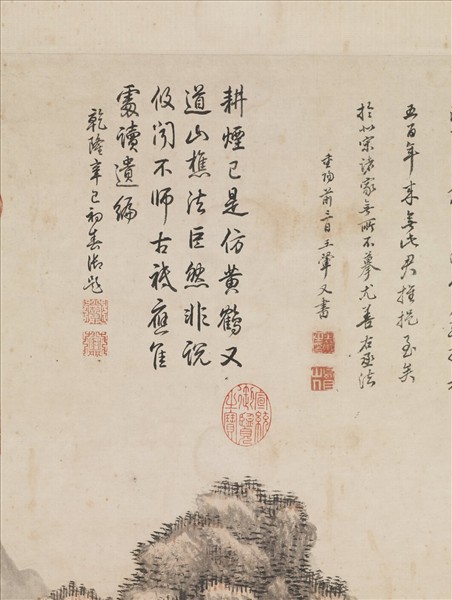
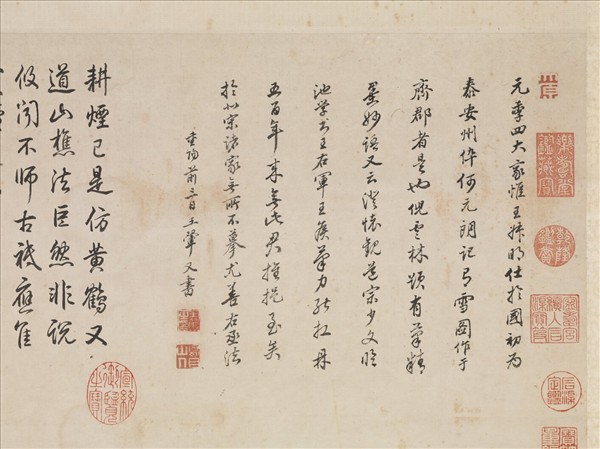
元季四大家。惟王叔明仕於國初。為泰安州倅。何元朗記。有雪圖作于齊郡者是也。倪雲林題。有筆精墨妙語。又云。澄懷觀道宗少文。臨池學書王右軍。王侯筆力能扛鼎。五百年來無此君。推挹至矣。於北宋諸家。無所不摹。尤善右丞法。重陽前三日。王翬又書。 |
草書 |
|
| 印主 |
印記 |
| 王翬 |
太原 |
| 王翬 |
王翬之印 |
| 王翬 |
烏目山人 |
| 王翬 |
意在丹丘黃鶴白石青藤之間 |
|
| 題跋 |
清高宗
印記 expand_more
|
本幅 |
乾隆辛巳(西元一七六一年)初春御題 |
行書 |
耕煙已是仿黃鶴。又道山樵法巨然。非說攸聞不師古。祇應佳處讀遺編。乾隆辛巳(西元一七六一年)初春御題。 |
|
|
| 印記類別 |
印主 |
印記 |
| 鑑藏寶璽 |
清高宗 |
八徵耄念之寶 |
| 鑑藏寶璽 |
清內府印 |
三希堂精鑑璽 |
| 鑑藏寶璽 |
清高宗 |
古稀天子 |
| 鑑藏寶璽 |
清高宗 |
石渠定鑑 |
| 鑑藏寶璽 |
清內府印 |
石渠寶笈 |
| 鑑藏寶璽 |
清內府印 |
宜子孫 |
| 鑑藏寶璽 |
宣統帝 |
宣統御覽之寶 |
| 鑑藏寶璽 |
宣統帝 |
宣統鑑賞 |
| 鑑藏寶璽 |
清高宗 |
乾隆御覽之寶 |
| 鑑藏寶璽 |
清高宗 |
乾隆鑑賞 |
| 鑑藏寶璽 |
宣統帝 |
無逸齋精鑑璽 |
| 鑑藏寶璽 |
清高宗 |
壽 |
| 鑑藏寶璽 |
清高宗 |
寧壽宮續入石渠寶笈 |
| 鑑藏寶璽 |
清高宗 |
樂壽堂鑑藏寶 |
| 鑑藏寶璽 |
清高宗 |
寶笈重編 |
| 主題類別 |
主題(第一層) |
主題(第二層) |
主題說明 |
| 主要主題 |
山水 |
秋景 |
|
| 次要主題 |
建築 |
房舍 |
|
| 次要主題 |
建築 |
齋館 |
|
| 次要主題 |
樹木 |
松 |
|
| 其他主題 |
人物 |
侍從(侍女、童僕) |
童僕 |
| 其他主題 |
人物 |
高士(士人、隱士) |
|
| 其他主題 |
人物 |
漁夫、船夫 |
船夫 |
| 其他主題 |
山水 |
石磴、棧道 |
石磴 |
| 其他主題 |
山水 |
溪澗、湍泉 |
|
| 其他主題 |
山水 |
瀑布 |
|
| 其他主題 |
建築 |
庭院 |
|
| 其他主題 |
建築 |
橋 |
|
| 其他主題 |
建築 |
籬笆、圍牆 |
圍牆 |
| 其他主題 |
翎毛 |
鶴 |
|
| 其他主題 |
船 |
|
|
| 其他主題 |
器用 |
文玩(琴棋書畫) |
書 |
| 其他主題 |
樹木 |
|
|
| 其他主題 |
樹木 |
竹 |
|
| 其他主題 |
樹木 |
寒林.枯樹 |
枯樹 |
| 技法 |
技法細目 |
| 人物衣紋描法(減筆) |
|
| 苔點 |
|
| 皴法 |
披麻皴 |
| 寫意 |
|
| 類別 |
參考資料 |
| 內容簡介 |
王翬(一六三二-一七一七),字石谷,號耕煙散人、烏目山人、劍門樵客、清暉主人。少即善畫,繼得王鑑、王時敏指授,並隨之閱覽各地珍藏,藉機臨摹名蹟,因能筆參古今,貌含南北,畫技之精熟為清代第一。
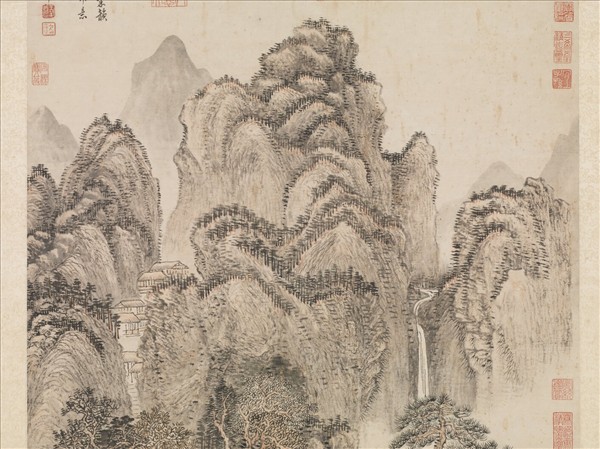
王蒙善繁密皴筆,山巒林木叢鬱深邃,多是夏秋山野之情狀。故仿王氏者,多作此二季之景。石谷以淡筆勾定略皴後,再施以枯筆牛毛皴,深得王蒙蒼鬱筆趣。成於壬申(一六九二),作者六十一歲。
|
| 內容簡介 |
王翬(1632-1717),字石谷,號耕煙散人、烏目山人、劍門樵客、清暉主人。少即善畫,後得王鑑、王時敏指授,並隨時觀摩臨仿名蹟,因能筆參古今,貌含南北,畫技之精熟為清代第一。
王蒙善繁密皴筆,山巒林木叢鬱深邃,多是夏秋山野之情狀。故仿王氏者,多作此二季景致。石谷以淡筆鉤定山石後,略加皴寫,再施以枯筆牛毛皴,深得王蒙蒼鬱筆趣。此畫是壬申(1692)年王氏六十一歲之作。
(20110913)
|
| Description |
Wang Hui (style name Shigu; sobriquets Gengyan sanren, Wumu shanren, Jianmen qiaoke, Qinghui zhuren) was gifted at painting in his youth, later receiving instruction from Wang Jian and Wang Shimin, who also took him to view and copy masterpieces of art. Being able to absorb the brush manners of old and new, and encompassing both the Northern and Southern Schools, Wang Hui was among the best painters in the Qing dynasty and renowned for his mastery of technique.
Wang Meng excelled at complex texturing in brushwork, creating peaks and forests dense and deep while often rendering rustic scenes in summer and autumn, which is why imitators of his works often did paintings of landscapes in these two seasons. Here, after Wang Hui had used light outlines to delineate the mountain forms, he added a little texturing and then applied “ox-hair” texture strokes with a dry brush, achieving the hoary brush manner of Wang Meng. This work was done in 1692 by Wang at the Chinese age of 61.
(20110913)
|
| Description |
Wang Hui (style name: Shih-ku; sobriquets; Keng-yen san-jen, Wu-mu Shan-jen, Ch’ien-men chi’ao-k’o, Ch’ing-hui Chu-jen) was a native of Ch’ang-shu, Kiangsu. He was already a capable painter in his youth when he met Wang Chien (1598-1677) and Wang Shih-min (1592-1680), who both became his teachers. In addition to providing him with thorough instruction in painting, they also took him to view and copy the works of ancient masters in many great collections. In this way, he was able to absorb the brush techniques of both past and contemporary masters. Because of Wang Hui’s consummate skill and being able to unite the best qualities of the Northern and Southern Schools of painting, he became the greatest master of brush technique in the Ch’ing dynasty.
Wang Meng (1309-85), after whose works the present painting is patterned, was an artist best known for his scenes of densely wooded mountain peaks in summer and autumn, and short, nervous texture strokes. After Wang Hui roughly outlined the forms in light ink, he then used a dry brush to execute “ox-hair” (numerous, tight-knit) texture strokes, thus capturing the spirit of Wang Meng’s works. This painting was done in 1692 when Wang Hui was 61-years-old.
|
| 收藏著錄 |
石渠寶笈續編(寧壽宮),第五冊,頁2891
|
| 收藏著錄 |
故宮書畫錄(卷五),第三冊,頁528
|
| 收藏著錄 |
故宮書畫圖錄,第十冊,頁133-134
|
本院文物保存維護依〈國立故宮博物院典藏文物管理作業要點〉及〈國立故宮博物院文物修護業務作業原則〉辦理
抽盤點紀錄
修護紀錄