| 文物統一編號 |
故畫000525N000000000
|
| 作品號 |
故畫00052500000 |
| 品名 |
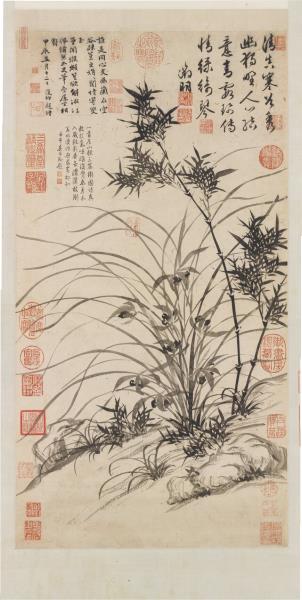
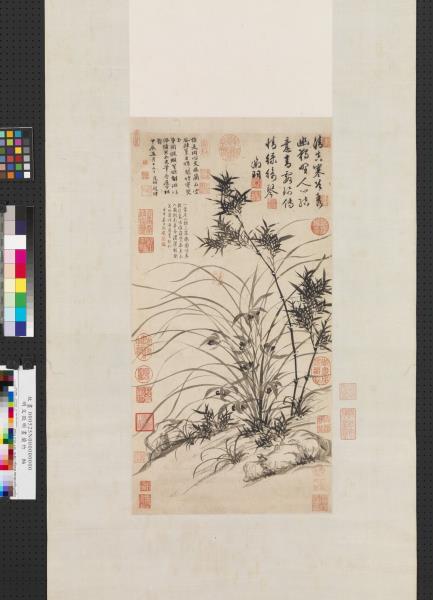
明文徵明畫蘭竹 軸
Orchids and Bamboo |
| 分類 |
繪畫 |
| 作者 |
文徵明 |
| 數量 |
一軸 |
| 位置 |
尺寸(公分) |
| 全幅 |
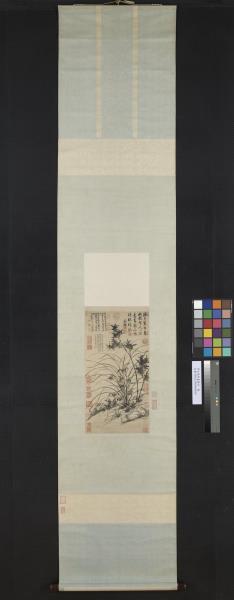
285x58 |
| 本幅 |
62x31.2 |
| 題跋類別 |
作者 |
位置 |
款識 |
書體 |
全文 |
| 作者款識 |
文徵明
印記 expand_more
|
本幅 |
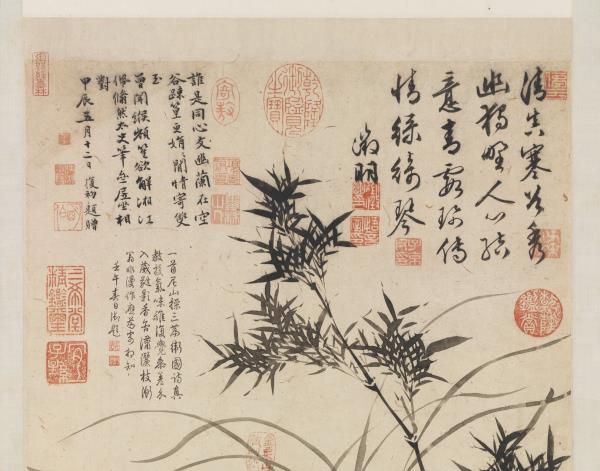
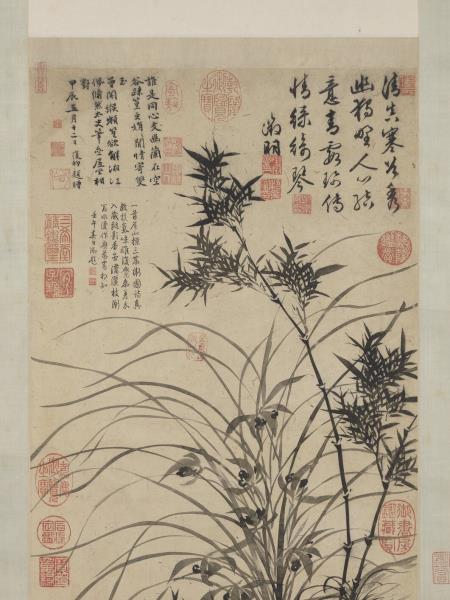
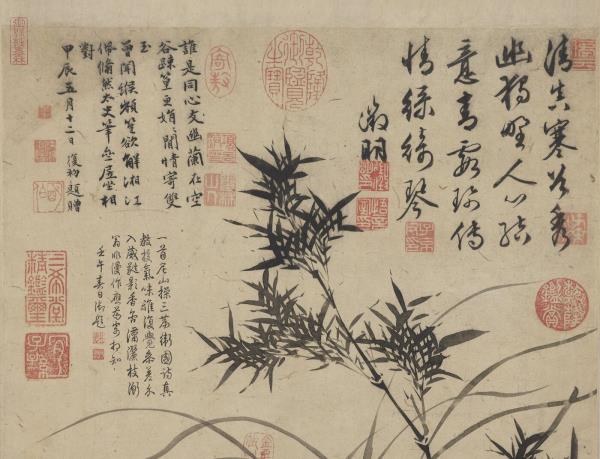
清真寒谷秀。幽獨野人心。結意青霞珮。傳情綠綺琴。徵明。 |
草書 |
|
| 印主 |
印記 |
| 文徵明 |
停雲 |
| 文徵明 |
徵明印 |
| 文徵明 |
悟言室印 |
| 文徵明 |
徵明 |
| 文徵明 |
玉磬山房 |
|
| 題跋 |
華夏
印記 expand_more
|
本幅 |
甲辰五月十二日復初題贈 |
行書 |
誰是同心友。幽蘭在空谷。疎篁更娟娟。閒情寄雙玉。曾聞緱嶺笙。欲解湘江佩。翛然太史筆。齋居坐相對。甲辰五月十二日復初題贈。 |
|
|
| 題跋 |
清高宗
印記 expand_more
|
本幅 |
壬午(西元一七六二年)春日御題。 |
行書 |
一首尼山操。三篇衛國詩。真教投氣味。誰復覺参差。介入葳蕤影。香含瀟灑枝。衡翁非漫作。應為寄相知。壬午(西元一七六二年)春日御題。 |
|
|
| 印記類別 |
印主 |
印記 |
| 收傳印記 |
項元汴 |
子京父印(白文) |
| 收傳印記 |
項元汴 |
子京父印(朱文) |
| 收傳印記 |
項元汴 |
子孫永保 |
| 收傳印記 |
項元汴 |
寄傲 |
| 收傳印記 |
安岐 |
御題翰墨林 |
| 收傳印記 |
項元汴 |
項元汴印 |
| 收傳印記 |
項元汴 |
項墨林鑑賞章 |
| 收傳印記 |
項元汴 |
墨林山人 |
| 收傳印記 |
項元汴 |
墨林祕玩 |
| 收傳印記 |
項元汴 |
檇李 |
| 鑑藏寶璽 |
清內府印 |
三希堂精鑑璽 |
| 鑑藏寶璽 |
清高宗 |
石渠定鑑 |
| 鑑藏寶璽 |
清內府印 |
石渠寶笈 |
| 鑑藏寶璽 |
清內府印 |
宜子孫 |
| 鑑藏寶璽 |
宣統帝 |
宣統御覽之寶 |
| 鑑藏寶璽 |
宣統帝 |
宣統鑑賞 |
| 鑑藏寶璽 |
清高宗 |
乾隆御覽之寶 |
| 鑑藏寶璽 |
清高宗 |
乾隆鑑賞 |
| 鑑藏寶璽 |
清高宗 |
御書房鑑藏寶 |
| 鑑藏寶璽 |
宣統帝 |
無逸齋精鑑璽 |
| 鑑藏寶璽 |
清仁宗 |
嘉慶御覽之寶 |
| 鑑藏寶璽 |
清高宗 |
寶笈重編 |
| 主題類別 |
主題(第一層) |
主題(第二層) |
主題說明 |
| 主要主題 |
花草 |
蘭.蕙 |
蘭 |
| 主要主題 |
樹木 |
竹 |
|
| 類別 |
參考資料 |
| 內容簡介 |
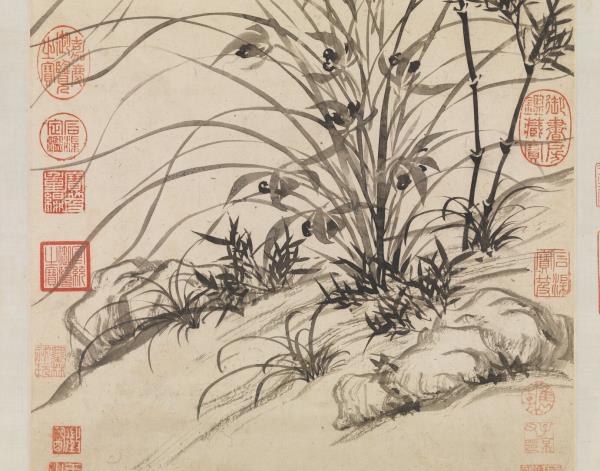
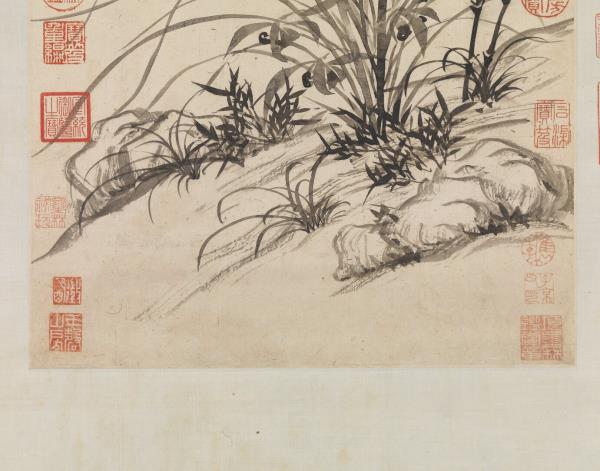
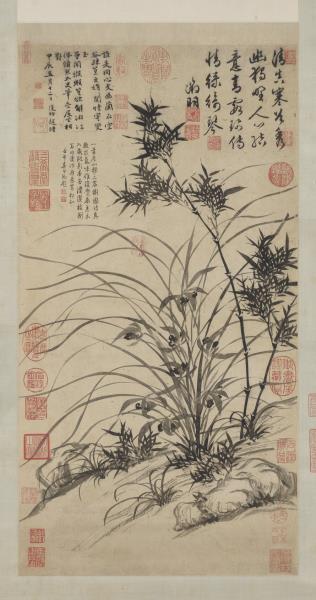
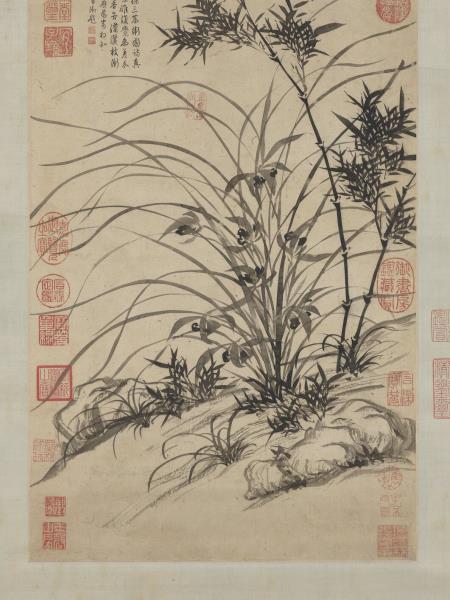
文徵明(西元一四七○—一五五九年),江蘇長洲人。詩、文、書、畫均極擅長,繪畫師法沈周,兩人同被尊為「吳派」的支柱,對明代中後期的影響,尤其顯著。 本幅是以「金粟山藏經紙」來作畫,描繪竹石和幽蘭的線條,下筆勁健有力,又迴旋自如,彷彿書家揮毫一般,全畫充滿了清逸高雅的文人氣息。雖然沒有註明年份,但從左上方畫家題字的風格來推測,應該是他七十多歲時的作品。
|
| 內容簡介 |
文徵明(西元一四七○-一五五九年),江蘇長洲人。初名壁,字徵明,後以字行。更字徵仲,號停雲生、衡山居士。畫師沈周(一四二七-一五○九),詩文書畫均佳,為明中葉四大家之一,對明末畫壇影響甚鉅。 本幅以藏經紙畫竹石幽蘭,蘭與石皆學趙孟頫,筆墨酣暢,誠屬得意之作。未識年份,但款字書風與丁未年(一五四七)作之「一川圖」、「江南春圖」近似,推斷應成於此際,時徵明七十八歲。
|
| 內容簡介 |
文徵明(1470-1559),江蘇長洲人。詩文書畫均擅長,畫師沈周,兩者對明代中後期畫壇影響顯著。
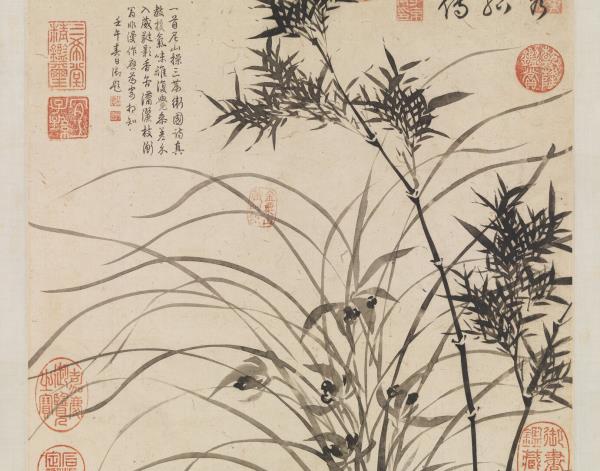
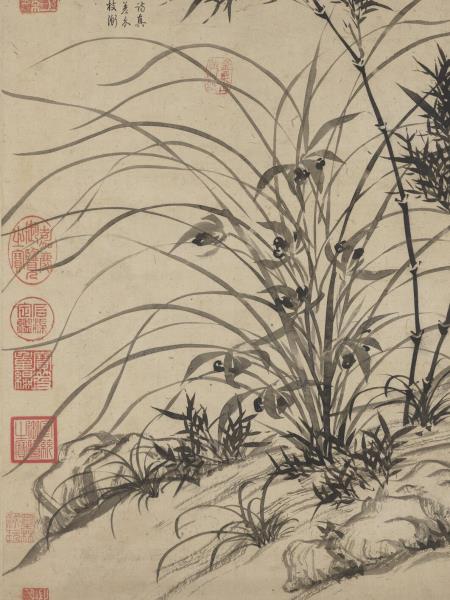
繪蘭竹叢生,葉長如帶,彎垂下折。湖石承襲趙孟頫(1254-1322),下筆勁健有力,迴旋自如。沒骨繪寫盛放蘭花花冠、花舌,濃墨點寫花蕾。旁襯墨竹兩竿,「人」字型竹葉交錯,能兼顧轉折面。構圖表現風中之蘭竹,描繪精妙,頗有情境。全圖詩畫、款印之佈局安排縝密嚴謹,自題詩首句描寫蘭竹幽雅秀麗之姿,末二句則表達以畫贈知己。(20110102)
|
| Description |
Wen Zhengming, a native of Changzhou in Jiangsu, excelled at poetry, painting, and calligraphy. In painting, he studied under Shen Zhou (1427-1509), the two of them becoming influential leaders in painting during the middle and late Ming dynasty.
In this painting of a cluster of orchids and bamboo, the orchid leaves grow long and ribbon-like as they curve and droop downwards. The style of the rocks follows in the manner of Zhao Mengfu (1254-1322), the application of the brush strong and forceful, but also turning with ease. The “boneless” method of painting in washes portrays the corolla and ray of the orchids in full blossom, and dark ink renders the buds. To the side are two stalks of bamboo in ink with crisscrossing leaves in the shape of the Chinese character “ren” (人) as the artist paid particular attention to the sides. The whole work, including the arrangement of poetry and seal impressions, is deliberate and exacting. The first line of the artist’s own poem describes the elegantly beautiful poses of the orchid and bamboo, while the last two lines express the intimacy of the painting.(20110102)
|
| Description |
Wen Cheng-ming (original name Pi, later style name Cheng-chung, and sobriquets T’ing-yun-sheng and Heng-shan chu-shih) was a native of Ch’ang-chou, Kiangsu. In painting, he followed after Shen Chou (1427-1509), but he also excelled at calligraphy, poetry, and prose. He became knownas one of the Four Great Masters of the middle Ming and he had an enormous influence on the art field in the late Ming. This painting of bamboo, rocks, and orchids was done on special “sutra” paper. The rendering of the orchids and stones reflects the study of the style of Chao Meng-fu (1254-1322). The brushwork is flowing and fluent and done in an easy and confident manner. Although this painting is not dated, the style of inscription is calligraphically similar those on View from the Riverside and Spring in Kiangnan, which were done in 1547. Thus, this painting may have been completed at around this time.
|
| Description |
Wen Cheng-ming, a native of Soochow, excelled at the arts of poetry, writing, calligraphy, and painting. His style followed that of Shen Chou(1427-1509), and both have been praised as the pillars of the "Wu School", having a profound influence on on middle and late Ming art circles. This work was done on "Mt. Chin-shu sutra paper". It depicts rocks and bamboo along with orchids done in lines of brushwork that are powerful yet natural, much like those of a calligrapher. The work is filled with the lofty and elegant style of the scholar. Although this work is undated, the style of Wen Cheng-ming's calligraphy inscribed in the upper right appears to have been done sometime after the age of 70.
|
| 收藏著錄 |
石渠寶笈續編(御書房),第四冊,頁2001
|
| 收藏著錄 |
故宮書畫錄(卷五),第三冊,頁393-394
|
| 收藏著錄 |
故宮書畫圖錄,第七冊,頁161-162
|
| 參考書目 |
1.江兆申,〈文徵明畫蘭竹 軸〉,收入國立故宮博物院編,《吳派畫九十年展》(臺北:國立故宮博物院,1975年初版,1976年再版,1981年三版),頁313 - 314。
2.本社,〈明文徵明蘭竹圖〉,《故宮文物月刊》,第13期(1984年4月),封底 。
3.許郭璜,〈明文徵明畫蘭竹〉,《故宮文物月刊》,第106期(1992年1月),頁124-131。
4.〈明文徵明畫蘭竹 軸〉,收入譚怡令、劉芳如、林莉娜主編,《滿庭芳-歷代花卉名品特展》(臺北:國立故宮博物院,2010年十二月初版一刷),頁132-133。
|
| 參考書目 |
吳誦芬、童文娥、譚怡令,〈明文徵明畫蘭竹 軸〉,收入《明四大家特展-文徵明》(臺北:國立故宮博物院,2014.03),頁236-237、342。
|
本院文物保存維護依〈國立故宮博物院典藏文物管理作業要點〉及〈國立故宮博物院文物修護業務作業原則〉辦理
抽盤點紀錄
修護紀錄