| 類別 |
參考資料 |
| 內容簡介 |
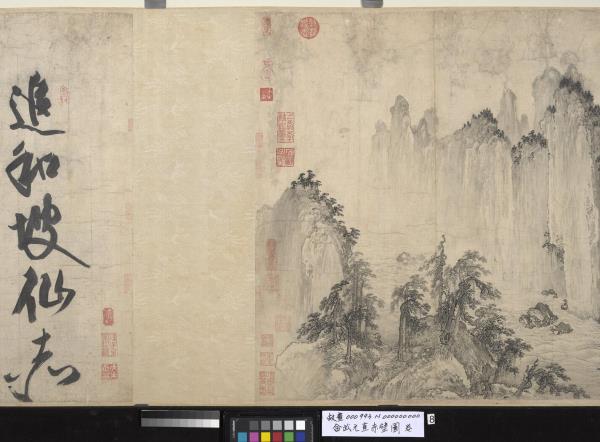
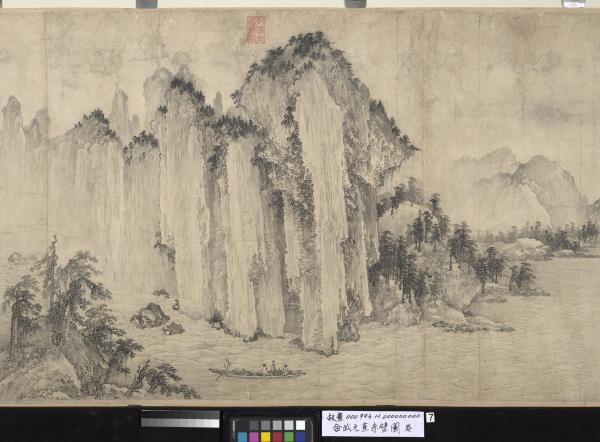
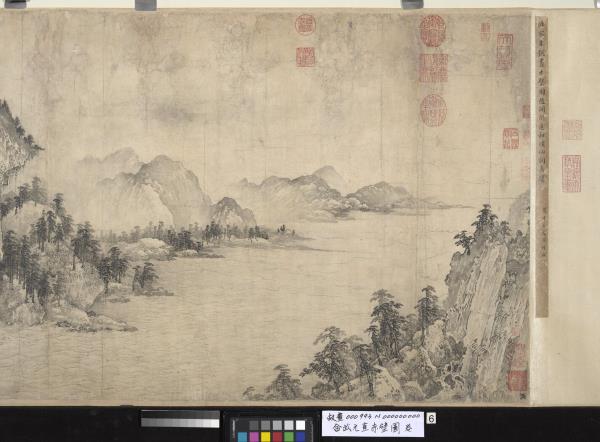
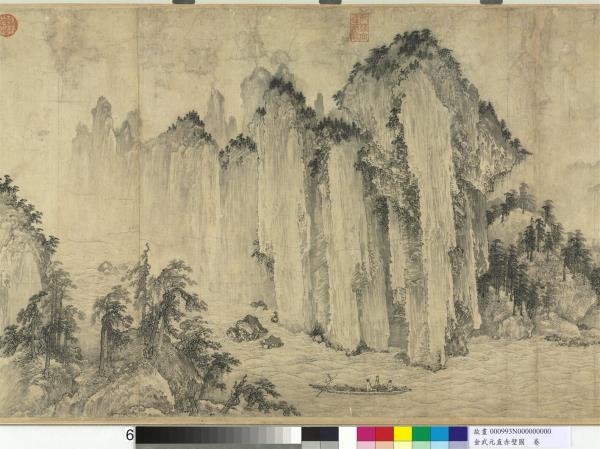
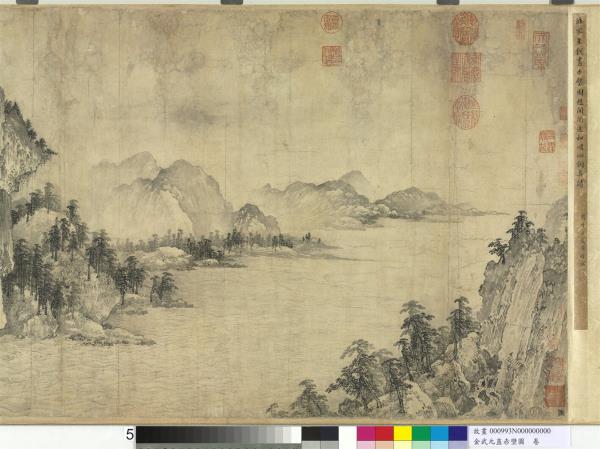
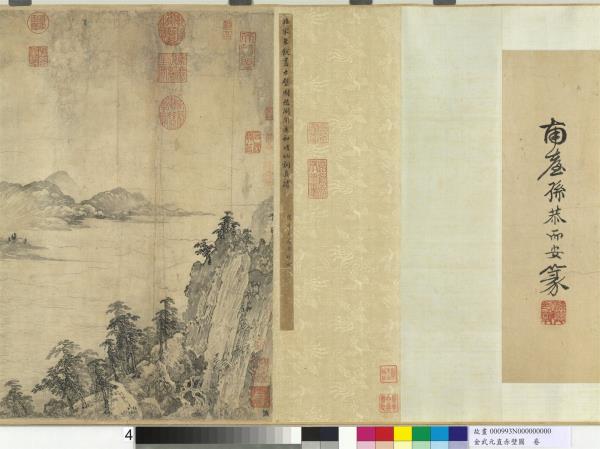
武元直,金章宗明昌時(西元一一九0-一一九五年)名士,善畫山水。圖中繪蘇軾傳誦千古的〈赤壁賦〉。東坡頭戴峨冠,與二客及一船夫正「縱一葦之所如,凌萬頃之茫然」。對岸赤壁巍然矗立,岸上松枝微彎,似乎「清風徐來」,水紋盤旋,暗示「江流有聲」。前景樹石用盛行於北方的李郭風格,主山皴紋直筆而下,明快俐落,遠山則用淡墨渲染,和南宋風格相通,全卷氣象萬千,是金畫傑作。
|
| 內容簡介 |
武元直,字善夫,北平人。金章宗(西元一一九0─一一九六年)時名士。善畫山水,有巢雲、曙雪等作傳世。 此圖寫東坡赤壁泛舟之景。通幅筆意圓勁,如鋼針鑴鐵。畫山窮其凹凸,寫水狀其盤渦,的屬古畫中之面目特立者。今據「元遺山集」中題趙閒閒書赤壁詞,云為武元直之作,而改原籤。
|
| 內容簡介 |
武元直(活動於1149-1189),字善夫,號廣漠道人,金朝明昌年間進士,擅畫山水,其山水承襲北宋以來李成、郭熙的北方山水風格。 此圖描繪蘇東坡與友人泛舟赤壁之下,舟上坐四人:東坡頭戴「高裝巾子」,另有二客及一船夫。石崖嶙峋峻拔,流水沖漱崖腳溪石,激起浪花,並成漩渦,景境偉壯險奇。用筆挺健,如鋼針鐫鐵,面目特立,亦可歸於斧劈系統之皴法。此手卷為本院收藏最早之赤壁圖,且為<赤壁賦>山水圖式中最為重要者,亦是畫史的名作。
|
| 內容簡介 |
武元直(活動於一一四九─一一八九)字善夫,號廣漠道人。武氏雖生長於金國,承襲了北宋以來李成郭熙的北方山水風格。江水湍急,一側有嶙峋巨壁,石壁下一舟逐波盪樣,舟上坐四人:東坡頭戴「高裝巾子」,另有二客及一船夫。山水雄壯遼闊,赤壁斷岸千尺,水波起伏,江流有聲。此手卷為本院收藏最早之赤壁圖,且為<赤壁賦>山水圖式中最為重要者,也是畫史上的名作。
|
| 內容簡介 |
江水湍急,一側有嶙峋巨壁,石壁下一舟逐波盪樣,舟上坐四人:東坡頭戴「高裝巾子」,另二客及一船夫。山水雄壯遼闊,隱現北宋山水之氣勢。此手卷為本院收藏最早之赤壁圖,且為山水圖式中最為重要者。
|
| 內容簡介 |
武元直,活動於海陵王至金世宗時期(1149-1188),善畫山水。圖中描繪蘇軾與友人同遊赤壁之下。東坡頭戴高巾,與二客及一船夫正「縱一葦之所如,凌萬頃之茫然」。對岸赤壁巍然矗立,岸上松枝微彎,細筆描繪的水波微微盤環蕩漾,似乎表現當晚「清風徐來,水波不興」之意。前景樹石雖用盛行於北方的李郭風格,然主山以樸素的短直皴構成,全卷並以淡墨渲染,全無李郭風格原有的戲劇性筆墨與氣氛。加上整幅作品作於紙上,其素雅簡樸的氣質,回應了北宋末蘇軾等人所提倡之文人畫之旨趣,顯示此時金畫如何融匯原來北方地方傳統與新興之文人畫風潮。
|
| 內容簡介 |
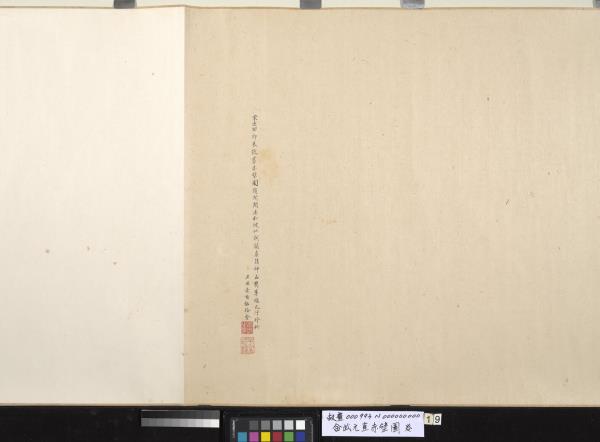
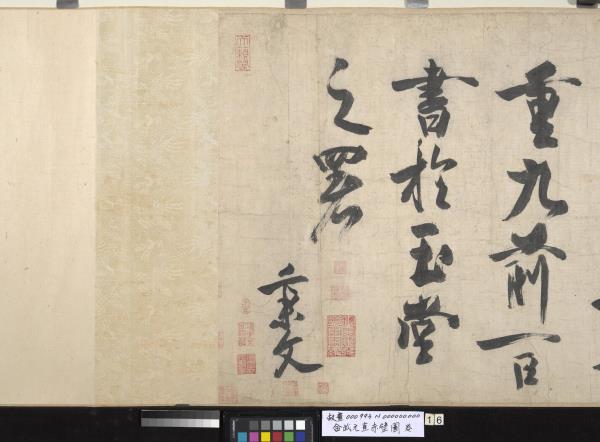
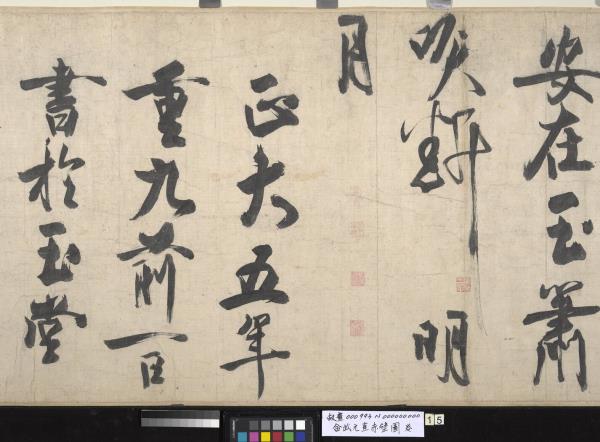
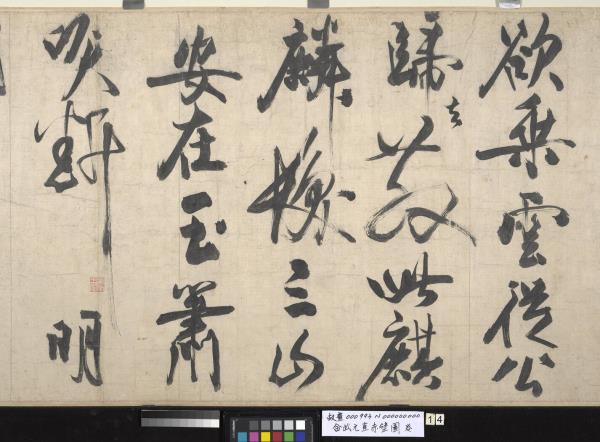
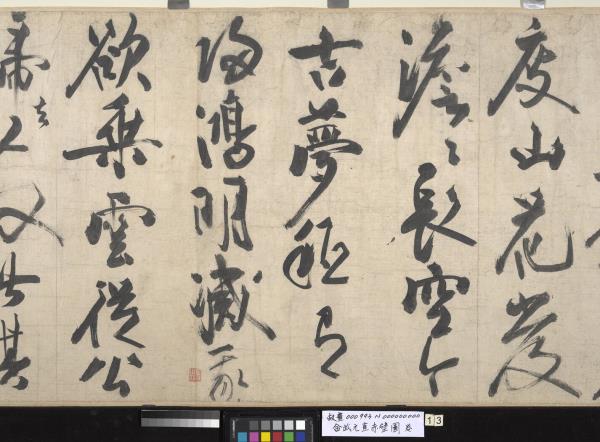
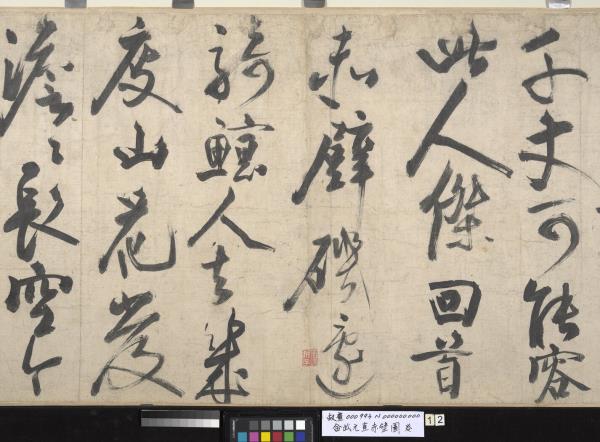
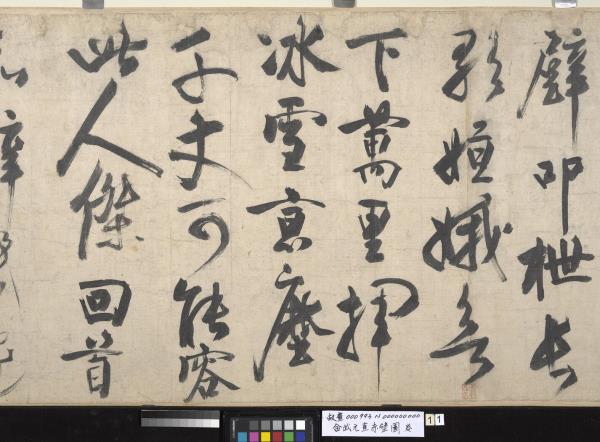
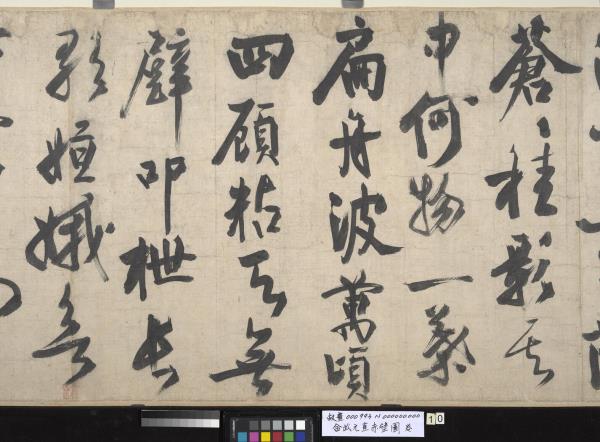
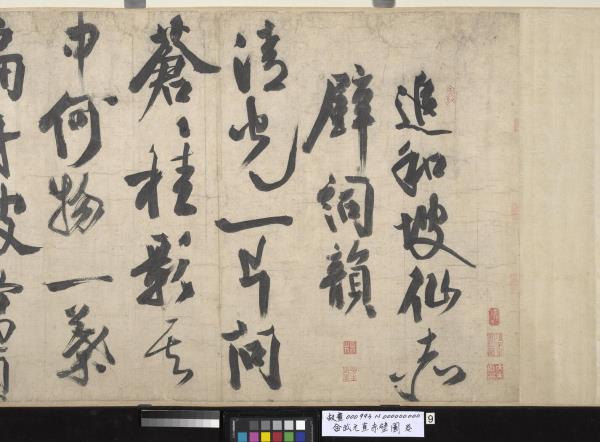
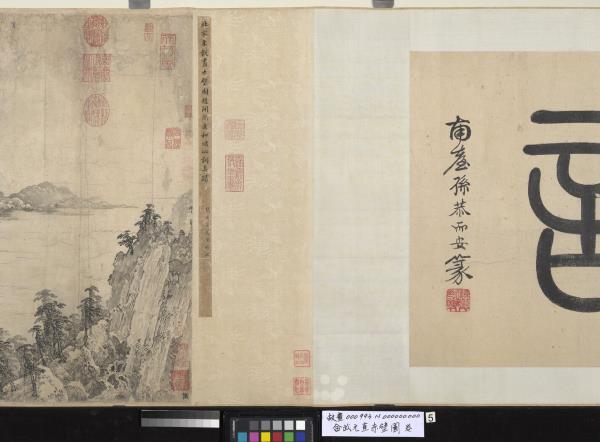
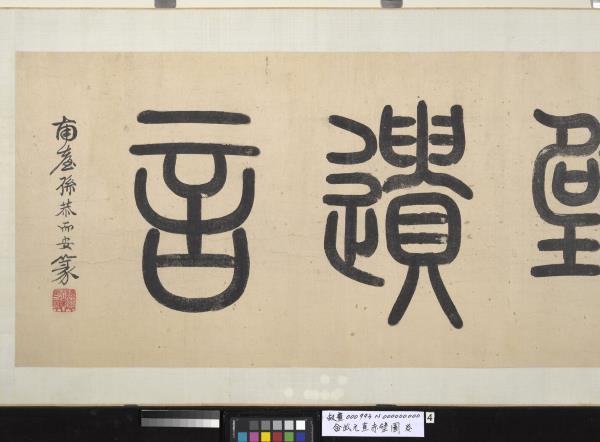
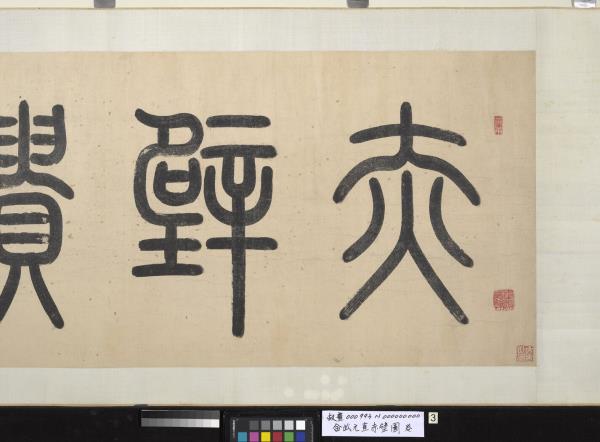
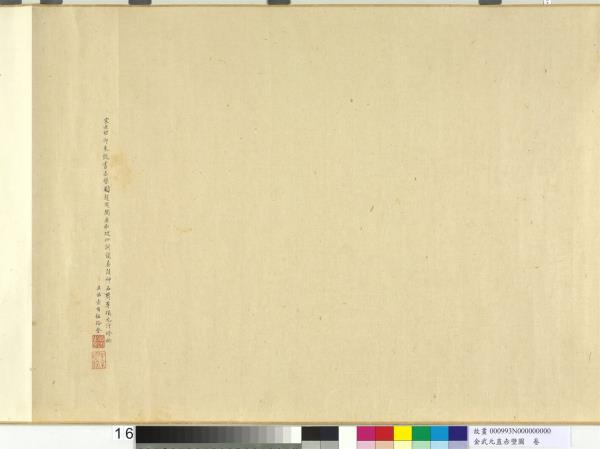
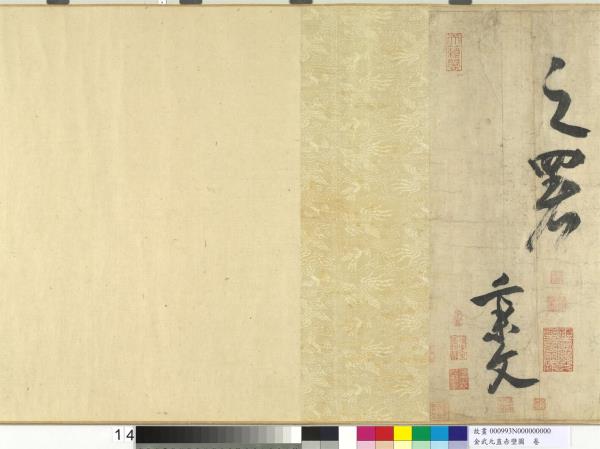
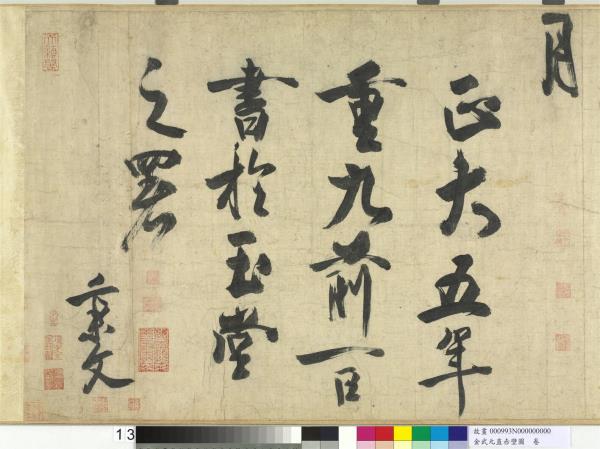
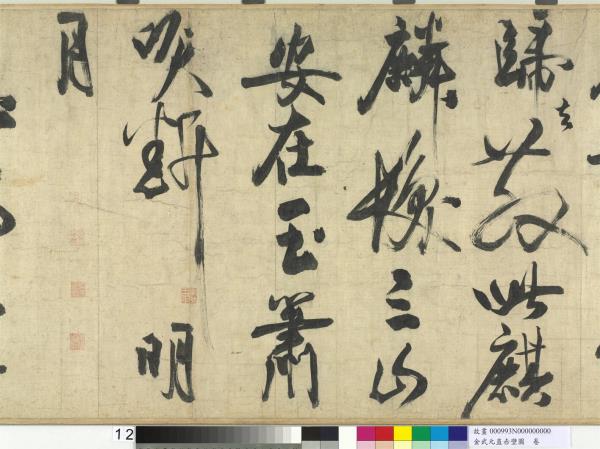
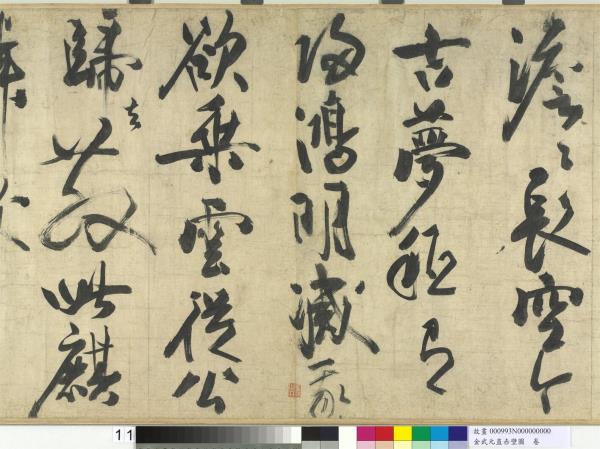
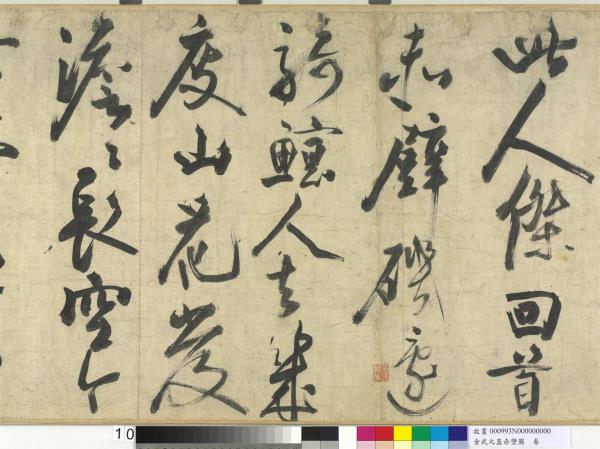
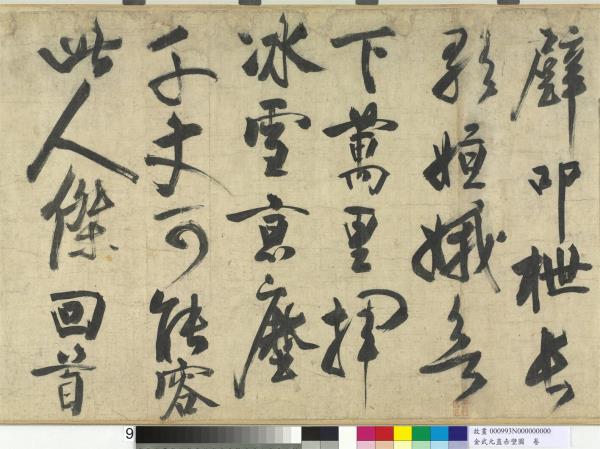
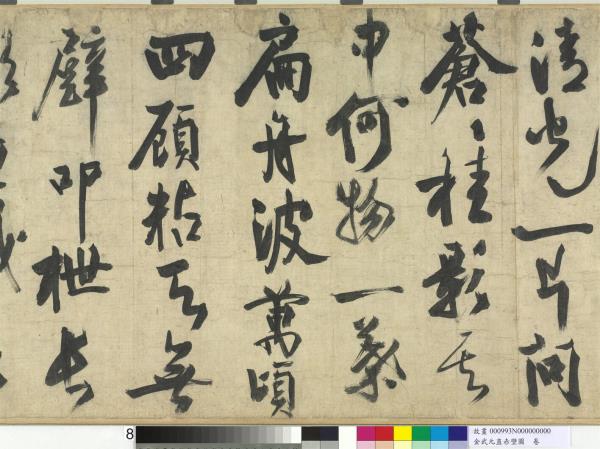
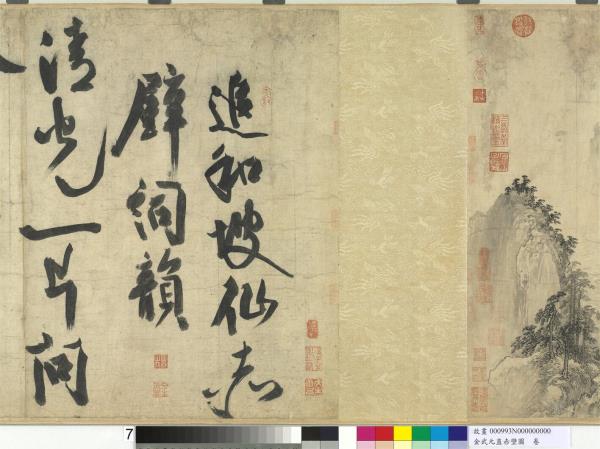
趙秉文(1159-1232)字周臣,號閑閑,河北磁縣人。金世宗大定二十五年進士,歷仕世宗、章宗、衛紹王、宣宗、哀宗五朝,著述豐富,目前尚有《閑閑老人滏水文集》流傳於世。趙氏傾慕漢文化,對北宋蘇軾、黃庭堅的崇敬,每於文字間自然流露。書法雖然也取徑蘇黃,實際上從唐人出發,不止於一家之學。這段書跋筆意奔放,如見東坡的意趣和精神,其中真實無華的本質最為動人。(20101015)
|
| Description |
Zhao Bingwen (style name Zhouchen, sobriquet Xianxian) was a native of Cixian, Hebei. He became a Presented Scholar (jinshi) in 1185 under Emperor Shizong of the Jin dynasty and went on to serve under four other rulers (Zhangzong, Weishaowang, Xuanzong, Aizong). A prolific writer, his texts are still extant in Literary Collection of the Xianxian Old Man of Fushui.
Though active in the foreign state of Jin, Zhao had a strong inclination towards Chinese culture, holding Su Shi and Huang Tingjian of the Northern Song in great admiration and their styles naturally flowing forth in his writings. As for calligraphy, though Zhao also followed Su and Huang, he actually reached back to the Tang dynasty and was not restrained to any one particular manner. The brushwork in this colophon of calligraphy is like witnessing the feeling and spirit of Su Shi, the authentic and unadulterated essence being its most moving aspect.(20101015)
|
| Description |
Wu Yuan-chih, a famous scholar under Emperor Chang-tsung, excelled at landscape painting. This work illustrates Su Shih's immortal “Ode on the Red Cliff”. Su, wearing a gauze cap, appears with two passengers and an oarsman in a scene reminiscent from the ode (“Like a single reed against the vastness of Nature”). On the opposite shore stands the majestic Red Cliff. Pine branches bend slightly, as indicated in the ode by a “light breeze”, and the whorls in the water suggest the “sound of the river flowing”. The style of foreground trees and rocks here was popular in northern China under the Chin dynasty, while the light distant mountains are similar to those done in the south under the Sung. The clear and decisive strokes for the cliff and the majestic spirit also help make this a masterpiece of Chin dynasty painting.
|
| Description |
Wu Yuan-chih, a famous scholar under Emperor Chang-tsung, excelled at landscape painting. This work illustrates Su Shih’s immortal “Ode on the Red Cliff”. Su, wearing a gauze cap, appears with two passengers and an oarsman in a scene reminiscent from the ode (“Like a single reed against the vastness of Nature”). On the opposite shore stands the majestic Red Cliff. Pine branches bend slightly, as indicated in the ode by a “light breeze”, and the whorls in the water suggest the “sound of the river flowing”. The style of foreground trees and rocks was popular in the north, while the light distant mountains are similar to those done in the south. The clear and decisive strokes for the cliff and the majestic spirit also make this a masterpiece.
|
| Description |
Wu Yuan-chih, tzu(style name) Shan-fu, received his chin-shih degree during the Ming-ch’ang period(1190-1195)of the Chin dynasty. He excelled in painting landscapes. This painting depicts Su Tung-p’o and his friends in a boat passing beneath the Red Cliff. Su, wearing a gauze cap, appears with two passengers and an oarsman in a scene reminiscent from the ode (“Like a single reed against the vastness of Nature”). On the opposite shore stands the majestic Red Cliff. Pine branches bend slightly, as indicated in the ode by a “light breeze”, and the whorls in the water suggest the “sound of the river flowing”. The style of foreground trees and rocks was popular in the north, while the light distant mountains are similar to those done in the south. The clear and decisive strokes for the cliff and the majestic spirit also make this a masterpiece.
|
| Description |
Wu Yuan-chih, a famous scholar under Emperor Chang-tsung, excelled at landscape painting. This illustrates Su shih’s immortal “Ode to the Red Cliff.” Su, wearing a gauze cap, appears with two passengers and an oarsman in a scene reminiscent from the ode. On the opposite shore stands the majestic Red Cliff. Pine branches bend slightly, as indicated in the ode by a “light breeze,” and the whorls in the water suggest the “sound of river flow.” The foreground trees and rocks in the Li Ch’eng and Kuo Hsi style were popular in the north, ane the vertical strokes for the cliff are decisive and have clarity. The distant mountains in light ink are similar to the style in the south, and the majestic spirit makes this a masterpiece of Chin painting.
|
| 收藏著錄 |
石渠寶笈續編(乾清宮),第一冊,頁309
|
| 收藏著錄 |
故宮書畫錄(卷四),第二冊,頁99
|
| 收藏著錄 |
故宮書畫圖錄,第十七冊,頁71-76
|
| 研究性論著 |
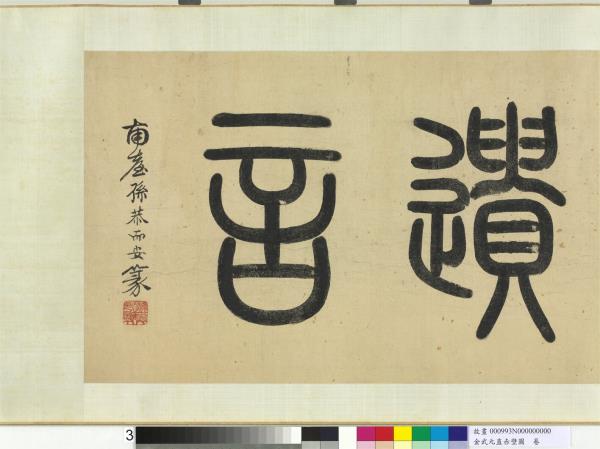
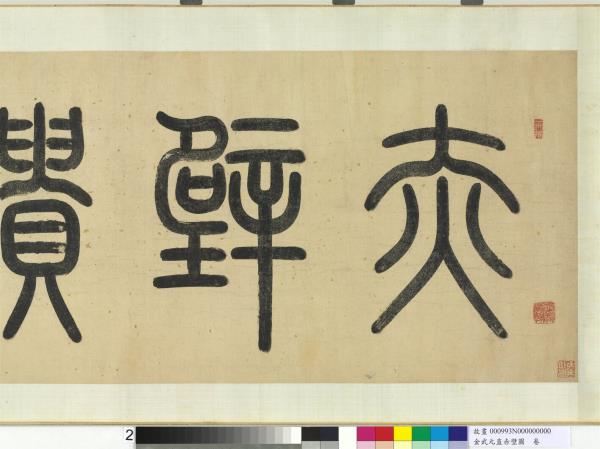
本幅無名款,卷前明代大收藏家項子京題籤:「北宋朱銳畫赤壁圖,趙閒閒追和坡仙詞真蹟,檇李天籟閣珍秘」。據《元遺山遺集》有題〈趙閒閒赤壁詞〉云:「赤壁圖,武元直所畫,門生元某謹書」。此圖作者實為武元直。(註1)武元直字善夫,號廣莫道人,生卒年不詳。明昌二年(1191)任提點遼東路刑獄王寂著有《鴨江行部志》,記當年二月二十日至三月十二日日記。其中壬寅(二十三日),題詩武元直〈龍門招隱圖〉,明記武元直已去世。據此當是活動於海陵王至金世宗朝(1149-1161;1161-1189在位)間。(註2)
蘇軾的〈赤壁賦〉為宋神宗五年(1082)謫居湖北黃岡時所作,完成後傳誦千古,畫家據之以成畫題。畫中東坡頭戴高裝巾子,與二客又一船夫,泛舟蕩漾於江水之上。對岸則嶙峋巨嶂,當是赤壁;前景石岸壘塊,松林因風而響。讀前後赤壁二賦來說,蘇東坡所述本是帶有時間歷程的活動。歷代存世〈赤壁圖〉,表現內容,則可分為依文章發展成一段段演譯;另一種則如本幅,以山水畫的形態表現。本卷畫中母題,畫家選擇賦中:「蘇子與客泛游赤壁之下」為中心,「縱一葦之所如,凌萬頃之茫然。」(「駕一葉之扁舟」)赤壁則是「斷岸千尺」。水則盤渦,不是「水波不興」,而是「江流有聲」;畫中強調風動松折,也不是「清風徐來」;赤壁二賦均是夜遊,畫家也不循例將象徵性的月亮畫出,可見畫家別有心裁。本幅主山連嶂如屏,峨峨高山,直聳就在眼前,這是所謂「巨碑式」北宋山水風格。武氏雖屬於金,時在北宋末南宋前期,就此風格,猶是五代北宋以來北方地區「李(成)郭(熙)系統一派,亦顯現與南宋同中有異的地區風格。對山石之描繪,為典型之斧劈皴法,筆意健勁,恰似持利斧斫出山壁凹凸,一筆如一斧,斧起斧落,一斧留一痕,其清晰俐落,如以音樂比喻,節奏分明,毫無間歇;對山石更曲盡堅硬質感。扁舟雖小僅寸餘,但以小點連綴成形,點之跳動,如音符叮噹有聲;水流漩渦,迴瀾起伏,輪轉旋律有韻,去而又還,餘韻不了;風入松,其勁足使幹針葉為之翻轉,又使人聞之,颯颯作響。論歷代名作,筆調所產生之音樂性,此幅允為一流。展卷遠觀,卷首卷尾,以一角畫出群峰。兩岸之間,展露出無限開闊眼界,一望巍巍嶽峙,壁立千仞,其勢由上直下,氣象萬古雄偉,咄咄懾人;隨之大江東去,煙波浩渺,怎不令人興起臨江賦詩,一吐興觀群怨,與造物者游。
|
| 研究性論著 |
武元直所畫〈赤壁圖〉應不止於本卷而已。同時代之邊元鼎(天德三年進士;1119)〈題武元直赤壁圖〉:「鼎足三分漢祚移,阿瞞曾困火船歸。一時豪傑成何事,千里江山半落暉。雲破小蟾分樹暗,夜深孤鶴掠船飛。夢尋仙老經行處,祇有當年舊釣磯。」(註3)詩中前半是詠史感懷,第六句「夜深孤鶴掠船飛」當是寫畫中景,則所畫為〈後赤壁賦〉與本卷圖像不同。(王耀庭)
註1:莊嚴,〈武元直赤壁圖考〉收入《山堂清畫》(台北:故宮,1980),頁210-241。
註2:參見小川裕充,〈關於武元直的活躍年代及其製作環境〉,《美術史論叢》(東
京:東京大學文學部美術史研究室紀要,1995)11,頁67-73。
註3:《中州集》收錄於王雲五主編《四部叢刊》初編集部(台北:商務,1965),頁49。
|
| 參考書目 |
1.王耀庭,〈金武元直赤壁圖〉,收入王耀庭、許郭璜、陳階晉編,《故宮書畫菁華特輯》(臺北:國立故宮博物院,1987年初版,2001年再版),頁170-171。
2.王耀庭,〈金武元直赤壁圖 卷〉,收入國立故宮博物院編輯委員會主編《文學名著與美術特展》(臺北:國立故宮博物院,2001.10),頁44-45、134-135。
3.〈金武元直赤壁圖〉,收入國立故宮博物院編輯委員會編,《赤壁賦書畫特展》(臺北:國立故宮博物院,1984年初版),頁25-26。
4.林莉娜,〈金武元直赤壁圖〉,收入林莉娜編,《秋景山水畫特展圖錄》(臺北:國立故宮博物院,1989年十月初版),頁66。
5.〈金趙秉文武元直赤壁圖卷跋〉,收入國立故宮博物院編輯委員會編,《名寶上珍》(臺北:國立故宮博物院,1995年初版一刷),頁183。
6.黃緯中,〈趙秉文及其追坡仙赤壁詞韻墨蹟〉,《故宮文物月刊》,第74期(1989年5月),頁90-95。
7.王耀庭,〈書畫菁華特展 — 武元直赤壁圖〉,《故宮文物月刊》,第163期(1996年10月),頁50-51。
8.李霖燦,〈山水畫中點景人物的斷代研究〉,《故宮季刊》,第十三卷第二期(1978年冬),頁25-40。
9.衣若芬,〈戰火與清遊:赤壁圖題詠論析〉,《故宮學術季刊》,第十八卷第四期(2001年夏),頁63-102。
10.李羿萩,《武元直赤壁圖研究》,國立臺北藝術大學美術史研究所碩士論文,2003年。
11.王競雄,〈跋金武元直赤壁圖卷〉,收入何傳馨主編,《文藝紹興:南宋藝術與文化‧書畫卷》(臺北:國立故宮博物院,2010年十月初版一刷),頁394-395。
12.李羿萩,〈蘇東坡把赤壁搞大了 宋金元明「東坡泛舟赤壁」圖的真情告白〉,《典藏古美術》,第213期(2010年06月),頁126-133。
|
| 參考書目 |
〈金武元直赤壁圖 卷〉,收入劉芳如主編《國寶再現-書畫菁華特展》(臺北:國立故宮博物院,2018.10),頁200-212、258。
|
| 參考書目 |
何傳馨,〈金武元直赤壁圖 卷〉,收入《文藝紹興-南宋藝術與文化‧書畫卷》(臺北:國立故宮博物院,2010.10),頁312-315、394-395。
|
| 參考書目 |
國立故宮博物院編輯委員會,〈金武元直赤壁圖 卷〉,收入《故宮書畫菁華特輯》(臺北:國立故宮博物院,1996.10),頁170-171。
|
| 參考書目 |
陳建志,〈金武元直赤壁圖 卷〉,收入余佩瑾主編《甲子萬年-國立故宮博物院百年院慶特展》(臺北:國立故宮博物院,2025.10),頁165-168。
|