| 文物統一編號 |
故畫000435N000000000
|
| 作品號 |
故畫00043500000 |
| 品名 |
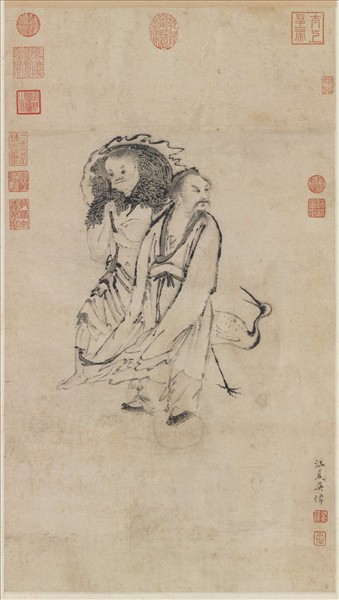
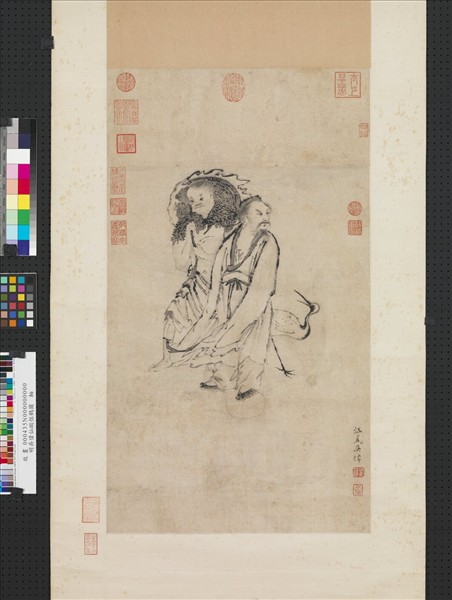
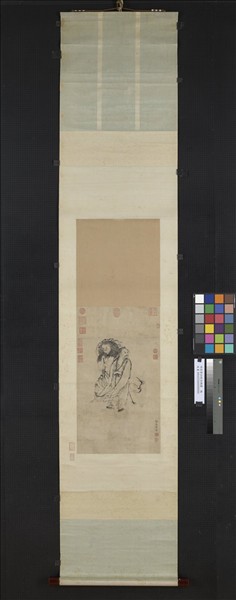
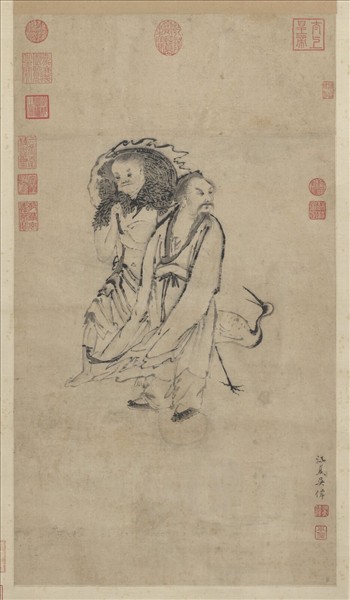
明吳偉仙蹤侶鶴圖 軸
Immortals in the Company of A Crane |
| 分類 |
繪畫 |
| 作者 |
吳偉 |
| 數量 |
一軸 |
| 印記類別 |
印主 |
印記 |
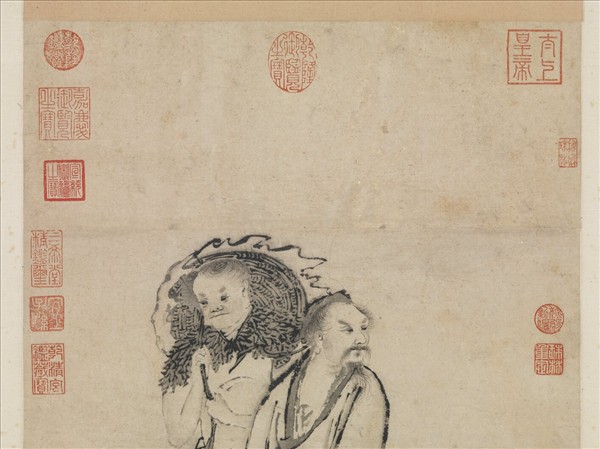
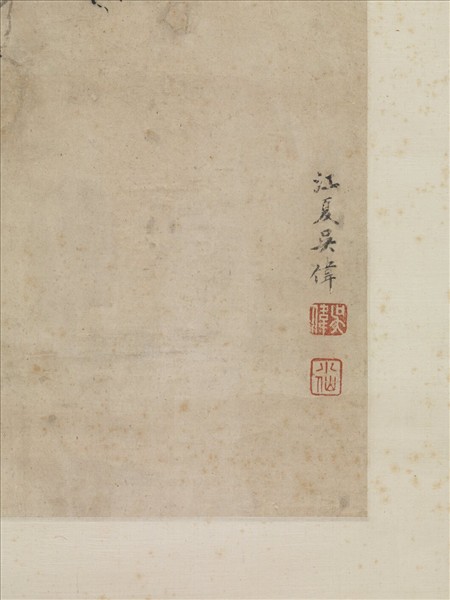
| 鑑藏寶璽 |
清內府印 |
三希堂精鑑璽 |
| 鑑藏寶璽 |
清高宗 |
太上皇帝 |
| 鑑藏寶璽 |
清內府印 |
宜子孫 |
| 鑑藏寶璽 |
宣統帝 |
宣統御覽之寶 |
| 鑑藏寶璽 |
清高宗 |
珠林重定 |
| 鑑藏寶璽 |
清內府印 |
秘殿珠林 |
| 鑑藏寶璽 |
清高宗 |
秘殿新編 |
| 鑑藏寶璽 |
清高宗 |
乾清宮鑑藏寶 |
| 鑑藏寶璽 |
清高宗 |
乾隆御覽之寶 |
| 鑑藏寶璽 |
清高宗 |
乾隆鑑賞 |
| 鑑藏寶璽 |
清仁宗 |
嘉慶御覽之寶 |
| 主題類別 |
主題(第一層) |
主題(第二層) |
主題說明 |
| 主要主題 |
佛道人物 |
神、仙 |
2人 |
| 次要主題 |
翎毛 |
鶴 |
|
| 次要主題 |
器用 |
服飾(對人) |
斗笠 |
| 類別 |
參考資料 |
| 內容簡介 |
吳偉(西元一四五九至一五○八年),湖北江夏人。字士英,號魯夫,更字次翁,又號小仙。幼年流落,曾傭工於錢昕家。後畫名大著,憲宗時待詔仁智殿,孝宗時賜畫狀元印章。 吳偉畫人物,出於吳道子,山水樹石則自戴進來。此幅破筆焦墨,則是小仙本色。
|
| 內容簡介 |
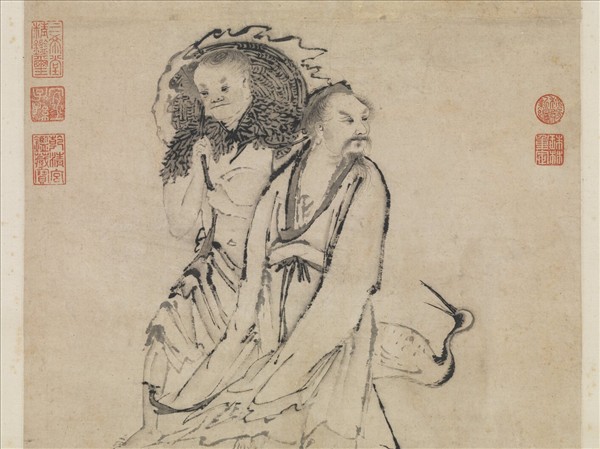
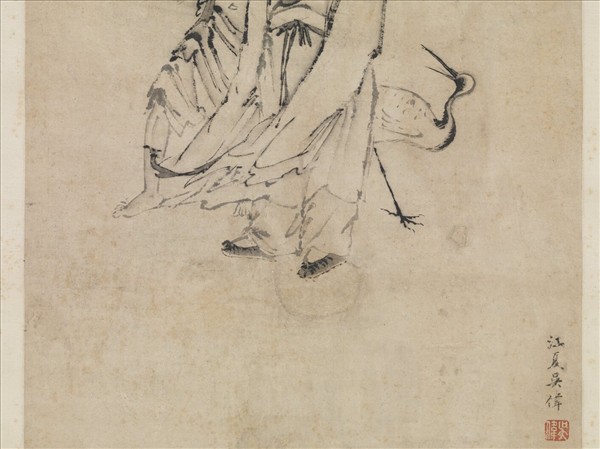
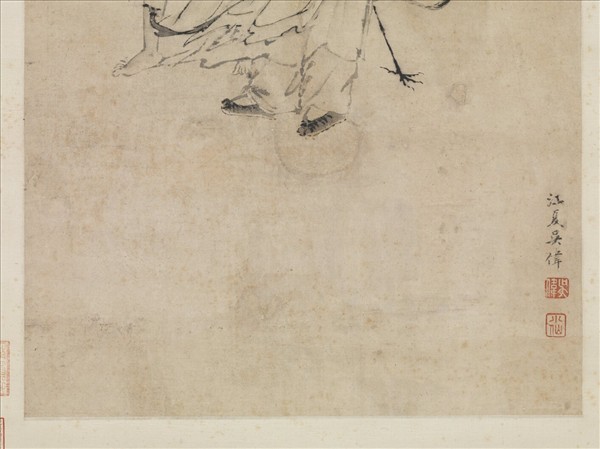
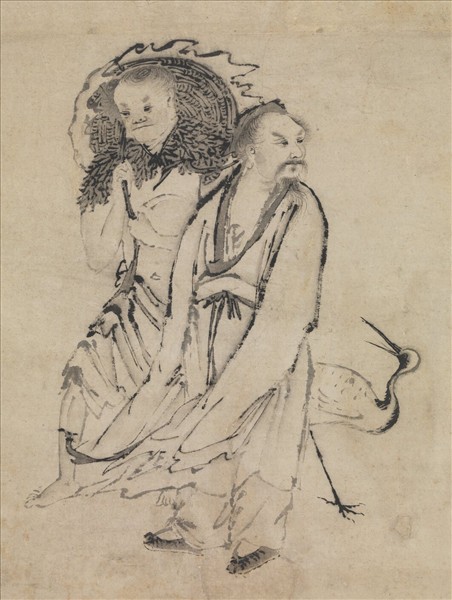
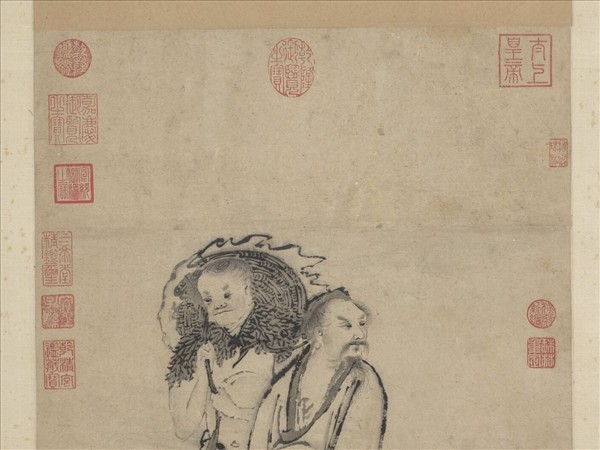
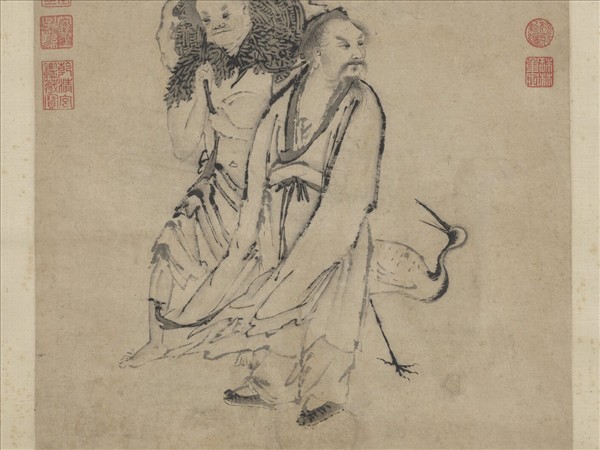
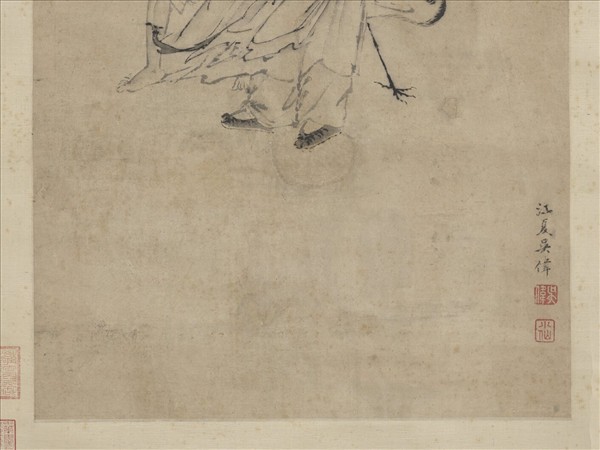
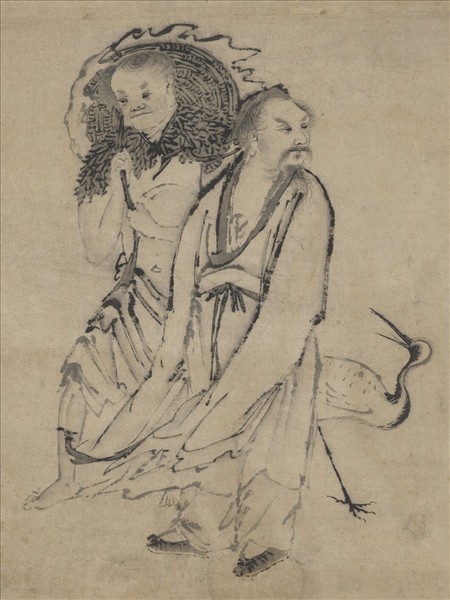
吳偉(西元一四五九-一五○八年)湖北江夏人。字士英,號魯夫,更字次翁,又號小仙。幼年流落,曾傭於錢昕家,後畫名大著。憲宗時,待詔仁智殿。孝宗時,曾賜「畫狀元」印章。 本幅水墨畫仙人攜鶴,童子赤足荷笠,直往前行;仙人似聞鶴唳聲,回頭看鶴,二者作呼應狀。本幅多用禿筆勾畫,線條極具精神,又用淡墨暈染,筆墨簡單而清雅。
|
| Description |
The Sage of the Northern Sea Riding a Crane Wu Wei (1459-1508) Ming Dynasty Wu Wei, style names Shih-ying and Tz’u-weng; sobriquets Lu-fu and Hsiao-hsien, was a native of Chiang-hsia, Hupei. A wanderer in his youth, he was at one time employed as a servant in the home of Ch’ien Hsin. Later he developed his talent as a painter. During the reign of the Ch’eng-hua Emperor (r. 1465-1488) he received the title of Painter-in-Attendance in the Jen-chih Hall. The Hung-chih Emperor (r. 1488-1505) gave him a seal which read “First among painters”. This painting depicts an immortal astrides a crane; an attendant stands beside him on a lotus branch. The immortal has turned his head to listen to the crane’s cry; gazing at one another the two seem to communciate. Wu has used a worn brush, achieving a vigorous line. For the contrasting washes he has employed very light ink.
|
| Description |
Immortals in the Company of A Crane Wu Wei (1459-1508) Ming Dynasty Wu Wei was a native of Chiang-hsia in Hopei. His style name was initially Shih-ying, but he later changed it to Tz’u-weng. His sobriquets were Lu-fu and Hsiao-hsien. A wanderer in his youth, for a while he worked at the home of Ch’ien Hsi. Later he became very well-known as a painter and during the Hsien-tsung reign (1465-1488) was called to the court as Painter-in-attendancd. Hsiao-tsung, the following emperor, bestowed on him a seal inscribed “First among Painters.” Wu Wei’s figure painting was in the tradition of Wu Tao-tzu, while his landscape style was derived from his near contemporary, Tai Chin. The use of ‘broken’ brush strokes and black, dry ink in this work represent a typical manner of his own.
|
| 收藏著錄 |
秘殿珠林續編(乾清宮),頁248
|
| 收藏著錄 |
故宮書畫錄(卷五),第三冊,頁315
|
| 收藏著錄 |
故宮書畫圖錄,第六冊,頁325-326
|
| 參考書目 |
1.王耀庭,〈明吳偉仙蹤侶鶴圖〉,收入王耀庭、童文娥編,《長生的世界:道教繪畫特展圖錄》(臺北:國立故宮博物院,1996年初版),頁78。
|
本院文物保存維護依〈國立故宮博物院典藏文物管理作業要點〉及〈國立故宮博物院文物修護業務作業原則〉辦理
抽盤點紀錄
修護紀錄