| 文物統一編號 |
故畫000378N000000000
|
| 作品號 |
故畫00037800000 |
| 品名 |
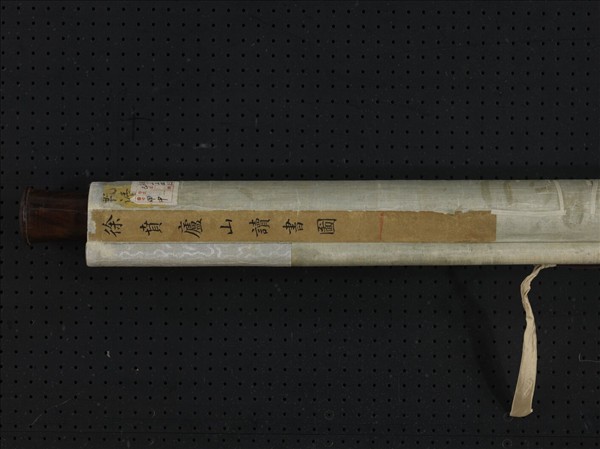
明徐賁廬山讀書圖 軸
Studying on Mount Lu |
| 分類 |
繪畫 |
| 作者 |
徐賁 |
| 創作時間 |
明太祖洪武三十年(1397) |
| 數量 |
一軸 |
| 題跋類別 |
作者 |
位置 |
款識 |
書體 |
全文 |
| 作者款識 |
徐賁
印記 expand_more
|
本幅 |
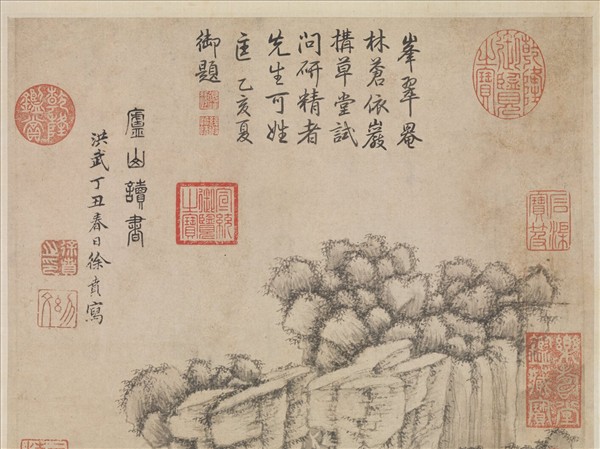
廬山讀書。(篆書)。洪武丁丑(1397)春日。徐賁寫。(楷書)。 |
篆書 |
|
|
|
| 題跋 |
清高宗
印記 expand_more
|
本幅 |
乙亥(1755)夏御題。 |
行書 |
峰翠罨林蒼。依巖搆草堂。試問研精者。先生可姓匡。乙亥(1755)夏御題。 |
|
|
| 印記類別 |
印主 |
印記 |
| 鑑藏寶璽 |
清內府印 |
三希堂精鑑璽 |
| 鑑藏寶璽 |
清高宗 |
石渠定鑑 |
| 鑑藏寶璽 |
清內府印 |
石渠寶笈 |
| 鑑藏寶璽 |
清內府印 |
宜子孫 |
| 鑑藏寶璽 |
宣統帝 |
宣統御覽之寶 |
| 鑑藏寶璽 |
宣統帝 |
宣統鑑賞 |
| 鑑藏寶璽 |
清高宗 |
乾隆御覽之寶 |
| 鑑藏寶璽 |
清高宗 |
乾隆鑑賞 |
| 鑑藏寶璽 |
宣統帝 |
無逸齋精鑒璽 |
| 鑑藏寶璽 |
清高宗 |
寧壽宮續入石渠寶笈 |
| 鑑藏寶璽 |
清高宗 |
樂壽堂鑑藏寶 |
| 鑑藏寶璽 |
清高宗 |
寶笈重編 |
| 主題類別 |
主題(第一層) |
主題(第二層) |
主題說明 |
| 主要主題 |
山水 |
|
|
| 次要主題 |
建築 |
橋 |
木架橋、石板 |
| 次要主題 |
樹木 |
松 |
|
| 其他主題 |
人物 |
侍從(侍女、童僕) |
侍從一人 |
| 其他主題 |
人物 |
高士(士人、隱士) |
三人 |
| 其他主題 |
山水 |
山徑 |
|
| 其他主題 |
山水 |
雲 |
|
| 其他主題 |
山水 |
溪澗、湍泉 |
溪澗 |
| 其他主題 |
山水 |
瀑布 |
|
| 其他主題 |
建築 |
水榭 |
|
| 其他主題 |
建築 |
房舍 |
|
| 其他主題 |
建築 |
亭 |
|
| 其他主題 |
建築 |
茅草屋 |
|
| 其他主題 |
樹木 |
|
|
| 其他主題 |
樹木 |
竹 |
|
| 類別 |
參考資料 |
| 內容簡介 |
徐賁(十四世紀),四川人,居住蘇州。字幼文,號北郭生。累官至河南布政,後以官軍過境,犒勞失時,下獄死。工詩善書,又精於繪畫,山水法董源,時稱「十才子之一」。
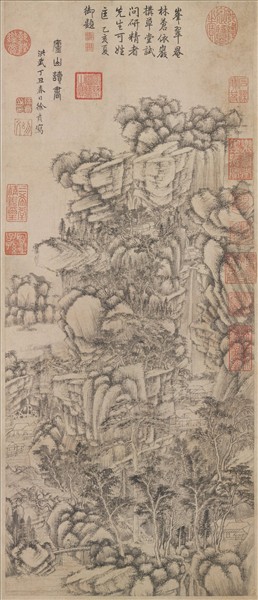
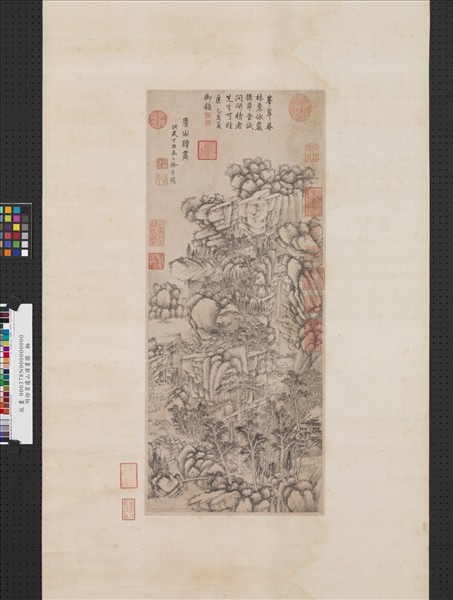
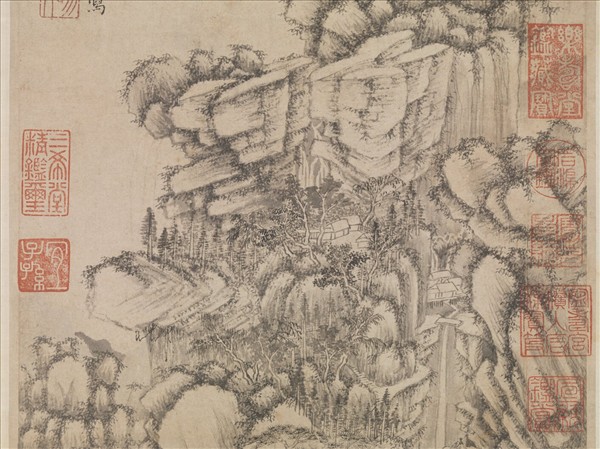
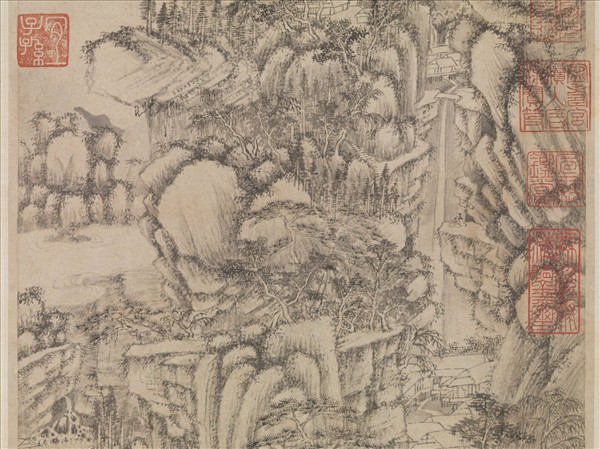
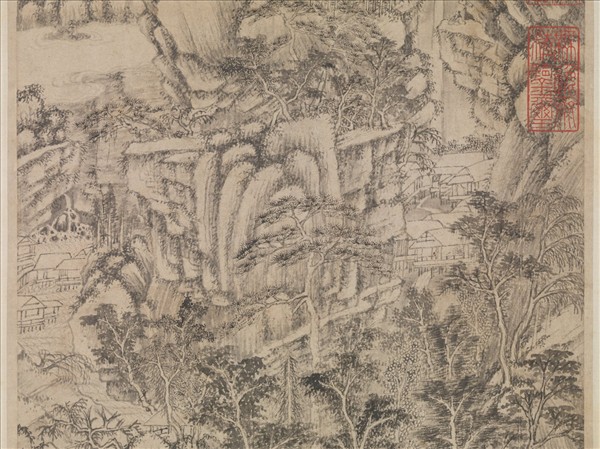
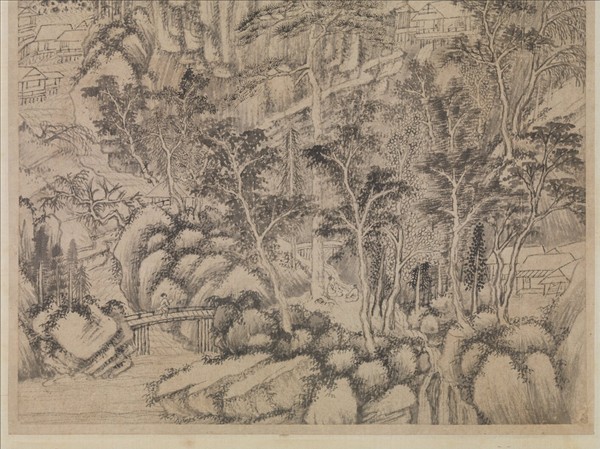
層巖重嶂,飛瀑三疊。山村錯落於深窈之中,一人持琴過穚,兩人於松下對談。此幀構圖繁複而不雜亂,用筆溫婉而饒富變化,用墨亦層次分明。據幅右作者款書,知此為徐氏洪武丁丑年(一三九七)之作。
|
| 內容簡介 |
廬山在今江西省九江縣南,相傳周代匡俗隱居山中,結廬讀書,因此得名為「廬山」,也稱「匡山」,或者合稱為「匡廬」。自宋代以來,廬山千變萬化寫入畫圖,從體現客觀物象的美,到追求筆墨的意趣,展現的深度各有不同。此幅著重於個人心境的投射,作者徐賁(一三三五-一四○三),字幼文,江蘇蘇州人,詩書畫均有造詣,一度隱居蜀山,後回歸仕宦生涯,卻仍在筆墨中寄託隱居的情懷。
|
| 內容簡介 |
徐賁(西元十四世紀),四川人,居住蘇州。字幼文,號北郭生。洪武甲寅年被徵作官,至河南布政。詩寫得好,書法也不錯。楷書尤其清逸;當時人稱之「十才子之一」。
這幅畫山居深窈中,有七個村聚。飛瀑三疊。一人持琴過橋,松樹下兩人對談,懸崖上一人觀瀑。畫山景繁複而不雜,用筆於溫婉中饒富變化,用墨很有層次。愈仔細欣賞,愈發現樹枝的變化及山石的皴染都是很好的。
|
| Description |
Reading on Mount Lu
Hsu Pen (14th century)
Ming Dynasty
Hsu Pen was a native of Szechwan, but immigrated to Suchow. His style name was Yu-wen, his sobriquet Pei-kuo-sheng. He was promoted to the rank of governor of Honan in 1374. Excelling at poetry and calligraphy, he wrote Kai-shu (regular script) characters with great purity and ease. His contemporaries listed him as one of the Ten Geniuses of his time.
The painting depicts a scene deep in the mountains. Visible are seven secluded settlements and three soaring cataracts. A man carrying a lute is crossing a bridge, while two men seated under pines are engaged in conversation. A solitary figure gazes from a precipice at the waterfalls. The mountain scenery is painted with great complexity but no confusion, the brushwork is delicate but with infinite diversity. The ink tones, as well, possess excellent gradations. The careful execution is much to be admired, as are the varied tree branches and the texture strokes on rocks and mountains.
|
| Description |
Studying on Mount Lu
Hsu Pen (1335-1403)
Ming Dynasty
Mount Lu (“Thatched Hut”) is in southern Chiu-chiang County, modern Kiangsi. It is said that K’uang Su of the Chou dynasty lived as a recluse there in Taoist cultivation and built a thatched hut for study (hence its name). It is also named K’uang after him or a combination of the two (K’uang-lu). Starting from the Sung (960-1279), its myriad features have been rendered in art, including both the beauty of its forms and the expressiveness of painters, from a variety of perspectives. This work projects the inner world of Hsu Pen, a native of Soocow, Kiangsu. He was gifted in painting, poetry, and calligraphy and for a time lived in reclusion at Mount Shu. He later returned to office but in art often expressed nostalgia for a life of reclusion.
|
| Description |
Studies at Mount Lu
Hsu Pen (14th c.)
Ming Dynasty
Hsu Pen, a native of Szechwan, lived in Soochow. He went on to serve as governor of Honan, but was later jailed and died in prison. Good at poetry, he excelled at calligraphy as well as painting. In landscapes, he followed the style of Tung Yuan and was considered one of the “Ten Talents” of his time. Here, serried ridges and overlapping cliffs are punctuated by three waterfalls. Mountain villages are scattered through the land. A man carrying a lute crosses a bridge in the foreground as two men are seated under pines engaged in conversation. The composition is complex, but not overly chaotic. The brushwork is gentle and varied, while the shading of the ink is clearly rendered. According to the inscription, this work was done in 1397.
|
| 收藏著錄 |
石渠寶笈續編(寧壽宮),第五冊,頁2785
|
| 收藏著錄 |
故宮書畫錄(卷五),第三冊,頁272
|
| 收藏著錄 |
故宮書畫圖錄,第六冊,頁19-20
|
本院文物保存維護依〈國立故宮博物院典藏文物管理作業要點〉及〈國立故宮博物院文物修護業務作業原則〉辦理
抽盤點紀錄
修護紀錄