
明織花鳥寫生 冊 桃花雙雀
Tapestry of Sketches From Life of Flowers and Birds by Ming Artists: Peach Blossoms and a Pair of Sparrows
絲繡
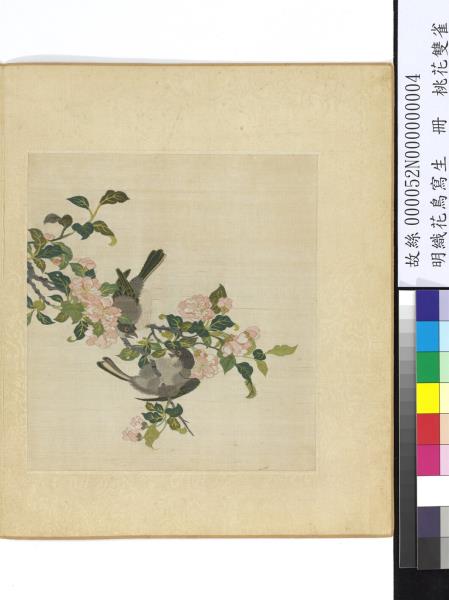


| 文物統一編號 | 故絲000052N000000004 |
| 作品號 | 故絲00005200004 |
| 品名 |
明織花鳥寫生 冊 桃花雙雀 Tapestry of Sketches From Life of Flowers and Birds by Ming Artists: Peach Blossoms and a Pair of Sparrows |
| 分類 | 絲繡 |
| 數量 | 一幅 |
| 位置 | 尺寸(公分) |
|---|---|
| 本幅 | 23x21 |
| 質地位置 | 質地 |
|---|---|
| 本幅 | 絹 |
| 主題類別 | 主題(第一層) | 主題(第二層) | 主題說明 |
|---|---|---|---|
| 主要主題 | 花草 | 桃花 | |
| 主要主題 | 翎毛 | 麻雀 | 二隻 |
| 技法 | 技法細目 |
|---|---|
| 織 |
| 類別 | 參考資料 |
|---|---|
| 內容簡介 | 緙絲亦稱「刻絲」,它是一種傳統絲織工藝品,盛行於宋代。「緙」字的意義稱為「織緯」,意即畫面圖形的形成,專賴緯線的累積織成。織造時,各色絲線僅於圖案花紋須要處與經絲交織,故緯絲不貫穿全幅,而經絲則縱貫織品,舊時稱做「通經斷緯」。成品的圖案,顏色正反面是一樣,圖形則左右相反。圖形周圍留下鋸齒狀的空隙,像是雕鏤刀刻出來的,別有一番趣味。 |
| Description | Tapestry is also known as “cut silk” in Chinese. One of the traditional silk-weaving arts, it became popular in the Sung dynasty (960-1279). The word for tapestry in Chinese means “warp and woof,” in which images are created by piling up woof threads. Thus, silk threads of various colors only need to be woven where the pattern or image is to appear. Consequently, by breaking off the pattern at the border, tapestry does not usually involve working the entire surface. In the past, this was called “continuous warp and broken woof.” The finished image appears reversed and in the negative on the other side. Since the edge of the image appears with a ragged “saw-tooth” border, it thus looks as if it has been chiseled away. |
| 收藏著錄 | 國立故宮博物院緙絲,頁61-68 |
100萬像素圖檔下載
600萬像素圖檔下載