| 文物統一編號 |
故畫000646N000000000
|
| 作品號 |
故畫00064600000 |
| 品名 |
明陳洪綬蓮池應化圖 軸
The Amitabha Triad |
| 分類 |
繪畫 |
| 作者 |
陳洪綬 |
| 數量 |
一軸 |
| 題跋類別 |
作者 |
位置 |
款識 |
書體 |
全文 |
| 作者款識 |
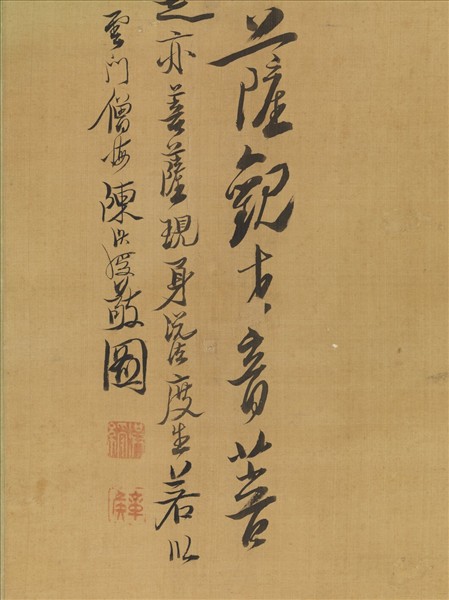
陳洪綬
印記 expand_more
|
本幅 |
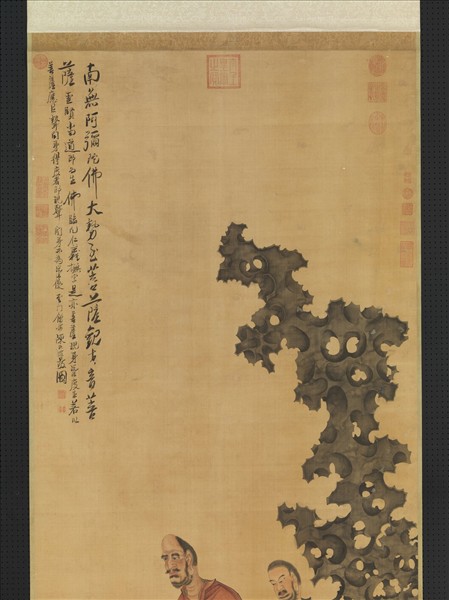
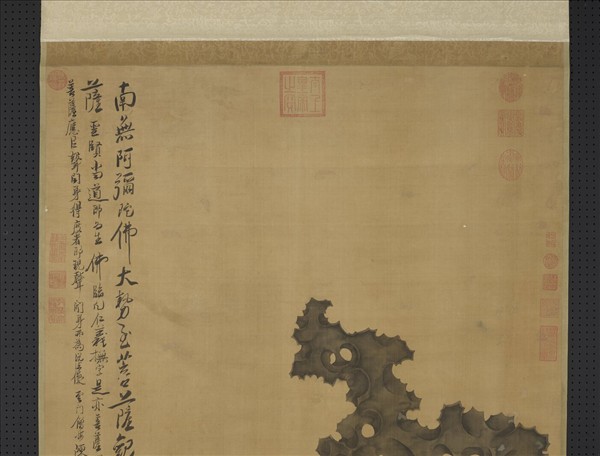
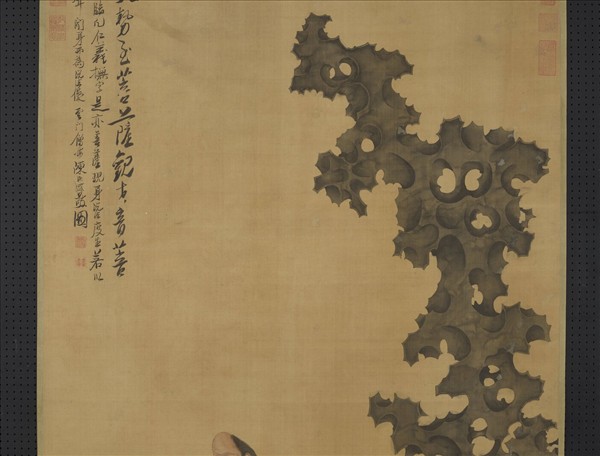
南無阿彌陀佛。大勢至菩薩。觀世音菩薩。聖賢當道。即為生佛臨凡。仁義撫字。是亦菩薩現身。說法度生。若以菩薩應以聲聞身得度者。即現聲聞身。而為說法像。雲門僧悔陳洪綬敬圖。 |
行書 |
|
|
|
| 印記類別 |
印主 |
印記 |
| 鑑藏寶璽 |
清內府印 |
三希堂精鑑璽 |
| 鑑藏寶璽 |
清高宗 |
太上皇帝之寶 |
| 鑑藏寶璽 |
清內府印 |
宜子孫 |
| 鑑藏寶璽 |
宣統帝 |
宣統御覽之寶 |
| 鑑藏寶璽 |
宣統帝 |
宣統鑑賞 |
| 鑑藏寶璽 |
清高宗 |
珠林重定 |
| 鑑藏寶璽 |
清內府印 |
秘殿珠林 |
| 鑑藏寶璽 |
清高宗 |
秘殿新編 |
| 鑑藏寶璽 |
清高宗 |
乾清宮鑑藏寶 |
| 鑑藏寶璽 |
清高宗 |
乾隆御覽之寶 |
| 鑑藏寶璽 |
清高宗 |
乾隆鑑賞 |
| 鑑藏寶璽 |
宣統帝 |
無逸齋精鑑璽 |
| 鑑藏寶璽 |
清仁宗 |
嘉慶御覽之寶 |
| 主題類別 |
主題(第一層) |
主題(第二層) |
主題說明 |
| 主要主題 |
山水 |
奇石 |
|
| 主要主題 |
佛道人物 |
佛 |
阿彌陀佛
|
| 主要主題 |
佛道人物 |
菩薩 |
大勢至菩薩
|
| 主要主題 |
佛道人物 |
觀音 |
|
| 技法 |
技法細目 |
| 人物衣紋描法(粗細線條) |
|
| 工筆 |
|
| 皴法 |
|
| 類別 |
參考資料 |
| 內容簡介 |
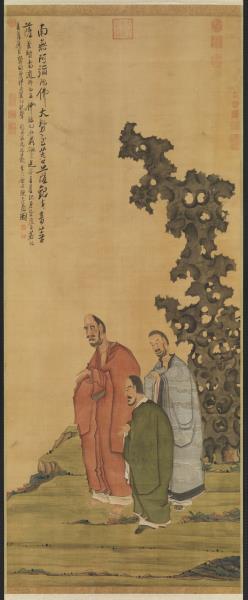
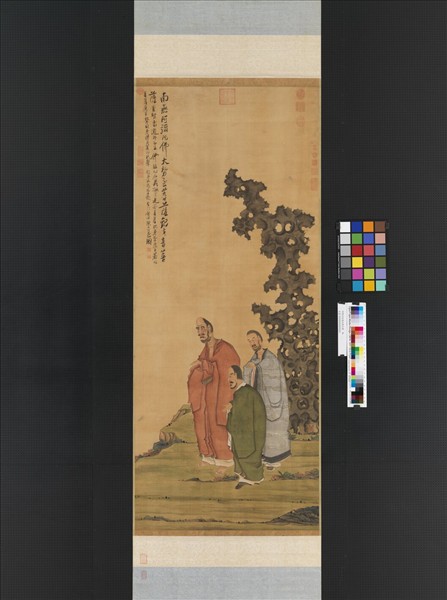
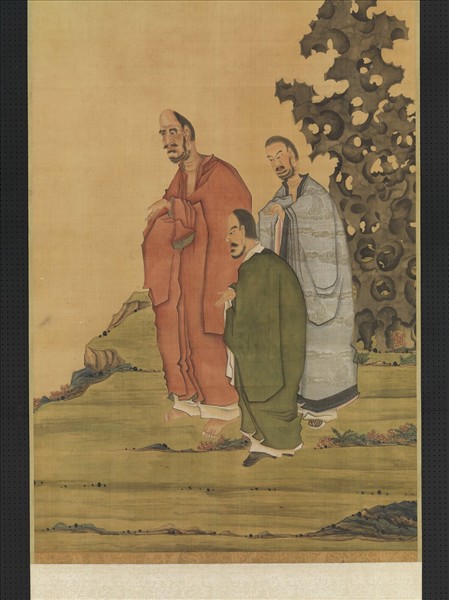
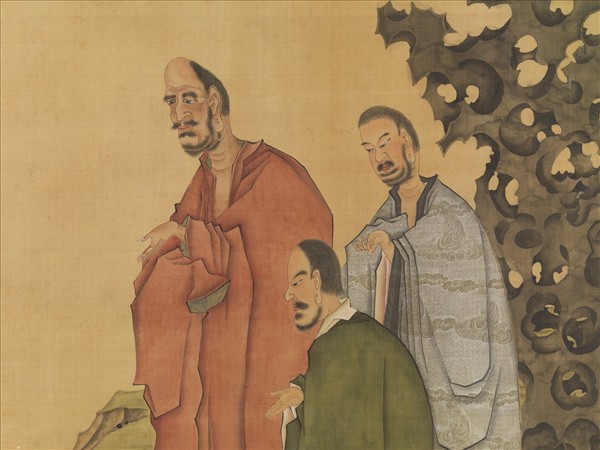
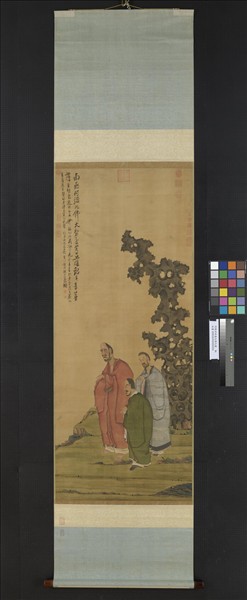
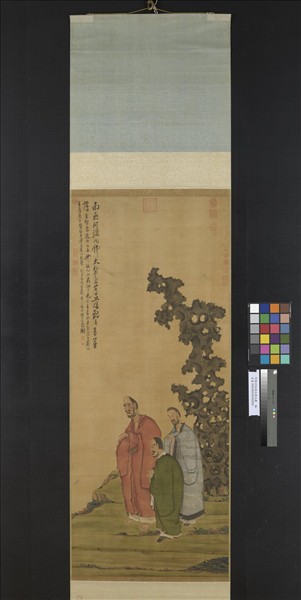
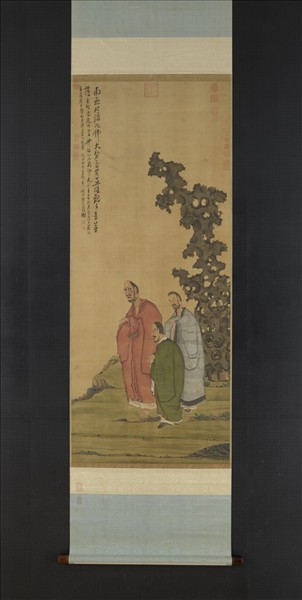
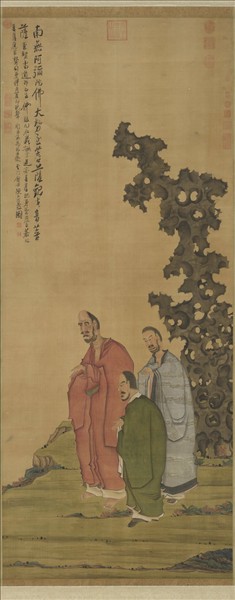
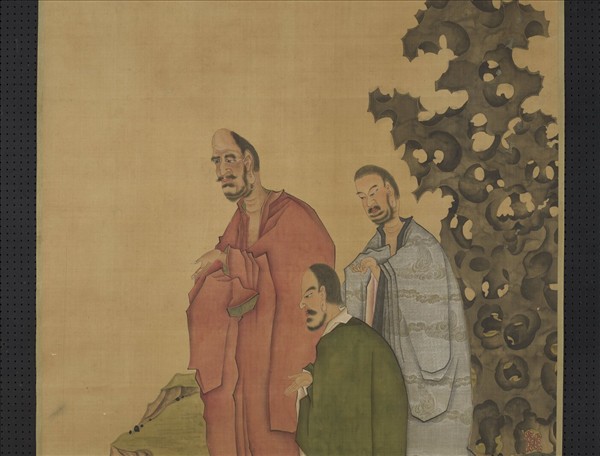
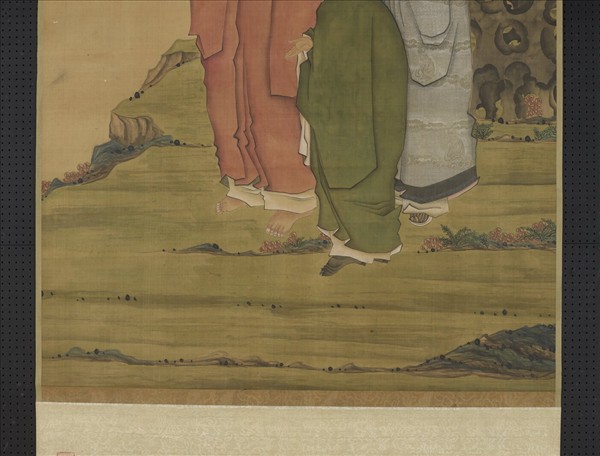
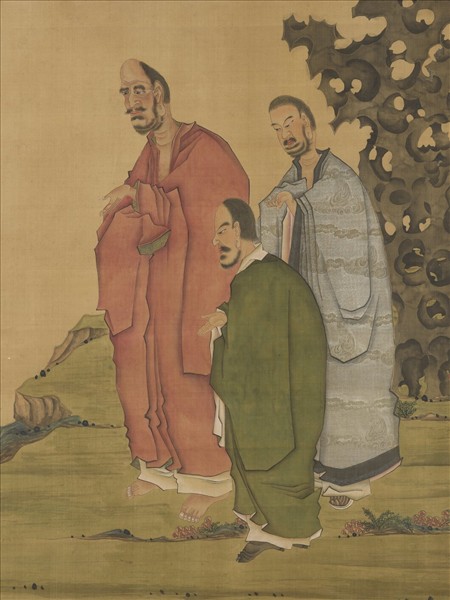
陳洪綬(一五九八-一六五二),浙江諸暨人。字章侯,號老蓮,老遲、雲門僧等。他擅長畫花鳥、草蟲和山水,人物畫更是精妙絕倫。高大的太湖石前站著三位出家人,他們濃眉高鼻,高頭大馬,看上去好像外國僧人。根據畫上作者的題款,祂們是阿彌陀佛、觀世音和大勢至菩薩。這三位人物的造形怪異,頭和身體不成比例。畫家用方硬的線條來鉤畫衣紋,看上去好像鋼絲一樣,挺勁有力。
|
| 內容簡介 |
陳洪綬(西元一五九八-一六五二年),浙江諸暨人,號老蓮。晚明人物畫大家,明亡後出家為僧,自稱悔僧、雲門僧。本幅為陳洪綬出家之後作品。據畫上作者題款可知,畫中三位羅漢實乃淨土宗西方三聖:阿彌陀佛、觀音菩薩與大勢至菩薩。題款最後兩句出自﹝普門品﹞:「若以菩薩應以聲聞身得度者,即現聲聞身,而為說法像」。此畫將普門觀音「無所不應化」的觀念,巧妙的用之於淨土佛、菩薩畫境,誠為佛畫意念的突破與創新。
|
| Description |
Manifestations of the Three Holy Ones by the Lotus Pond Ch’en Hung-shou (1599-1652) Ming Dynasty Ch’en Hung-shou, a native of Chu-chi, Chekiang province, was also known by his sobriquet Lao-lien. He was a great figure painter of the late Ming dynasty. After the fall of the Ming dynasty in 1644, he became a monk and called himself Monk Hui and Monk Yun-men. Ch’en Hung-shou painted this after he became a monk. According to his inscription, the three figures painted as lohans represent the three holy ones in Pure Land Buddhism: the Buddha Amitâbha and the Bodhisattvas Kuan-yin and Mahâsthana. The last two phrases in the inscription are from the Samanta-mukha Chapter of the Lotus Sûtra: “Kuan-yin will appear in the form of a lohan to expound the Dharma (Buddhist doctrine) to a lohan.” Ch’en Hung-shou has used the idea that Kuan-yin can assume a myriad of shapes to paint the Buddha and Bodhisattvas of the Western Paradise as lohans, thus introducing a new creativity to Buddhist painting.
|
| Description |
The Amitâbha Triad Ch’en Hung-shou (1599-1652) Ming Dynasty Ch’en Hung-shou, a native of Chekiang, was known for the distorted style of his bird-and-flower, insect-and-grass, and landscape painting. His figure paintings were also unparalleled. Three Buddhist monks proceed in front of a tall perforated garden rock. Their heavy facial hair and features suggest that they are foreigners. According to the artist’s inscription, they represent the Amitâbha Buddha accompanied by the bodhisattvas Kuan-yin and Mahâsthâmaprâpta. The unusual appearance of the figures is accented by the size and disproportion of the heads to the bodies. To outline the drapery, ch’en Hung-shou used his distinctive angular strokes that look as tough and powerful as steel wire.
|
| 收藏著錄 |
秘殿珠林續編(乾清宮),頁315
|
| 收藏著錄 |
故宮書畫錄(卷四),第二冊,頁476
|
| 收藏著錄 |
故宮書畫圖錄,第九冊,頁81-82
|
| 參考書目 |
1.葛婉章,〈明陳洪綬畫蓮池應化圖〉,收入葛婉章編,《妙法蓮華經圖錄》(臺北:國立故宮博物院,1995年初版),頁119-120。
2.李玉珉,〈明陳洪綬蓮池應化圖〉,收入李玉珉主編,《觀音特展》(臺北:國立故宮博物院,2000年初版),頁205-206。
3.〈明陳洪綬蓮池應化圖〉,收入國立故宮博物院編,《晚明變形主義畫家作品展》(臺北:國立故宮博物院,1977年九月初版),頁482。
4.葛婉章,〈無緣大悲 觀達自在 — 院藏「普門品」觀音畫探究〉,《故宮文物月刊》,第112期(1992年7月),頁42-43。
5.張啟文,〈從時空背景看金農的佛教信仰與佛畫〉,《議藝份子》,第4期(2002年3月),頁27-45。
|
本院文物保存維護依〈國立故宮博物院典藏文物管理作業要點〉及〈國立故宮博物院文物修護業務作業原則〉辦理
抽盤點紀錄
修護紀錄