| 文物統一編號 |
故畫002245N000000000
|
| 作品號 |
故畫00224500000 |
| 品名 |
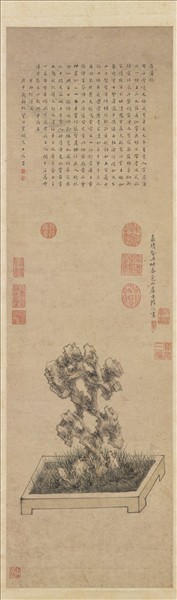
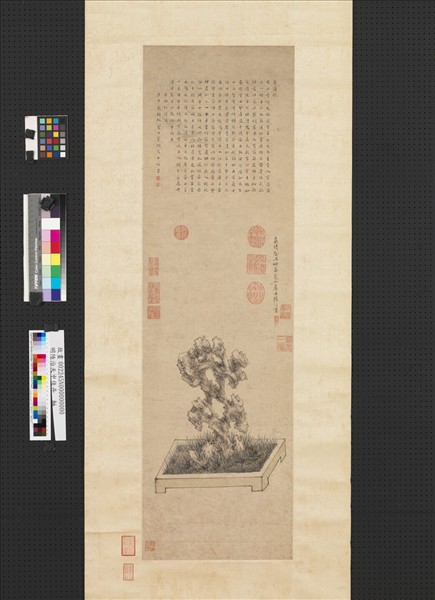
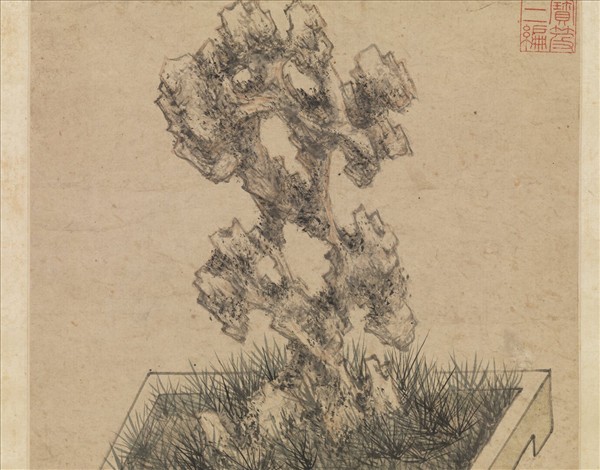
明陸治天中佳卉 軸
Calamus at the Dragon Boat Festival |
| 分類 |
繪畫 |
| 作者 |
陸治 |
| 創作時間 |
明世宗嘉靖三十二年(1553) |
| 數量 |
一軸 |
| 題跋類別 |
作者 |
位置 |
款識 |
書體 |
全文 |
| 作者款識 |
陸治
印記 expand_more
|
本幅 |
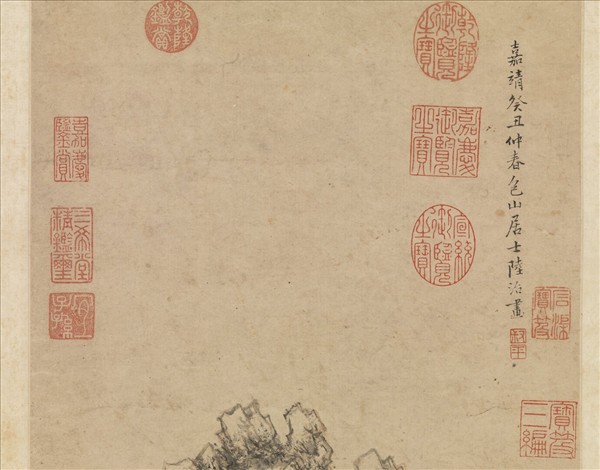
嘉靖癸丑(1553)仲春。包山居士陸治畫。 |
楷書 |
|
|
|
| 題跋 |
沈士端
印記 expand_more
|
本幅 |
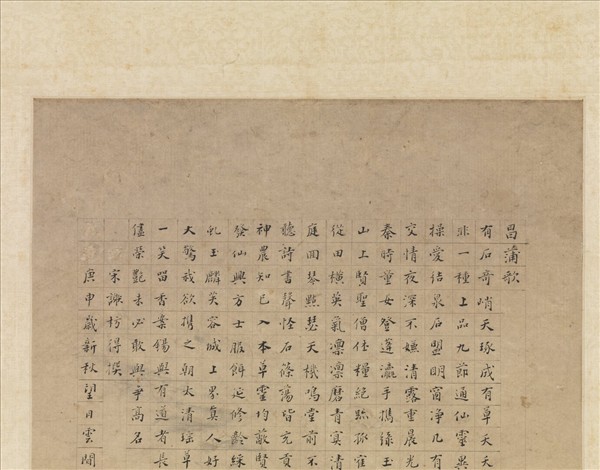
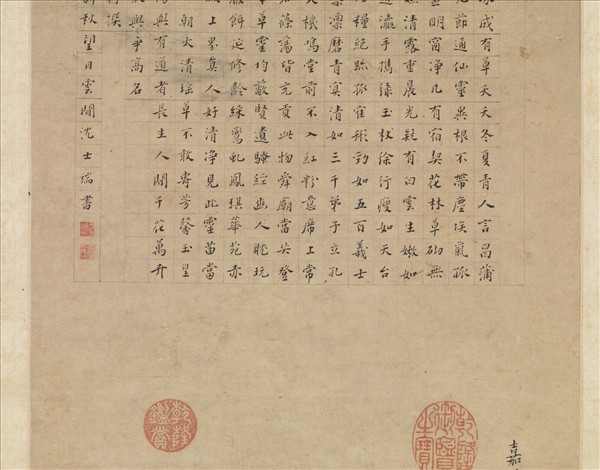
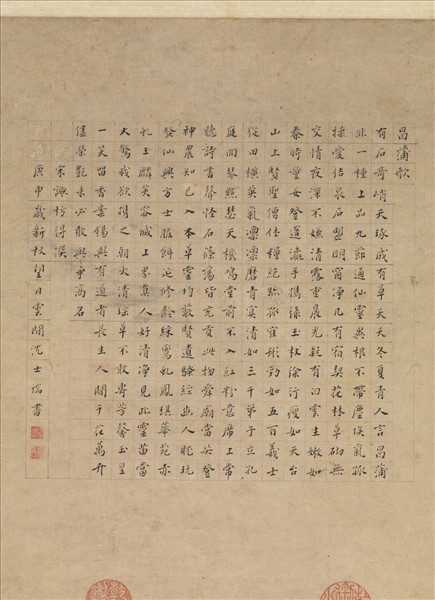
庚申歲新秋望日。雲間沈士端書。 |
楷書 |
昌蒲歌。有石奇峭天琢成。有草夭夭冬夏青。人言昌蒲非一種。上品九節通仙靈。異根不帶塵埃氣。孤操愛結泉石盟。明窗淨几有宿契。花林草砌無交情。夜深不嫌清露重。晨光疑有白雲生。嫩如秦時童女登蓬瀛。手攜綠玉杖徐行。瘦如天台山上賢聖僧。休糧絕跡孤鶴形。勁如五百義士從田橫。英氣凜凜磨(應作摩)青冥。清如三千弟子立孔庭。回琴點瑟天機鳴。堂前不入紅粉意。席上常聽詩書聲。怪石篠蕩皆充貢。此物舜廟當共登。神農知已入本草。靈均蔽賢遺騷經。幽人耽玩發仙興。方士服餌延修齡。綵鸞虯鳳琪華苑。赤虯玉麟芙容城。上界真人好清淨。見此靈苗當大驚。我欲攜之朝太清。瑤草不敢專芳馨。玉皇一笑留香案。錫與有道者長生。人間千花萬卉儘榮豔。未必敢與爭高名。宋謝枋得撰。庚申歲新秋望日。雲間沈士端書。 |
|
|
| 印記類別 |
印主 |
印記 |
| 鑑藏寶璽 |
清內府印 |
三希堂精鑑璽 |
| 鑑藏寶璽 |
清內府印 |
石渠寶笈 |
| 鑑藏寶璽 |
清內府印 |
宜子孫 |
| 鑑藏寶璽 |
宣統帝 |
宣統御覽之寶 |
| 鑑藏寶璽 |
清高宗 |
乾隆御覽之寶 |
| 鑑藏寶璽 |
清高宗 |
乾隆鑑賞 |
| 鑑藏寶璽 |
清仁宗 |
嘉慶御覽之寶 |
| 鑑藏寶璽 |
清仁宗 |
嘉慶鑑賞 |
| 鑑藏寶璽 |
清仁宗 |
寶笈三編 |
| 主題類別 |
主題(第一層) |
主題(第二層) |
主題說明 |
| 主要主題 |
山水 |
奇石 |
|
| 主要主題 |
花草 |
菖蒲 |
|
| 主要主題 |
節令與二十四節氣 |
端午 |
天中佳卉
|
| 類別 |
參考資料 |
| 內容簡介 |
陸治(西元一四九六-一五七六年),江蘇吳縣人。字叔平,號包山子。倜儻好義,以孝友著稱於鄉里。曾與文徵明、祝允明一起作畫吟詩。詩文書畫並佳。
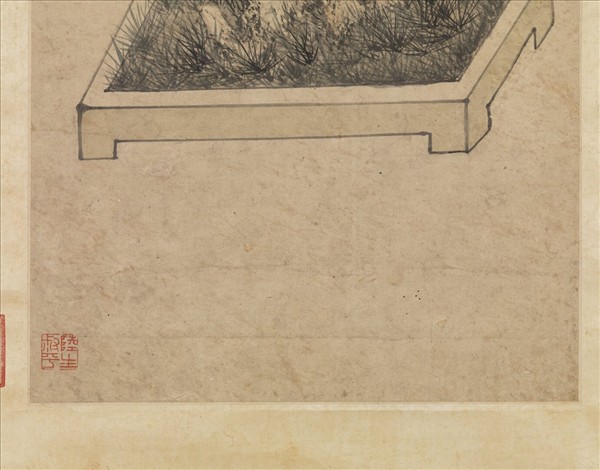
「天中」即農曆五月五日之端午節,民俗以菖蒲葉浸酒,服之可以辟瘟氣,是以本幅畫盆景中一太湖石,旁植菖蒲草,取名為「天中佳卉」。文人講究生活情趣,蒔花賞石,做為花園書房擺設之用,進而畫圖記實。本幅亦可視如此。楷書寫賦,佔畫面上方大部份,更足以顯示書畫一體。
|
| Description |
Lu Chih (style name Shu-p’ing, sobriquet Pao-shan-tzu) was a native of Wu County, Kiangsu province. He was a bit of a dandy and gained fame for his loyalty and sincerity in friendships. He also once painted paintings and wrote poems with Wen Cheng-ming and Chu Yun-ming. He excelled in poetry, belles-lettres, calligraphy, and painting.
T’ien-chung signifies the Dragon Boat Festival on the fifth day of the fifth month of the lunar calendar. According to folk traditions, at this time calamus soaked in wine can drive out pestilential vapors. Calamus at the Dragon Boat Festival, inspired by this traditional belief, is a depiction of a T’ai-hu garden rock surrounded by calamus in a rectangular pot. Literati paid particular attention to their lifestyle and surroundings, and they had a great appreciation for garden rocks and flowers. They often placed such objects in their studies or gardens and painted realistic depictions of them. This painting is an example of this practice. The painting and the prose poem written in standard script in the top portion of the scroll exemplify the unity of calligraphy and painting.
|
| 收藏著錄 |
石渠寶笈三編(延春閣),第四冊,頁1997
|
| 收藏著錄 |
故宮書畫錄(卷八),第四冊,頁83
|
| 收藏著錄 |
故宮書畫圖錄,第八冊,頁1-2
|
本院文物保存維護依〈國立故宮博物院典藏文物管理作業要點〉及〈國立故宮博物院文物修護業務作業原則〉辦理
抽盤點紀錄
修護紀錄