
宋高宗千文 冊
Thousand-Character Essay (Originally attributed to Emperor Gaozong [1107-1187])
法書
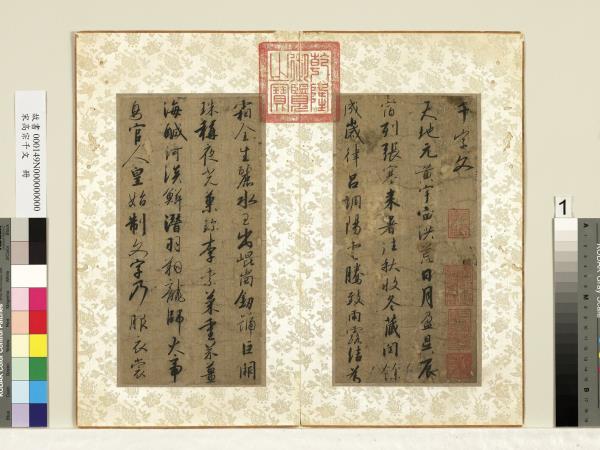
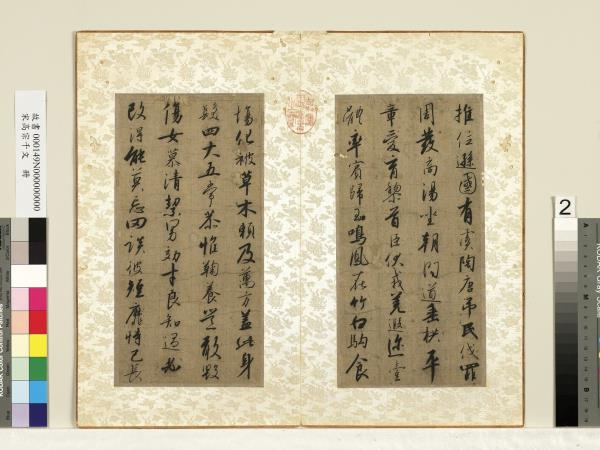
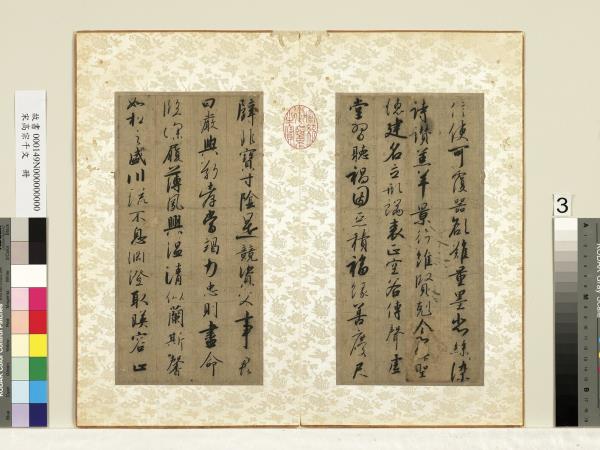
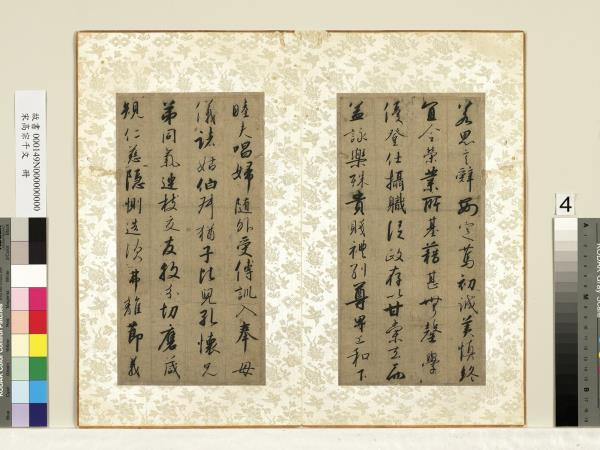
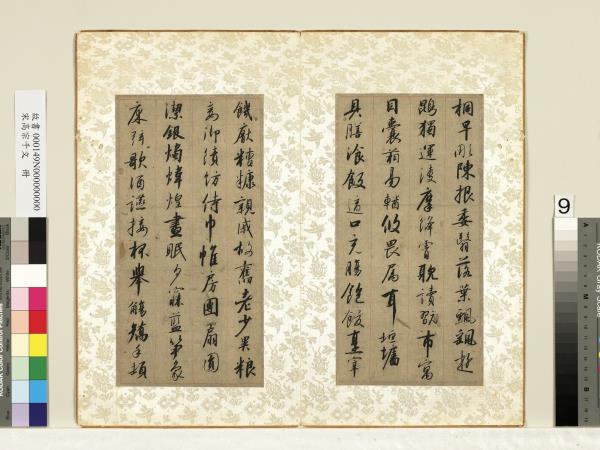
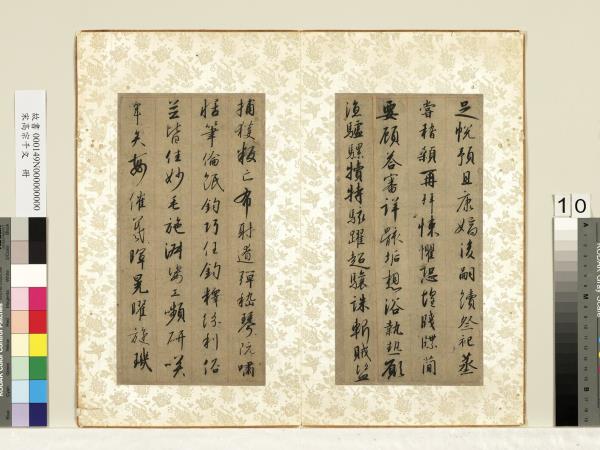
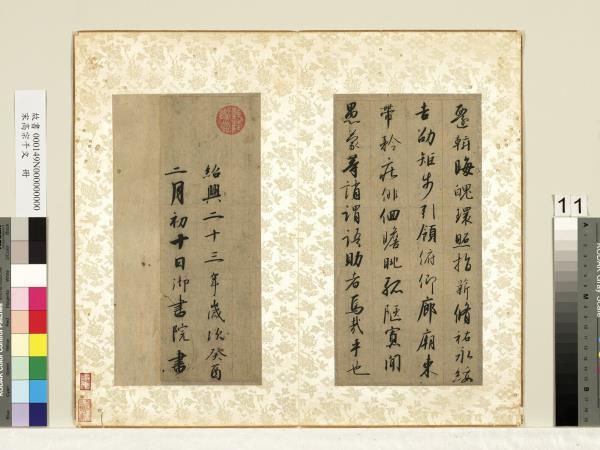
(行書千字文。文不錄。)紹興二十三年(西元一一五三年)歲次癸酉二月初十日御書院書。
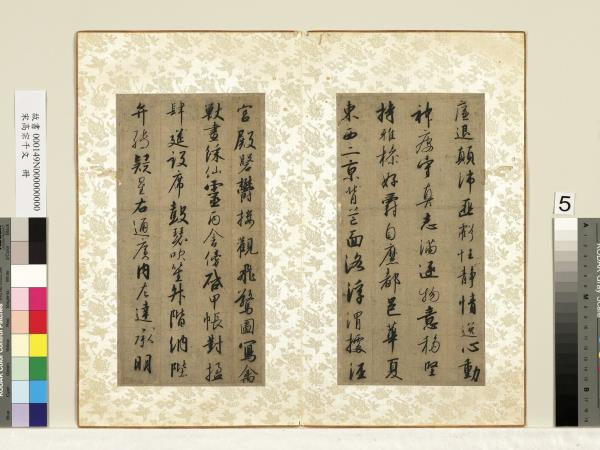
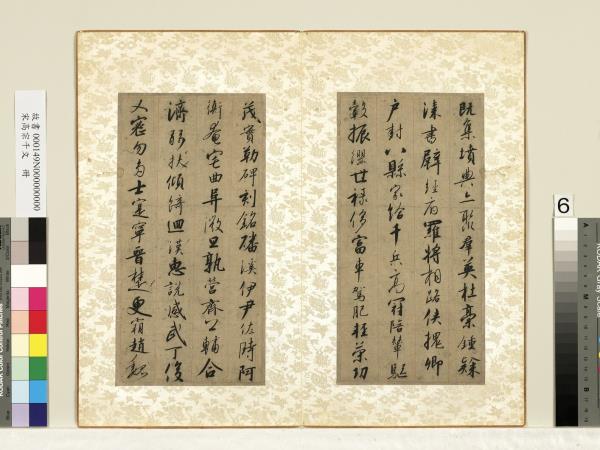
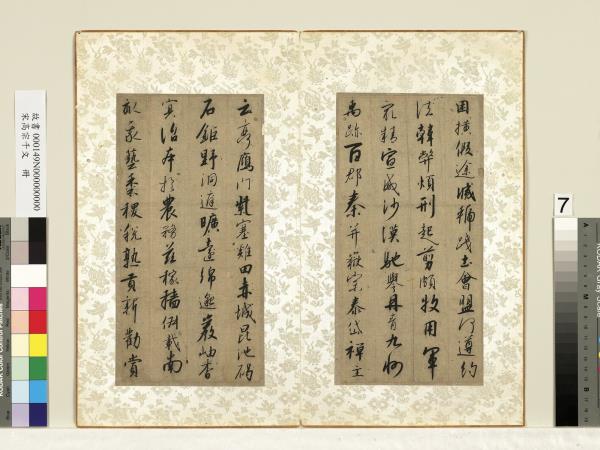
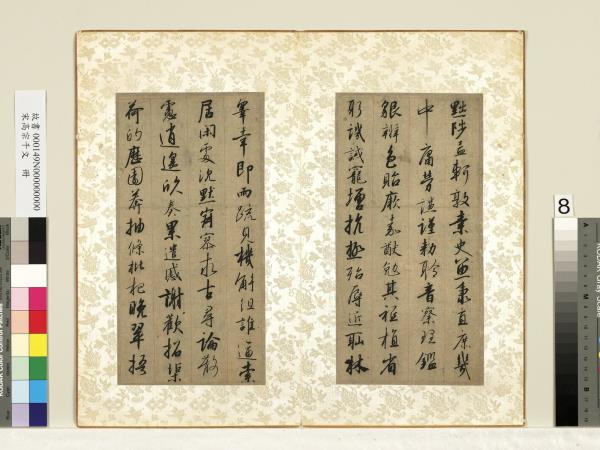


| 文物統一編號 |
故書000149N000000000
more
故書000149N000000001
故書000149N000000002
故書000149N000000003
故書000149N000000004
故書000149N000000005
故書000149N000000006
故書000149N000000007
故書000149N000000008
故書000149N000000009
故書000149N000000010
故書000149N000000011
|
| 作品號 | 故書00014900000 |
| 品名 |
宋高宗千文 冊 Thousand-Character Essay (Originally attributed to Emperor Gaozong [1107-1187]) |
| 分類 | 法書 |
| 作者 | 趙構 |
| 書體 | 行書 |
| 創作時間 | 宋高宗紹興二十三年(1153) |
| 數量 | 一冊:十一開(本幅十一開二十二幅) |
| 作品語文 | 漢文 |
| 釋文 | (行書千字文。文不錄。)紹興二十三年(西元一一五三年)歲次癸酉二月初十日御書院書。 |
| 位置 | 尺寸(公分) |
|---|---|
| 本幅 | 28.5x14.5 |
| 質地位置 | 質地 |
|---|---|
| 本幅 | 紙 |
| 題跋類別 | 作者 | 位置 | 款識 | 書體 | 全文 | ||||||
|---|---|---|---|---|---|---|---|---|---|---|---|
| 簽 | 清高宗 印記 | 封面 | 草書 | 宋高宗千文真蹟。御府祕玩。 | |||||||
|
|||||||||||
| 印記類別 | 印主 | 印記 |
|---|---|---|
| 鑑藏寶璽 | 清內府印 | 三希堂精鑑璽 |
| 鑑藏寶璽 | 清內府印 | 石渠寶笈 |
| 鑑藏寶璽 | 清內府印 | 宜子孫 |
| 鑑藏寶璽 | 宣統帝 | 宣統御覽之寶 |
| 鑑藏寶璽 | 清高宗 | 乾隆御覽之寶 |
| 鑑藏寶璽 | 清高宗 | 乾隆鑑賞 |
| 鑑藏寶璽 | 清仁宗 | 嘉慶御覽之寶 |
| 鑑藏寶璽 | 清高宗 | 養心殿鑑藏寶 |
| 類別 | 參考資料 |
|---|---|
| 內容簡介 | 此作書於朱絲欄紙本上,《石渠寶笈》定為宋高宗書,然應為御書院書家所書,寫於紹興二十三年(1153)。此冊避諱處甚多,例如第六行「敬」字缺末筆,乃是避宋太祖趙匡胤之祖父趙敬。全冊線條粗細變化明顯,頗類〈集字聖教序〉,用筆亦皆精熟流暢,結體略偏瘦長,字形優美,帶有濃厚的古典氣息,反映出宋高宗所提倡的復古書風。 |
| 內容簡介 | 千字文相傳起於南北朝之際,代代流傳下來,除了作為童蒙階段識字教本之外,同時與書藝結下不解之緣。此冊行書千文,文後詳明書寫年代、地點,卻未見書者具名,從結體、筆法均與唐懷仁〈集王書聖教序〉相近看來,作者當屬紹興年間御書院中任職人員。由於宋人講求避諱,其中一部分字目書寫時因而闕略筆畫,或者用其他字目代替,文句於是與常見的千文內容稍有不同。(20101015) |
| Description | The “Thousand-Character Essay” began circulating in the interval between the Northern and Southern Dynasties. Passed down through the generations, it not only was used as a primer for instructing children, it also has been closely associated with the art of calligraphy. This album version of the essay in running script has a specific date (1153) and place of production indicated at the end, but no name of the calligrapher. Judging from the similarity of the character structure and brushwork to Huairen’s “Collected Wang [Xizhi] Characters for the Sacred Teachings Preface” of the Tang dynasty, the calligrapher here probably served in the Imperial Calligraphy Academy of the Shaoxing era under Emperor Gaozong. Since taboo characters were observed in the Song dynasty, a stroke in part of such a character would be omitted by the calligrapher or another character substituted, resulting in the contents here being slightly different from the “Thousand-Character Essay” commonly seen.(20101015) |
| Description | The authors of the Qing dynasty imperial catalogue Treasured Boxes of the Stone Moat (Shiqu baoji) attributed this work on red-lined paper to the Song emperor Gaozong (personal surname Zhao). Done in 1153, it appears instead to have come from the hand of a member of his Calligraphy Academy. The calligrapher observed many taboo characters in this album, including “jing 敬” in the sixth line that is missing its last stroke. This observes the taboo character in the personal name of Zhao Jing, the grandfather of Zhao Kuangyin (the founding emperor of the Song dynasty, Taizu). The lines throughout the album reveal clear distinctions in thickness similar to those in “Preface of Collected Characters for the Sacred Teaching.” The brushwork here is also adept and fluid, while the character forms are slightly thin and elongated. The elegant characters are also strongly archaic, reflecting the revivalist calligraphy promoted by Emperor Gaozong. |
| 收藏著錄 | 石渠寶笈初編(養心殿),上冊,頁460 |
| 收藏著錄 | 故宮書畫錄(卷三),第一冊,頁22 |
| 收藏著錄 | 故宮歷代法書全集,第十冊,頁112-135、207-208 |
| 參考書目 | 1.〈宋御書院書千字文〉,收入何傳馨、陳階晉、侯怡利主編,《五體千字文選輯》(臺北:國立故宮博物院,2010年六月出版一刷),頁27。 2.何炎泉,〈千字文概論〉,收入何傳馨、陳階晉、侯怡利主編,《五體千字文選輯》(臺北:國立故宮博物院,2010年六月出版一刷),頁176-188。 3.王競雄,〈千文〉,收入何傳馨主編,《文藝紹興:南宋藝術與文化‧書畫卷》(臺北:國立故宮博物院,2010年十月初版一刷),頁342-343。 |
| 參考書目 | 何炎泉,〈宋 御書院 千文(原題宋高宗千文)〉,收入余佩瑾主編《品牌的故事-乾隆皇帝的文物收藏與包裝藝術》(臺北:國立故宮博物院,2017.12),頁158-161。 |
| 參考書目 | 何傳馨,〈宋高宗千文 冊〉,收入《文藝紹興-南宋藝術與文化‧書畫卷》(臺北:國立故宮博物院,2010.10),頁102-109、342-343。 |
100萬像素圖檔下載
600萬像素圖檔下載